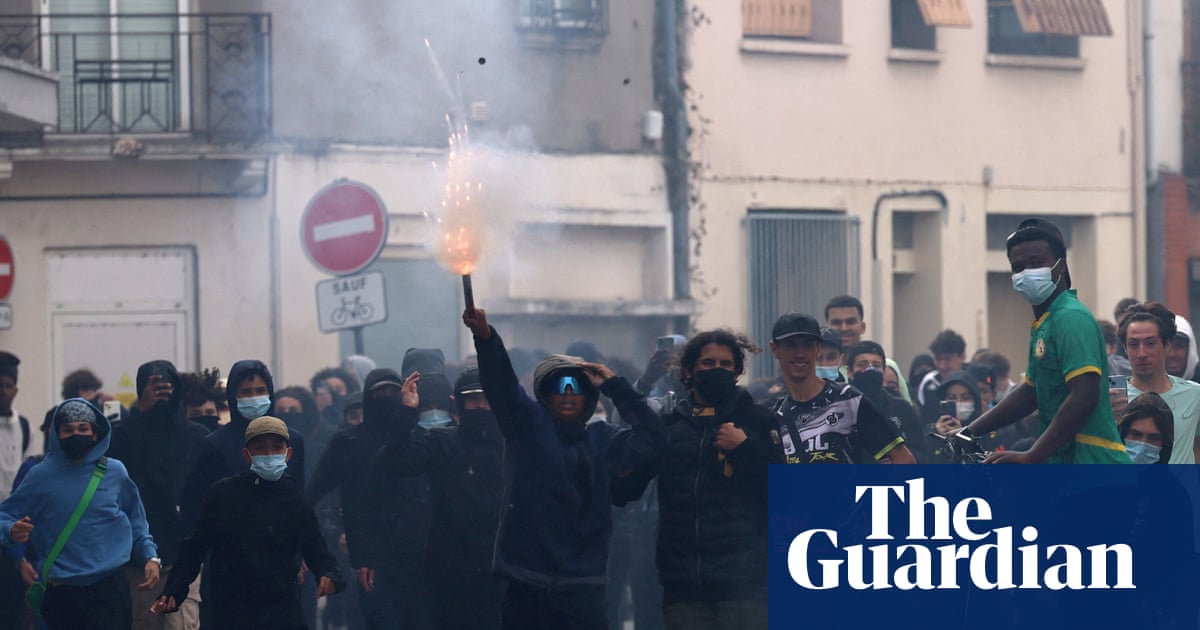
High-school students protesting in France. Photograph: Nacho Doce/ReutersView image in fullscreenHigh-school students protesting in France. Photograph: Nacho Doce/ReutersMore than 400 schools in France to be closed on Monday as more protests plannedEducation minister says 24 schools have been burnt or ransacked and 78 staff members injured since student unrest began last week
More than 400 schools in France will be closed or partially closed on Monday as authorities brace for a second week of student protests.
Lessons will be totally or partly suspended in 400 to 500 schools because security conditions “have not been fulfilled”, the education minister, Édouard Geffray, said on Sunday.
The minister said 24 schools have been burnt or ransacked and that 78 education staff members have been injured. The number of school closures on Monday would be comparable to Friday but the government envisaged a “partial, progressive return to lessons”, said Geffray.
Thousands of teenagers staged widespread demonstrations and erected barricades last week to protest against what they said was underfunding and neglect of the education system.
Clashes with riot police left hundreds of people injured, led to more than 5,000 arrests, mostly of minors, and jolted President Emmanuel Macron’s centrist administration.
There was a lull at the weekend, but protest organisers called for renewed demonstrations on Tuesday because the government had failed to produce “concrete measures”.
Authorities say political agitators have infiltrated the protest, which started at a Paris school on 17 September and spread across the capital and the rest of France.
“There are activists – particularly from the far left – who have infiltrated the high school student movement, hijacked it from the students themselves, and engaged in extreme violence,” said Geffray. “Clearly, this poses a risk to both our staff and our students.”
View image in fullscreenStudents block the entrance to Ampere high school in Lyon. Photograph: Konrad K/SIPA/ShutterstockThe injured education staff members were deliberately targeted, “something we have never seen before”, said Geffray.
The protests caught the government by surprise and confronted Macron with his worst crisis in months. Images of burning barricades and police using teargas, batons and other methods to disperse protests have dominated TV news.
Student grievances include overcrowded classes of up to 40 children in crumbling buildings, poor teacher pay, staff absences and an unequal system in which social background determined success. Other factors are an opaque and difficult online system for university applications as well as the sweltering temperatures in classrooms during heatwaves.
Protesters have accused the state of disengaging from secondary education and cited difficult conditions such as leaks, cockroaches, collapsed ceilings and decayed buildings. Others have complained about excessively long school days and a lack of teaching staff.
The government said the grievances were legitimate but condemned what it called “urban violence”. On Sunday, police detained a 16-year-old in relation to an assault of a teacher in the southern town of La Ciotat. The teacher, 59, was doused with gasoline and struck during a protest on Friday.
The government is also under pressure from trade unions that called a day of strikes last week to compel the new prime minister, Sébastien Lecornu, to rethink budget cuts and consider a form of wealth tax on the super-rich. The CGT trade union exhorted workers to sustain the pressure with demonstrations this week.