play Live Sign upShow navigation menuplay Live Click here to searchsearchSign upEXPLAINERNews|ElectionsWill Brazil’s Lula halt the right-wing wave sweeping Latin America?Lula has remained a symbol for much of the global left amid the rise of the far right in Latin America.
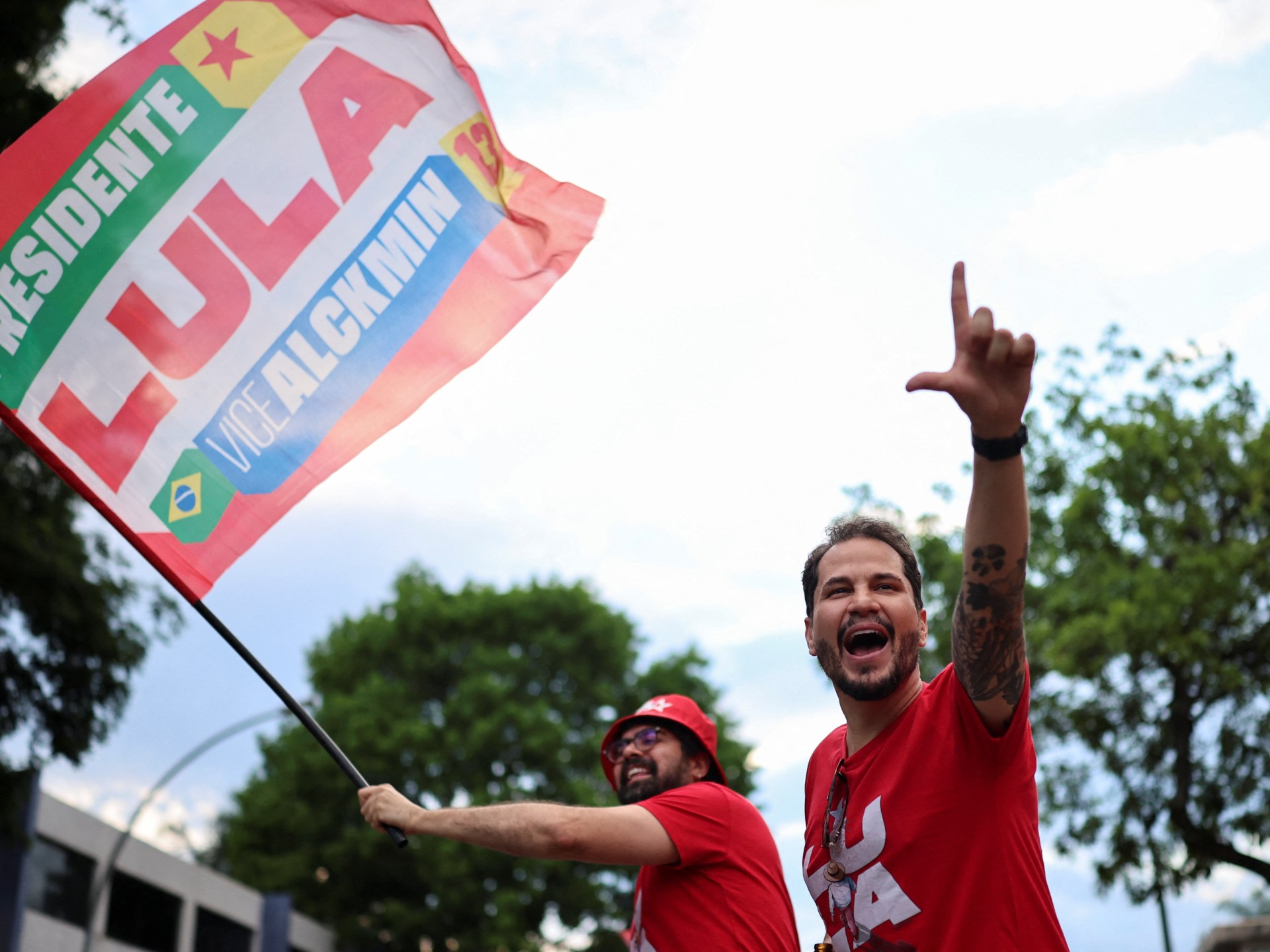
xwhatsapp-strokecopylinkgoogleAdd Al Jazeera on GoogleinfoSupporters of President Luiz Inacio Lula da Silva attend a rally in Brasilia, Brazil, October 3, 2026 [Mateus Bonomi/Reuters]By ReutersPublished On 4 Oct 20264 Oct 2026Brazil votes on Sunday in the presidential election that pits President Luiz Inacio Lula da Silva against far-right Senator Flavio Bolsonaro, the son of jailed former President Jair Bolsonaro. Will the incumbent left-wing leader be able to prevent Brazil from joining Latin America’s shift to the right?
A wave of right-wing election victories in recent years, including in Colombia, Chile and Argentina, has swept Latin America, aided by the Trump administration under a new framework of the “Donroe Doctrine”, an updated version of the 19th-century Monroe Doctrine aimed at restoring the pre-eminence of the United States in the Western Hemisphere.
Lula has sought to portray Senator Bolsonaro, whom he has called a “nobody” in campaign speeches, as a stand-in for a broader right-wing movement spreading across Latin America.
As Brazil heads to the polls on Sunday, will Lula be able to halt the right-wing wave in the region?
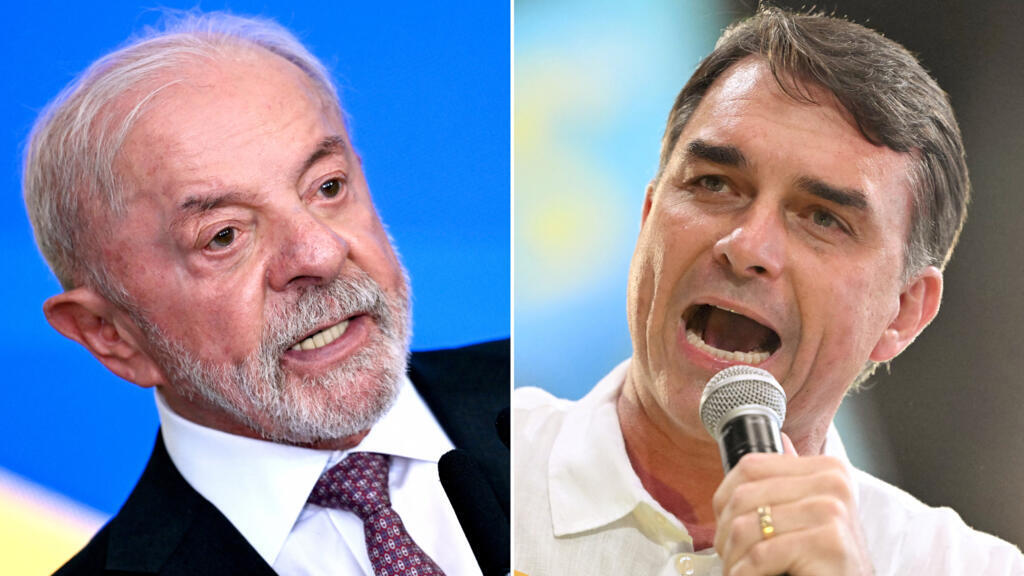
Luiz Inacio Lula da Silva, better known simply as Lula, is the country’s current president and the candidate for the Workers’ Party, or the PT.
The 80-year-old has been a central figure in Brazilian politics for decades, serving two four-year presidential terms between 2003 and 2011, and is currently serving his third term, which began in 2023.
His time in office has been defined by an effort to boost democracy, which was restored after a US-backed military dictatorship ruled the country for decades until the 1980s. He introduced a series of social programmes meant to address inequality, helping lift millions out of poverty.
Lula has also sought to forge ties between developing, non-Western countries on the global stage.
“He has come to embody the institutionalisation and consolidation of Brazilian democracy since the end of the dictatorship,” Andre Pagliarini, an assistant professor of history and international studies at Louisiana State University and the author of a book on Lula, told Al Jazeera in a phone call.
The 45-year-old has emerged as the heir to his father’s position as leader of Brazil’s political right and Lula’s main challenger. He is running as the candidate of the right-wing Liberal Party.
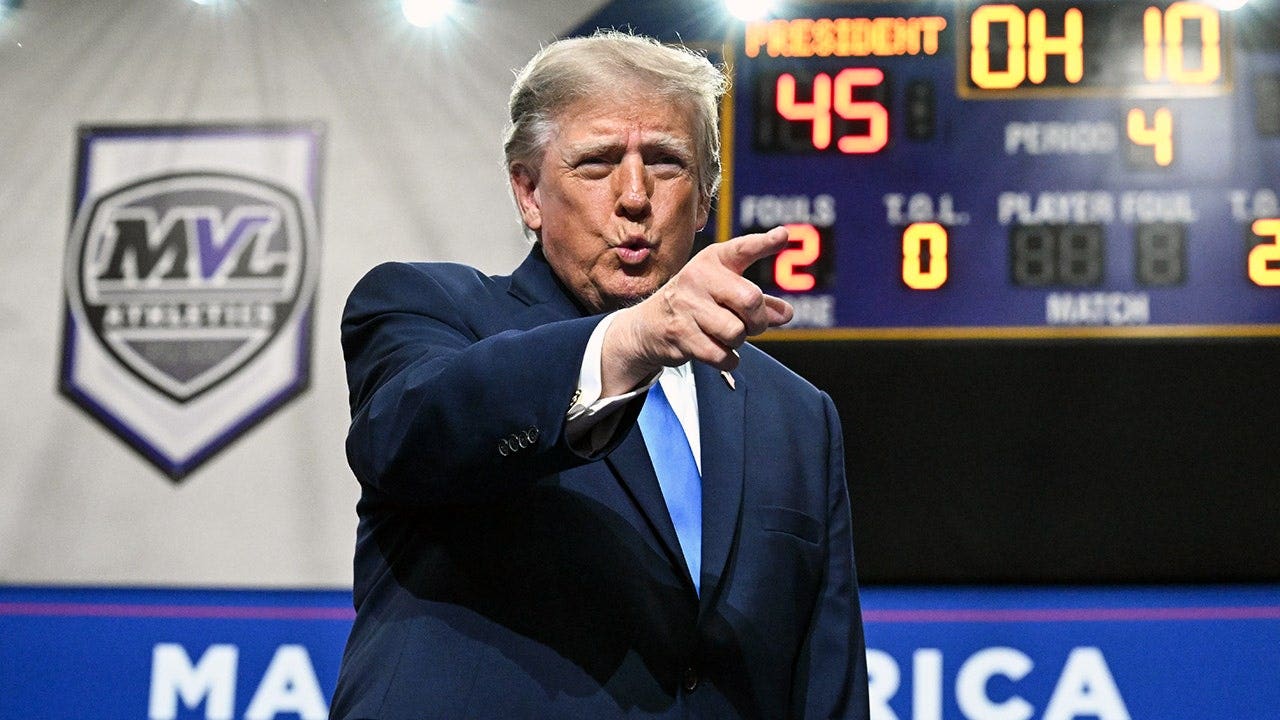
Flavio Bolsonaro has pledged a hard stance on crime and insecurity and close collaboration with the administration of US President Donald Trump, which has designated several criminal groups in Brazil as “terrorist organisations”.
He has also promised to rein in inflation and government spending, with an adviser stating that he would implement a debt ceiling if elected.
Flavio has also sought to turn his father’s conviction into a story of political persecution, denouncing his trial as illegitimate and seeking his release from prison.
“I ask God for the opportunity to walk up the ramp of Planalto Palace next year alongside President Jair Messias Bolsonaro, so that he may place the presidential sash across my chest,” he said at a campaign event in September.
“The Bolsonaro family’s pitch is that the institutions that Brazilian democracy has erected since the end of dictatorship are either rotten and unresponsive, and that we need a sharp turn away from this status quo,” said Pagliarini.
“The stakes of this election are incredibly stark because the candidates stand for such opposing visions about what Brazil’s recent history means,” he added.
A series of polls on Saturday suggested that Lula da Silva is slightly ahead of Senator Bolsonaro before Sunday’s first-round vote.
The polls have projected the race to be close, with a likely run-off between the left-wing incumbent and his far-right challenger.
A poll by CNT/MDA, a prominent political opinion and electoral poll in Brazil, gave Lula 47.3 percent in the run-off while Bolsonaro trailed at 43.1 percent. MDA surveyed 2,007 people from September 30 to October 2, with an estimated margin of error of 2.2 percentage points.
According to Datafolha, which surveyed 4,006 people on October 2-3 with a margin of error of 2 percentage points, in the run-off, Lula would get 47 percent and Bolsonaro 46 percent.
Polls also suggested Bolsonaro was favoured over Lula on issues of inflation, combating corruption, and crime and drug trafficking, while Lula was seen more favourably on issues of poverty and inequality, foreign affairs and healthcare.
If no candidate wins more than 50 percent of valid votes – which exclude blank and null ballots – on Sunday, the two frontrunners advance to a second-round run-off on October 25.
In 2023, when Lula returned to power in Brazil, he remained a symbol for much of the global left, attracting visitors ranging from former Uruguayan President Pepe Mujica to the philosopher Noam Chomsky.
He was also convinced that Brazil stood on the front line of a broader struggle against a global right-wing movement.
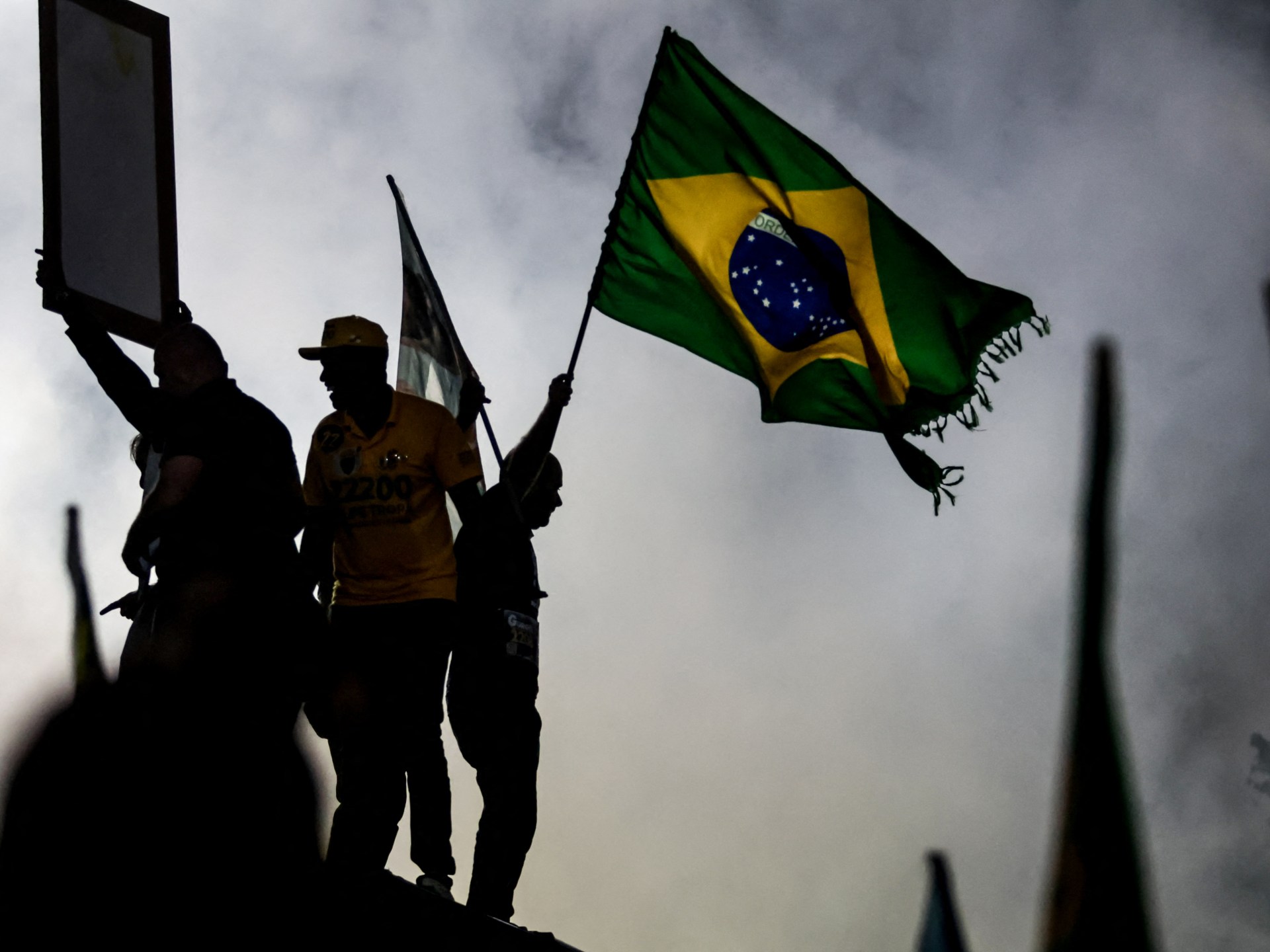
The January 8, 2023, attacks by Bolsonaro supporters on government buildings in Brasilia, days after his inauguration, only reinforced that belief for many.
But Lula’s government still struggles with voter frustration over rising living costs, and it has not overcome the polarisation that has gripped the country for nearly a decade.
Moreover, while Lula has revived Brazil’s leadership role in the BRICS bloc, boosted ties with countries like China and expanded engagement with Europe, recent right-wing victories in South America, and a confrontational relationship with the Trump administration have left him increasingly isolated in the Western Hemisphere.
Some Brazilian diplomats say Washington views the country as the last big obstacle to a sweep of Trump-aligned governments across Latin America, after recent victories in Chile, Colombia, Honduras and Peru, and an unprecedented expansion of US power in Venezuela after its military intervention.
In Washington, progressives view Lula as a “beacon of hope”, Alex Main of the Center for Economic and Policy Research, a left-leaning think tank, told the Reuters news agency.
In neighbouring Argentina, opponents of libertarian President Javier Milei see Lula’s possible re-election as a boost ahead of next year’s vote.
“If Lula wins, it will create a countercurrent to what has been taking hold in the region and show there is resistance to these right-wing winds,” Santiago Cafiero, a congressman and former foreign minister, told Reuters.
Diplomats from liberal governments in Europe who have been supportive of Brazil’s progressive climate initiatives are also watching closely.
“If human rights are being violated in a pretty big way or if the Amazon is being deforested in a big way, then it’s going to be much more difficult for us to engage with Brazil,” a European ambassador, who asked not to be named, said.
“As long as I am alive, the far right will not return to power in this country,” he has repeatedly said.
As with many recent elections across the region, corruption and concerns about US intervention in the country’s domestic affairs loom over the campaign and Lula’s efforts to quash the right-wing wave.
The US president has frequently threatened to cut off economic assistance to Latin American countries if his preferred candidate fails to win. Trump had also used sanctions to target members of the Brazilian judiciary involved in the case against the elder Bolsonaro, which he portrayed as a “witch-hunt”. Trump also placed heavy tariffs on Brazil in a bid to have the case thrown out.
The country’s government denied visas to two US officials who sought to travel to Brazil, saying they planned to cast doubt on the integrity of Brazilian elections. Lula’s government has warned the US against meddling in the country’s domestic affairs.
Trump has himself used false claims of rampant fraud to justify efforts to remain in office despite his election loss in 2020.
A group of 31 Democratic US Congress members recently sent a letter to Secretary of State Marco Rubio criticising “an apparent effort to interfere with, and potentially undermine” Brazilian elections.
Reuters reported that Brazilian intelligence officials also briefed a French and German delegation in September about possible interference in the election by outside powers such as the US and Russia. The officials said US interference ranged “from lawfare to interference that is openly acknowledged”.