Make New York Post a Preferred Source Since Oct. 7, 2023, Hamas sympathizers have insisted that we must understand the massacre in its historical context — that it did not happen in a vacuum. This much is true.
To understand this context, we need to look back at a chapter of history that predates the state of Israel by two decades. That chapter is 1929.
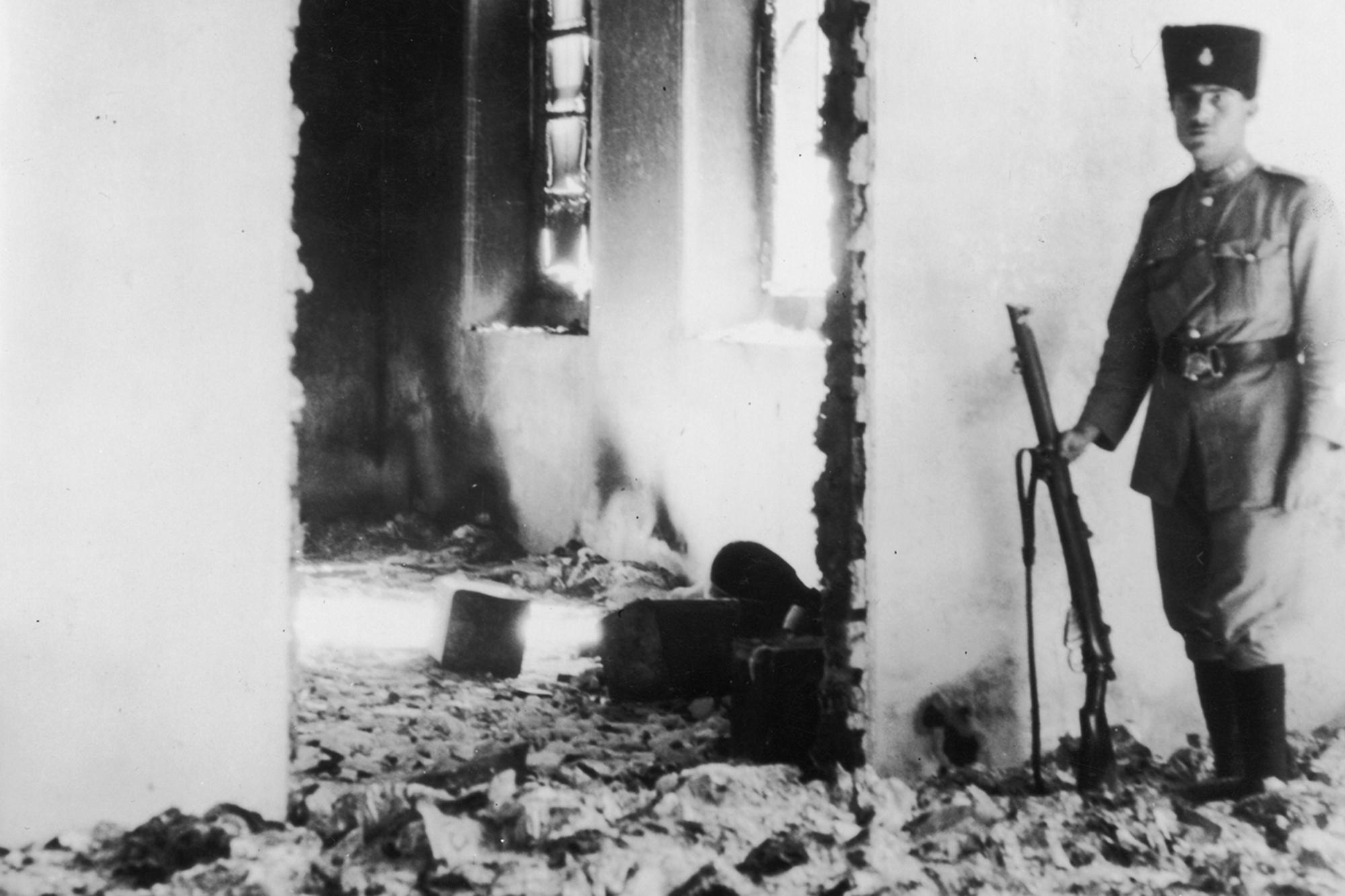
On Aug. 24, 1929, more than 3000 Muslim men armed with swords, axes and machetes marched through the ancient Jewish quarter of Hebron, then part of British Mandate Palestine. That Sabbath morning, they slaughtered 67 Jewish men, women and children, and wounded dozens more. Children watched as their parents were butchered by their neighbors. Rabbis and yeshiva students were castrated. Infants were murdered in their mothers’ arms. Young women were raped. Those who survived endured horrific cruelty, with fingers and limbs severed and eyes gouged.
Many victims of the Hebron massacre knew their assailants by name. Until that day, the rioters had been their friends, neighbors, coworkers and landlords. Most of Hebron’s Jews were natives of the land who spoke Hebrew and Arabic. This was the world’s oldest Jewish community, dating back to the days of Abraham and Sarah, who are believed to be buried in Hebron’s Cave of the Patriarchs and Matriarchs.
The massacre bore striking similarities to Oct. 7.
But the significance of 1929 extends far beyond these parallels. This overlooked chapter of history offers a window into the forces that shape this conflict — forces that are entirely missing from contemporary accounts of its origins.
In 1929, Jews represented 20% of a population of less than 1 million people. There was no persecution or oppression of Palestinians in 1929. To be a Palestinian was to be a Jew or an Arab living under British rule. Jews and Muslims had lived alongside one another in Hebron for generations.
What led thousands of Muslims in Hebron to turn on their Jewish neighbors was a campaign of disinformation initiated by the first leader of the Palestinian people: the Grand Mufti of Jerusalem, Haj Amin Al-Husseini. He claimed that the Jews of Palestine were conspiring to destroy Al-Aqsa in order to rebuild the ancient Jewish Temple, upon whose ruins Al-Aqsa had been built.
That lie crested into a wave of violence against Jews in Palestine.
Hamas repeats the same lie today, positioning themselves as the defenders of Al-Aqsa. It is no coincidence that Hamas named the Oct. 7 attack “The Al-Aqsa Flood.”
Yet the most revealing connection between 1929 and 2023 lies not in the violence but in its aftermath. In both cases, atrocities were simultaneously denied and blamed on their Jewish victims, murderers were glorified as heroes and the religious underpinnings of the violence were obscured.
After the riots were quelled by British troops, the Arabic press in Palestine falsely reported that Jews had initiated the riots. The international community saw through these lies at the time. Western journalists did not attempt to justify the slaughter of unarmed children. Protests against the Arab riots took place around the world.
And yet, the British did then what they continue to do today. Siding with the Arab majority of Palestine, the British concluded in the 1930 Shaw Commission that what sparked the riots was a peaceful Jewish demonstration at the Western Wall in mid-August 1929, on the Ninth of Av, the saddest day on the Jewish calendar, when Jews mark the destruction of the ancient Jewish Temples.
In hopes of keeping the peace, the British rewarded the attackers. To appease the Arab majority, they issued quotas on Jewish immigration. There were no limits on rising Arab immigration. They also restricted Jewish land purchases. After all, land in Palestine was not being confiscated by Jews or given to them by the British. It was being sold to them by wealthy Arab landowners, at exorbitant prices.
So, what happens when the history of the Israeli-Palestinian conflict is told without the context of 1929?
We are witnessing the consequences in real time. The 1929 Hebron massacre undermines the assumption that today’s conflict was caused by the state of Israel.
As a journalist who reported from Israel and the Palestinian Territories from 2013 to 2023, I witnessed the ways in which history is omitted from coverage of this conflict. I began writing a book about the Hebron massacre four years before Oct. 7, hoping to shed light on this fateful period of history that so few people know about. Three years after Oct. 7, the lies which fueled violence in Palestine one century ago are no longer rejected by the international community, but sustained by it.
Context is only useful when it is complete. The long-forgotten story of 1929 is vital to understanding the deeper forces — of religious domination, disinformation and historical amnesia — that have shaped this conflict for the past century. They have been ignored far too long.
Yardena Schwartz is the author of “Ghosts of a Holy War: The 1929 Massacre in Palestine That Ignited the Arab-Israeli Conflict.”