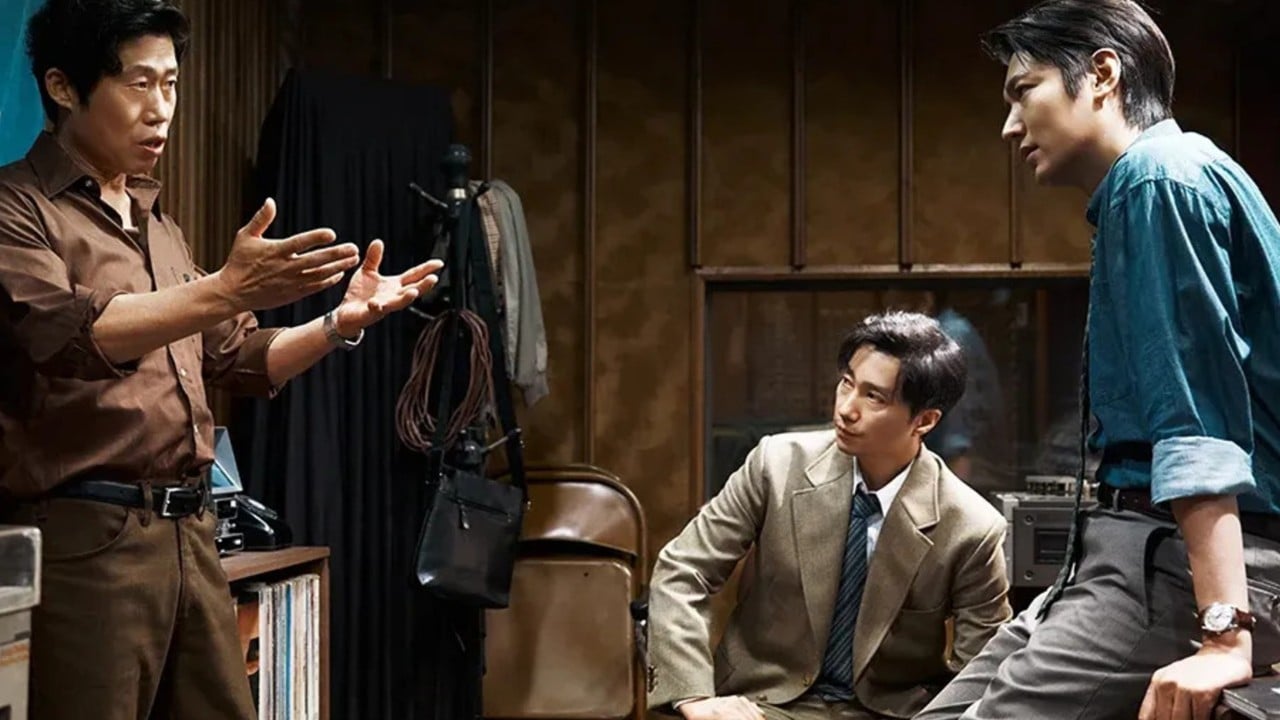
A still from Notre Salut, which is poised to become a box office hit. Photograph: Kidam & Michigan FilmsView image in fullscreenA still from Notre Salut, which is poised to become a box office hit. Photograph: Kidam & Michigan Films‘We swept a lot under the carpet’: Vichy regime film hits home in France of 2026Movie about Nazi-collaborating administration strikes chord during what director calls ‘time of great uncertainty’
It is the story of how a lowly state administrator unthinkingly becomes a cog in the machine of an authoritarian regime, embracing the bureaucracy and logistics of sending people to their deaths – and it is drawing in audiences to French cinemas.
The French film Notre Salut (Our Salvation), with its modern lighting, improvised scenes and anachronistic 1980s Europop soundtrack, is far from the standard historical costume drama about the second world war.
But the award-winning film about the daily lives of ordinary people participating in the puppet Vichy regime that collaborated with the Nazis – and ensured the deportation of a quarter of France’s Jewish population to concentration camps – is poised to become a box office hit.
View image in fullscreenRounding up of Jewish people in Paris in May 1941. Photograph: LAPI/Roger Viollet/Getty ImagesThe film, which has been given the English-language title A Man of His Time, had a strong cinema opening in France this week, particularly among young audiences, at a time when the country is soul-searching ahead of next spring’s presidential election.
Marine Le Pen of the far-right, anti-immigration National Rally (RN) continues to top the polls for the presidential race despite the political fallout from an investigation by Mediapart alleging that her party leader, Jordan Bardella, published antisemitic comments as a young party member, which he denies.
Notre Salut comes amid a boom in films about France during the second world war, including more than 5m ticket sales for the two-part biopic of Charles de Gaulle, as well the controversial Les Rayons et les Ombres about the press baron and Nazi collaborator Jean Luchaire, and the forthcoming Moulin, about the last days of the French resistance leader Jean Moulin.
View image in fullscreenA scene from Notre Salut. The film was inspired by a stash of family letters found by director Emmanuel Marre that shed light on the life of his great-grandfather, a Vichy administrator. Photograph: TCD/Prod.DB/AlamyBut rather than tackling well-known heroes or monsters, Notre Salut focuses instead on the role of ordinary people in the Vichy regime that, under Marshal Philippe Pétain, collaborated in the deportation of 76,000 Jewish people to Nazi concentration camps.
The film was inspired by a stash of family letters found by its writer and director, Emmanuel Marre, that gave insight into the life of his great-grandfather Henri Marre, who worked as an administrator under the authoritarian puppet regime.
“There are great figures who make history, but history is also made by the second-players, the grassroots who act on the ground, and that is what is interesting about this film,” said Marc Olivier Baruch, a historian and specialist on state administrators in the Vichy regime.
View image in fullscreenJewish deportees in the Drancy transit camp in France during the second world war. Photograph: AFP/Getty ImagesFor Baruch, the most chilling scene in the film is the bureaucratic nitpicking about the costs incurred by providing Jews on cattle trucks with straw and chamber pots. The central character in the film, the administrator Henri Marre, “never chooses to reflect on things or look at what he’s doing, to wonder what his room for manoeuvre is”.
Baruch said the film’s sense of unease was a pull for modern of audiences because today France was “in a time of great uncertainty … There’s a strong lack of confidence among French people in their elites and in their state and that has been going on for a long time.”
View image in fullscreenA notice in a restaurant window banning Jews from entering, German-occupied Paris, July 1940. Photograph: Art Media/Print Collector/Getty ImagesHe said the Vichy regime had resonance today as a period in history. “The Pétain dictatorship is the only moment when the far right was in power since 1820. There were these four years at the heart of the 20th century when the far right was in power and clearly for French people in 2026 and 2027 that is interesting … There has been a certain unease in modern France that it would be better to stop talking about Vichy, to draw a line under it, stop the masochism [of looking back]. That of course is stupid, and not possible.”
Film critics suggested modern audiences were seeking to better understand the rise of the far right across Europe and in France.
Henry Rousso, a historian who has studied the place of the Vichy regime in collective memory, wrote of the film in Le Monde: “The RN is not the fascism of the 1930s, nor a resurgence of the Pétain regime, but knowing this history allows an understanding of what [the RN] is the heir to, and how the mechanisms of gradually renouncing democratic and republican values led to disaster.”
View image in fullscreenEmmanuel Marre won the screenplay prize for Notre Salut at the 2026 Cannes film festival. Photograph: SOPA Images Limited/AlamyEmmanuel Marre, the film’s writer-director, who won the best Screenplay prize at the Cannes film festival, began working on the story more than a decade ago after the discovery of the letters from his great-grandfather that his family had kept in a drawer.
He told France Inter radio: “There are [similar] drawers everywhere in France … there is a phantom memory of the collaboration. With this film, we wanted to prise open those drawers and allow all families to look at that – not as flagellation, [but] because after the war France pushed a lot of it under the carpet to survive.”
He said it was crucial to look at the nuance of what led people to collaborate or take a stand. “In between resistance and in collaboration, there is a whole range of human emotions, even the most ambiguous.”