Make New York Post a Preferred Source Silicon Valley may be in the middle of an Artificial Intelligence gold rush but thousands of former senior programmes and tech workers aren’t feeling it.
Those workers — until recently, used to paychecks between $310-340,000 — say the rapid advances in AI have left living on savings and their spouses’ paychecks, despite having top companies on their résumés and PhDs.
“You find a lot of people who lack empathy for the tech worker, because they’re like, oh well, they got laid off but they got these huge severance packages,” ex-Google employee Basem Istanbouli told The Post.
“My severance package wasn’t huge. It wasn’t big at all … If I didn’t have a partner, there’s no way I would have been able to stay in the Bay Area.”
Silicon Valley took in $92 billion of venture capital last year, 83% of it for AI firms, yet lost 13,100 jobs, according to Joint Venture Silicon Valley’s 2026 Index.
Software job postings nationwide are 23% below their pre-pandemic level, data from job site Indeed show.
A former Amazon machine-learning scientist with a PhD, who quit to launch a startup that failed, said he applied for 120 jobs in two months but has not had one offer. One company put him through six rounds of interviews before rejecting him.
“Having run a startup counts against you. They think you weren’t content to just do tech, you went off to do your own thing, and when you come back they’re not very willing to take someone who has run a startup,” the scientist, who asked not to be named, told the Post.
“In tech you’re a workhorse. You do what you’re told. You’re not supposed to have ideas. You just have to finish writing the code.”
He has a child, a mortgage and about a year of savings left. His wife, whose job provides the family’s health insurance, has proposed applying for social assistance if he still cannot find work.
Before it comes to that, he said, he would swallow his pride.
“I’m embarrassed to tell my friends that my startup failed. If I put ‘open to work’ on LinkedIn and go around asking for referrals, everyone will know my startup died. If it really comes to that, I’ll have to do it and stop caring.”
Meanwhile the honchos at Anthropic and OpenAI are planning trillion-dollar stock market debuts and Anthropic’s co-founders were each worth $15.5 billion on paper in May, according to Forbes.
But the cuts keep coming. Oracle will lay off 441 workers in Redwood City, Santa Clara and Pleasanton on Nov. 13, state employment records show.
The company’s annual filing showed its headcount fell by 21,000, or nearly 13%, which it tied to the “adoption and deployment of AI technologies across our operations.”
Analysts say the boom and the layoffs are connected. AI is so expensive to build that tech companies are cutting costs elsewhere to pay for it.
Employers have blamed AI for 116,175 job cuts this year, according to placement firm Challenger, Gray & Christmas.
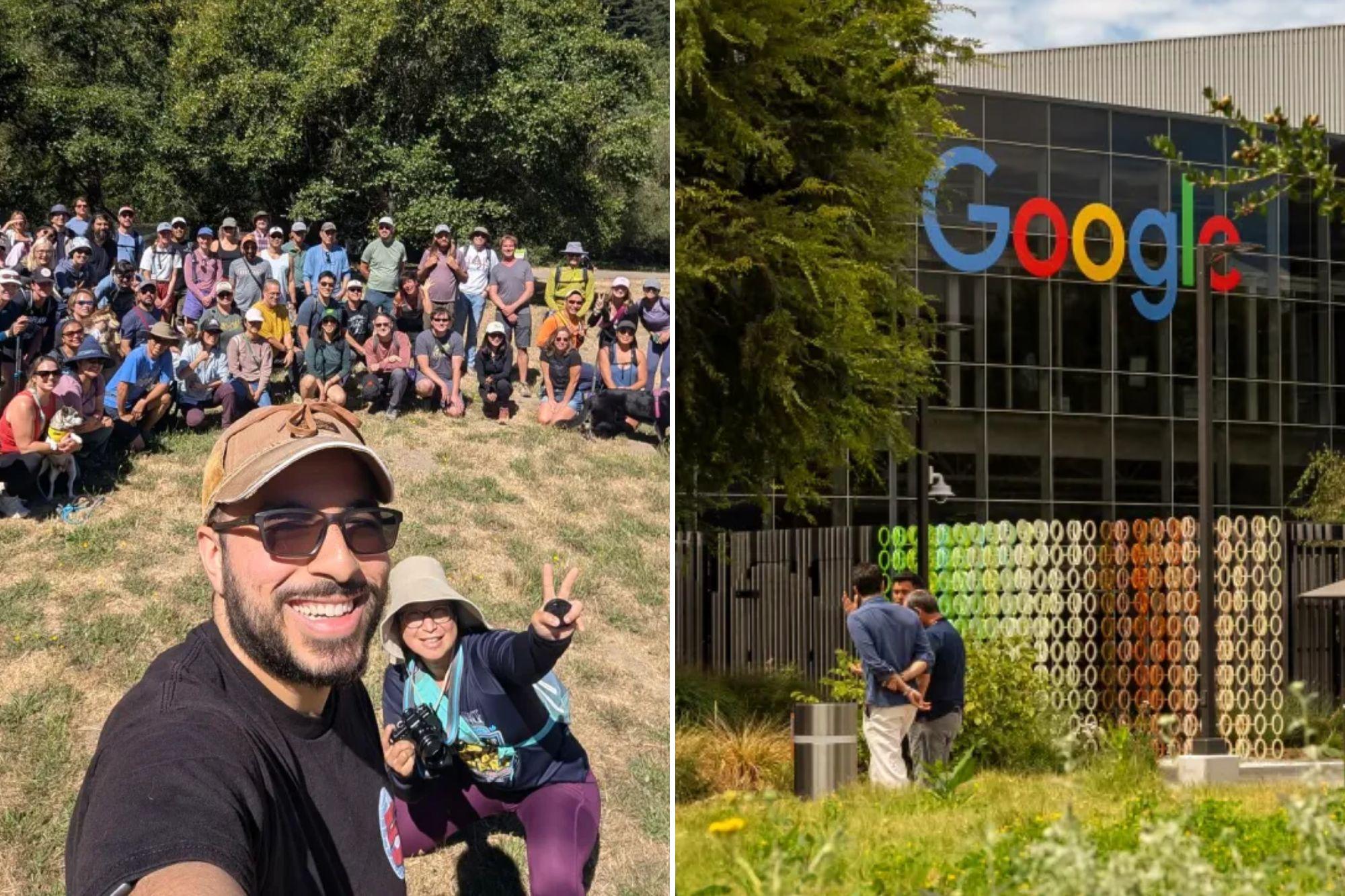
Looking for relief from the grind, Istanbouli asked on Reddit whether anyone else between jobs wanted to go on a weekday hike. Three people showed up.
But in less than a year, his group, “(un)PTO,” has grown to 1,783 members, most of them out-of-work tech workers. They meet for weekly hikes, coffee and co-working sessions around the Bay Area.
“Obviously people say, oh my God, another recruiter had ghosted me,” Istanbouli said. “But then you have something to look forward to in the week, whether it’s hanging out with people at a coffee shop or going on a hike … to make your time be a little bit more bearable.”
Yang Jin, who holds a PhD in biology, was laid off by a biotech company in 2024. She applied for dozens of jobs at companies, but got nowhere.
“At first it was what everyone imagined a layoff to be: you get cut, you go look for a job in the same field. But unfortunately I never found anything suitable … once you have a gap, it’s even harder to find a job,” Yang told the Post, pointing out lab work is being automated, too.
“The hands-on work is really too simple. It’s basically mix, mix, wash, mix, mix, wash, in order. Who can’t do that? The robotic arms are here now, so they need even fewer people,” she noted.
Yang now stays home with her children and is teaching herself to build AI applications, hoping it leads to a new career.
Her husband, Xingtao Zhao, spent more than 10 years at Google as a software engineer before leaving for an augmented-reality startup, but he got laid off.
“You can’t stay in one environment for too long, in a comfort zone for too long,” Zhao told the Post of his decision to leave Google.
Despite his PhD in machine learning, he went through 10 to 20 interviews with self-driving car and AI model companies as his main targets. None worked out.
He is now using AI to his advantage, running a quantitative stock trading operation with a longtime friend, a finance veteran who was also laid off. The friend handles the trading strategy and Zhao builds the models.
“I do quant trading full time and look for a job part time,” Zhao said.
But even in that area, coding tools are getting more people into quant trading, and the more who pile in, Zhao finds, the thinner his edge gets.
“AI’s impact on the whole job market, on every area, is huge … but I’m still fairly optimistic. AI may make a lot of old jobs disappear. But it will create a lot of new opportunities and new jobs,” he said. “It closes a window but opens a door.”
Istanbouli, who is still looking for work, has advice for anyone newly out of a job.
“A lot of times people’s whole personalities are their work, their whole social circle is their place of work. And when you leave that place of work, you literally end up with nothing,” he said.
“Build community outside of work, build yourself outside of work, so that when you are in a place of pain you have something that can bring you happiness and support.”