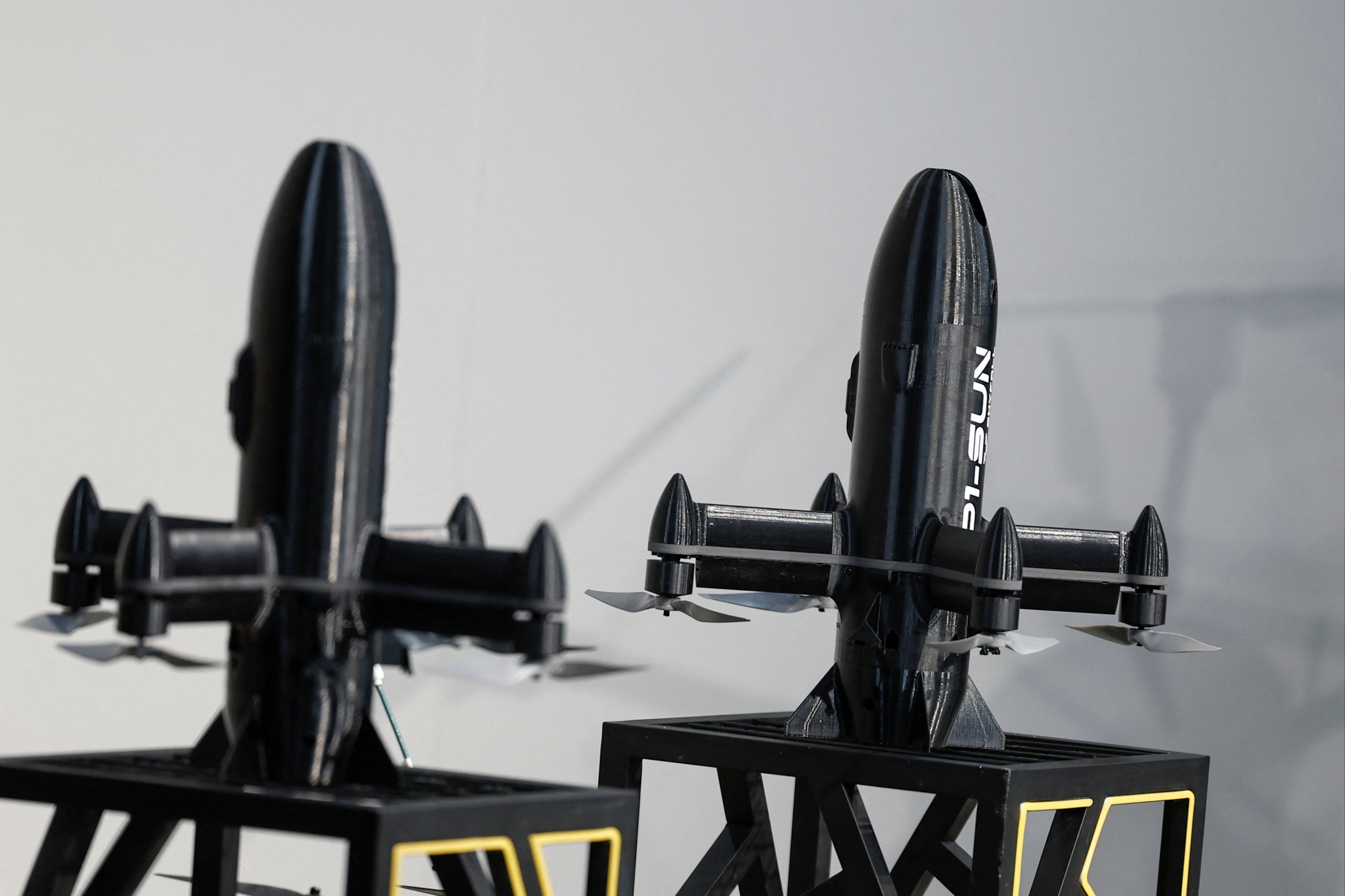
P1-Sun FPV interceptor drones at a show room of SkyFall company, amid Russia's attack on Ukraine, in an undisclosed location, Ukraine March 6, 2026. REUTERS President Donald Trump’s Department of War has rightly called Israel a “model ally” — and no wonder, as the world watches Israeli pilots operate alongside their American counterparts in the skies over Iran.
Now, Operation Epic Fury has given Ukraine a chance to show that it deserves that same distinction.
Of necessity, the Ukrainians have become the world’s experts in fighting off waves of enemy drones — while American forces are playing catch-up in that specialty, as Tehran launches thousands of drones at US and allied targets.
Over the last 10 days, the Israelis have been an equal partner in the most ferocious air campaign since World War II, risking blood and treasure alongside US forces.
But while these allies are imposing heavy costs on Iran, their otherwise unstoppable military juggernaut has a significant vulnerability: drones.
US forces are not equipped to deal with Shaheds — low-cost, long-range Iranian kamikaze drones that Tehran launches day and night.
The Shaheds are also pounding America’s Arab partners in Iran’s immediate neighborhood: Kuwait, Bahrain, Qatar, the UAE, and Saudi Arabia.
The Russian drones being deployed against Kyiv are actually a modified version of the Shahed.
After Vladimir Putin launched his Ukraine invasion, Tehran shipped thousands of them to Moscow and gave Russia the technology to build its own.
The US military should have taken this as a warning, yet it never developed an effective drone defense.
As a result, Shaheds have wreaked havoc on US forces, killing American soldiers and destroying key defense radars and communication systems.
In the midst of this struggle, a second model ally has emerged — Ukraine.
President Volodymyr Zelensky has stepped up to offer the US and its Arab allies immediate support, saying Ukraine would “provide the necessary means and ensure the presence of Ukrainian specialists” to help with counter-drone defense.
And Ukrainians have gotten very good at shooting down enemy drones.
They use a layered defense network, mixing aircraft and helicopters equipped with American rockets and laser sniper pods to cover wide areas, and combine them with ground-based defense drones that can protect valuable assets at fixed locations.
These ground-based counter-drone drones carry colorful names — like Sting, Bagnet, Sun, Octopus, Odin, Flamingo, Tytan, and Merops.
The Ukrainians use a mix of active and passive sensors, including unique optical, electronic-warfare and acoustic sensors, networked together in a cloud-based system to assess inbound raids.
The counter-drones then use a variety of engagement sensors, flight profiles, transit speeds, and loiter times to cover the various attack techniques Shaheds employ.
When combined with aircraft, these ground-based counter-drones have allowed Ukraine to significantly minimize the Shaheds’ damage.
US forces need ground-based counter-drone capabilities today — not next year — so they must turn to someone who has them on hand.
As if on cue, on the same day that Ukraine pledged counter-drone support to America, reports revealed that Russia is supporting Iran “with targeting information to attack American forces in the Middle East,” including specific locations of ships and aircraft.
That’s in keeping with longstanding reports that Russia has given China technology to conduct airborne assaults against Taiwan and to improve PRC subs’ performance against US naval forces, and has also provided ballistic missile technology to North Korea.
The United States and its Arab partners have already taken Ukraine up on its offer of counter-drone assistance.
The real question is whether Americans and their elected leaders will finally reach broad agreement on the fact that Russia is a dangerous adversary — part of an axis of aggressors with China, Iran and North Korea — while Ukraine is a critical ally.
Treating Russia as such would mean fully implementing sanctions on the shadow fleet that exports Russian crude, principally to China and India.
This could help starve the Russian war machine, which is now consuming 40% of the Russian federal budget.
As model allies, the Ukrainians have more than earned improved access to US weapons systems to defend themselves.
Washington should make it easier for Europe to buy American defensive weapons for Ukraine, including Patriot missiles, and should provide Ukraine with American attack weapons without targeting limitations — including ATACMS and even Tomahawks.
Finally, the administration should maintain high-quality intelligence sharing and targeting support to Ukraine, making sure these weapons impose the maximum cost on Russian forces and war-making industries.
The United States now has a second model ally, Ukraine — one that, like Israel, has been spending blood and treasure to defend itself against an authoritarian regime, and is willing to help us in a time of need.
We should remember that the next time we meet with Russia and Ukraine for peace talks — and apply our leverage on our adversary, not on our model ally.
Rear Adm. (ret.) Mark Montgomery is a senior fellow at the Foundation for Defense of Democracies.