Make New York Post a Preferred Source Don’t fuggedabout history!
Suffolk County is opening a brand new museum celebrating Italian-American history, heritage and the generations who helped shape Long Island.
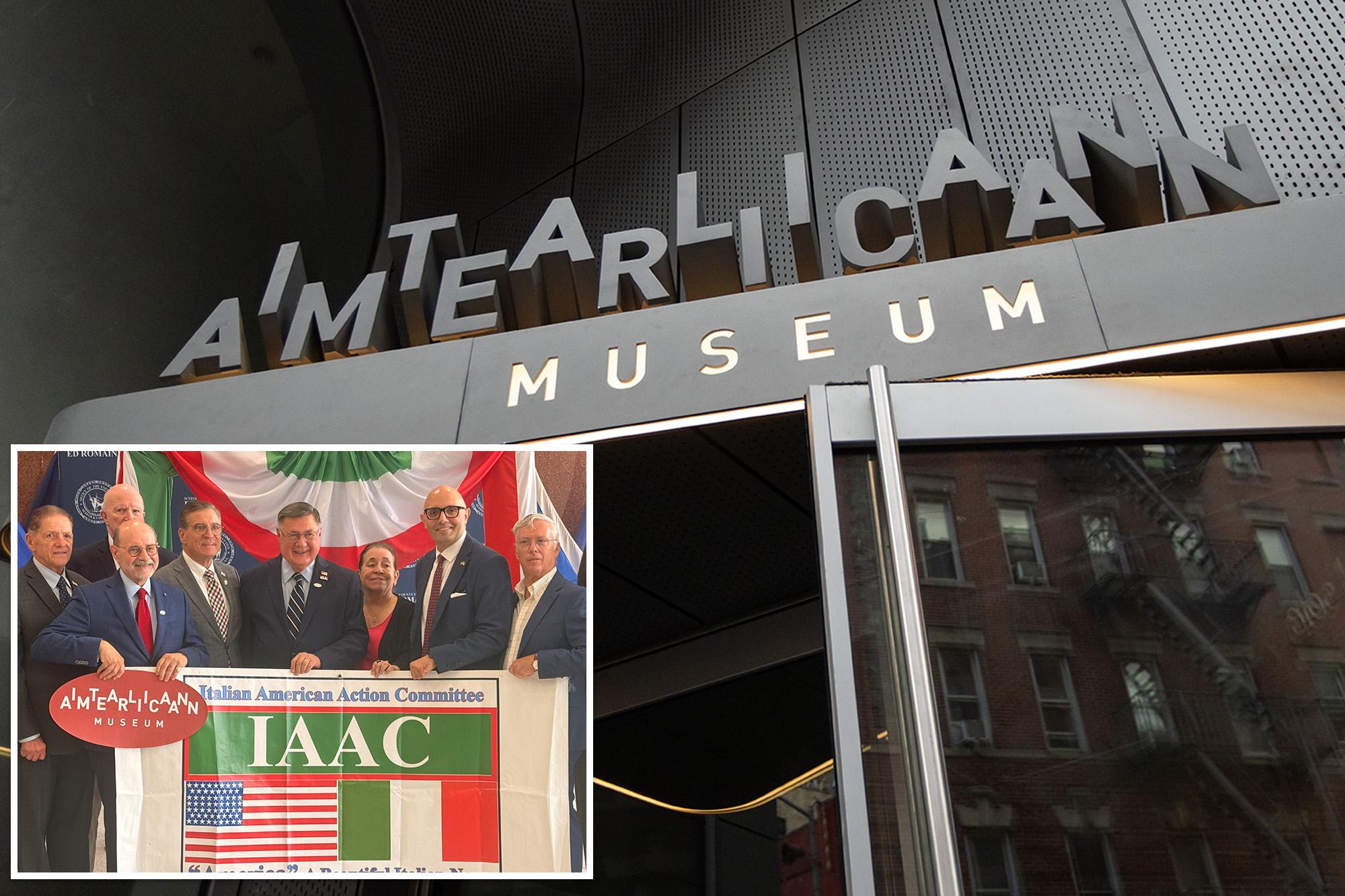
County officials, alongside numerous Italian-American organizations and activists, announced their plans to build the new museum on Thursday, which they said will not only feature the history of how Long Island came to be what it is today, but the contributions of the Italian-Americans who helped forge the region.
“So many Italian Americans have contributed to building Long Island and its continued success — we’re finally going to celebrate that properly,” Bob Fonti, who leads the Italian American Political Action Committee, told The Post.
The Italian American Museum in New York City will have brother-museum on Long Island. Michael Nagle Suffolk County is home to roughly 320,000 Italian-Americans — the most in any one county in the country — who account for nearly a quarter of the area’s entire population, according to census data.
Neighboring Nassau County is home to an additional 238,000 Italian-American residents, meaning that there are roughly over 557,000 Italian-Americans living between both counties — roughly 20% of Long Island’s whole population, according to census records.
Those figures, according to Dr. Joseph Scelsa, the founder and director of Mulberry Street’s Italian American Museum in Manhattan’s Little Italy, makes Long Island the perfect and most obvious location for the next museum, he said.
“It’s about time,” Scelsa said as he announced the plans for the museum.
“How did we get here — from steerage to the suburbs — that’s what this museum is going to talk about, that’s what this museum is going to tell you about,” Scelsa said, referencing Italian-American contributions.
Italian immigrants first started pouring onto Long Island at the turn of the 20th century, taking the Long Island Rail Road from the city to Long Island for work at places like Port Washington’s sand mines and Patchogue’s lace mills.
Long Island politicians and representatives of local Italian-American organizations announce plans for the new Suffolk County Italian-American museum. Brandon Cruz/NY Post Many eventually settled in Glen Cove to build and maintain the Gold Coast’s sprawling estates, and in 1920 the city became home to Long Island’s first Sons of Italy lodge, founded by an immigrant from the village of Sturno.
Copiague’s Italian enclave was even dubbed “Marconiville” after radio inventor Guglielmo Marconi, who would visit the town’s Italian community on several different occasions from 1913 to 1917, according to the Long Island History Journal.
Currently, there is no timetable, estimated budget, or set location for the museum’s opening, which officials said they hope to have running in the next few years. The museum will be privately funded.
“I hope, next year, we’ll be making announcements on choosing a place — we have exhibits that we’re looking to do,” County Executive Ed Romaine told reporters during the announcement.
“I cannot say enough about Italian-American traditions, family, their culture, and their food, all of which we enjoy here on Long Island,” he added.