play Live Sign upShow navigation menuplay Live Click here to searchsearchSign upIn Pictures
Dal Lake’s fragile ecosystem is deteriorating amid pollution, unregulated construction and climate change in Kashmir.
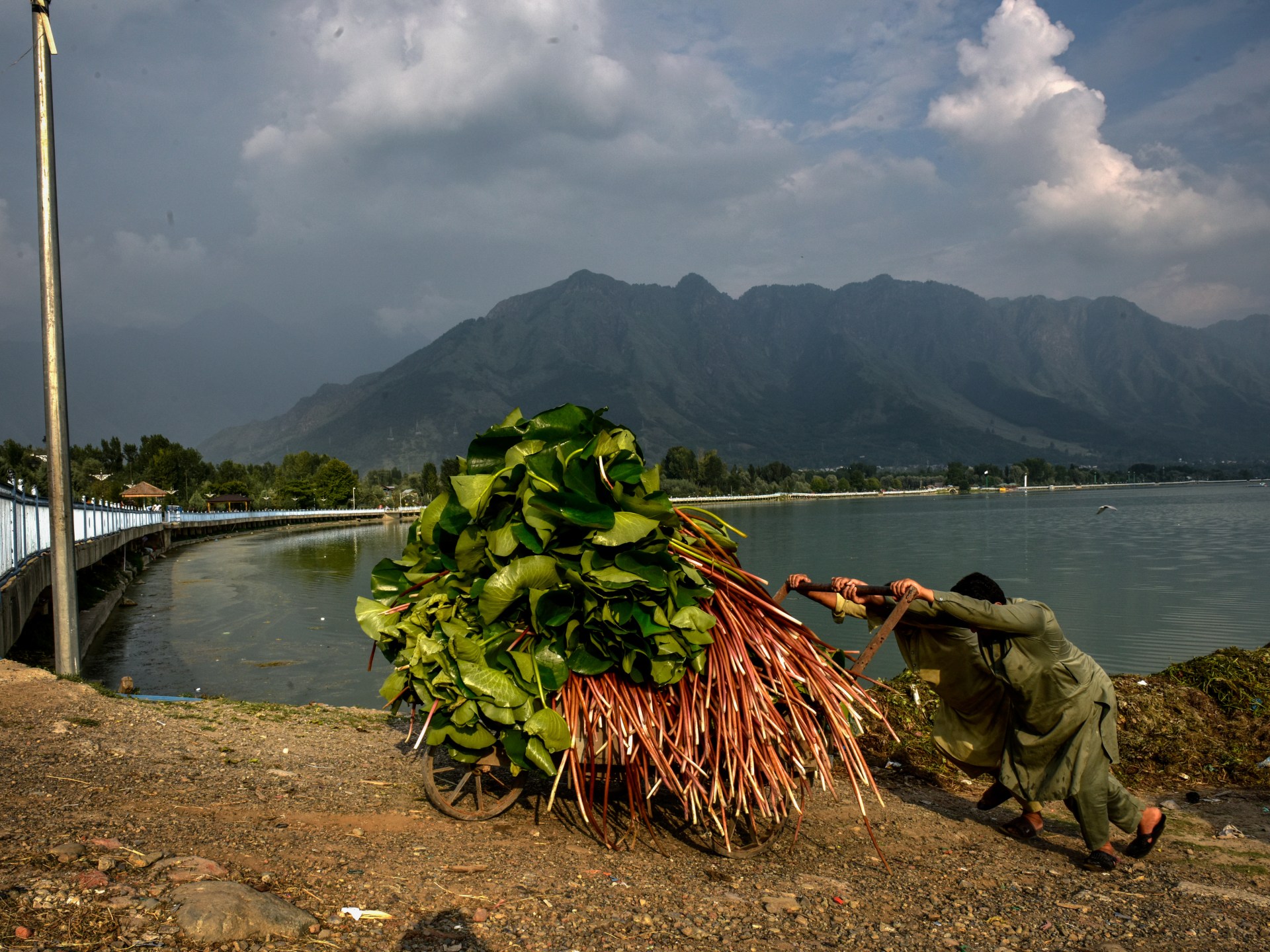
xwhatsapp-strokecopylinkgoogleAdd Al Jazeera on GoogleinfoKashmiri vendors push a handcart loaded with freshly harvested water lily stems. Water lilies grow abundantly in the lake, where local dwellers harvest their long stems with leaves to be sold to the livestock owners as green fodder for their cattle. [Yasir Iqbal/Getty Images]By Getty ImagesPublished On 1 Oct 20261 Oct 2026Dal Lake in Srinagar, the heart of tourism and cultural life in Indian-administered Kashmir, is slowly giving way under mounting population and environmental pressures.
Once renowned for its clear waters, floating gardens and houseboats, the lake is now clogged with untreated sewage, plastic waste and rampant weed growth, even as thousands of residents and businesses rely on it for transport and their livelihoods.
Unregulated construction along its shores, land encroachment and the expansion of nearby neighbourhoods have reduced its surface area and further damaged its fragile ecosystem.
The impact of climate change, including erratic rainfall and rising temperatures, is accelerating the lake’s decline.
Despite periodic clean-up campaigns and official conservation schemes, the future of Dal Lake remains uncertain, reflecting a wider environmental crisis across the Kashmir Valley.