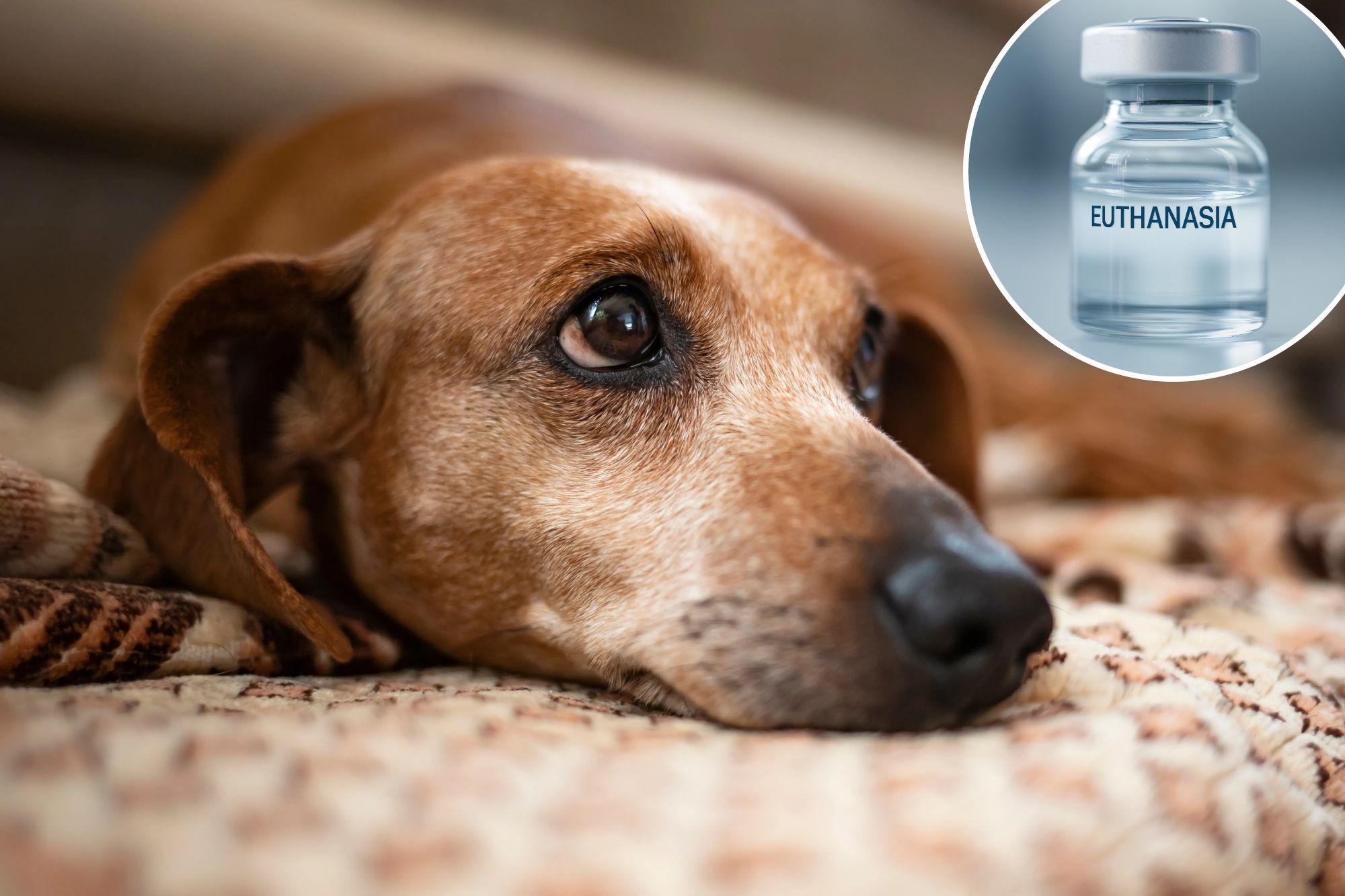
Make New York Post a Preferred Source New York Post photo composite I never thought my bank account would play a role in my dog’s fate.
Two days after Christmas, I was standing at a vet’s counter in rural Virginia, watching my mini schnauzer, Gloria, struggle to breathe in an emergency oxygen chamber.
I had to ask the question every pet owner dreads: “How much is this going to cost?”
But I’m far from the only one who’s had to ask it.
A new study from Healthy Paws Pet Insurance, “Love vs. Limits: The New Economics of Pet Care,” found that 77% of pet owners consider their animals “like a child.”
Recent Pew Research data backs that up. Pets have moved into the emotional space we used to reserve for family, and they shape our routines, our travel and most of all, our budgets. Older owners feel this most: 81% of pet parents 45 and up say their pet is basically a kid.
The trouble is that devotion now comes with a price tag that a lot of families can’t actually afford. A 2026 Checkup Report by Lovet Pet Health Care highlights just how deep the strain goes: 46% of pet owners say rising vet costs have caused them to delay or skip care in the past 12 months, and 37% have actively cut back on everyday expenses like groceries and utilities to cover their vet bills.
Most pet owners have a number in their head, a dollar figure where they’d have to say no. According to the Healthy Paws study:
More than half of owners said an unplanned bill under $1,000 would cause significant financial stress. And it’s not just lower-income households feeling it. Even among families earning over $100,000 a year, nearly 44% said a bill under $2,000 would hurt.
When Gloria went into sudden congestive heart failure, we were both at my parents’ house for Christmas, far away from home. My only goal was getting her well enough to survive the nine-hour drive back to New York, so she could pass peacefully in her own space.
That was how our other sweet girl, Margot, passed, and that was always the only way I thought I could possibly let Gloria go, too; comfortable on her favorite bed, surrounded by her closest family.
The emergency vet walked me through the oxygen therapy and the interventions she’d need, and I remember thinking: if we do all of this and she doesn’t get better, am I just throwing good money after bad? I was heartbroken. (Still am, to be honest.)
I also knew, given her age, that I was just prolonging the inevitable, however much I didn’t want to come to terms with it.
Two days and nearly $3,000 later, it was clear she wouldn’t survive the drive, and even if she did, she would be in pain and struggling to breathe the entire time. We ended up letting her go wrapped in a strange blanket on a cold, sterile vet table on December 27, 2025.
That’s the kind of math that happens in exam rooms every day. I knew it the moment the vet tech launched into her gentle yet matter-of-fact sales pitch for afterlife care and potential add-ons.
“Appointment openings ebb and flow with economic changes,” says Dr. Rachel Pound, lead veterinarian at Paradise Animal Hospital in Maryland. “There have certainly been times when a pet has not received ideal care due to financial constraints.”
“The biggest mistake I see isn’t that people don’t love their pets enough; it’s that they underestimate what modern veterinary medicine costs,” adds Dr. Karen “Doc” Halligan, a veterinarian with over 35 years of experience. “Hope is not a financial plan.”
Rising veterinary costs aren’t imagined. Data from the Bureau of Labor Statistics shows vet services have jumped 60% over the last decade. A few main factors are driving it:
Depending on the diagnosis, a single emergency visit can run anywhere from a few hundred dollars to well past $10,000.osis, a single emergency visit can run anywhere from a few hundred dollars to well past $10,000.
Dr. Mathieu Glassman, a veterinary surgeon in Washington, D.C., points out that repairing a torn ACL – the most common orthopedic disease in dogs – now typically runs between $7,000 and $10,000. And it’s not just emergencies that cause sticker shock. Preventable issues, like dental disease, often catch owners off guard; once you factor in anesthesia and extractions, a standard dental cleaning can easily run $1,500 to $2,500.
Pet insurance doesn’t make costs disappear, but it does change the math.
Data from the recent Healthy Paws study reveals 54% of insured owners had their insurer reimburse at least half the cost of a major vet expense. Insured owners were also far more likely to pursue every recommended treatment, regardless of cost: 47% compared with 32% of pet owners overall.
The upside is obvious. Insurance shifts a multi-thousand-dollar emergency off your shoulders, and it takes the guilt out of “economic euthanasia” entirely, because the decision gets made on medicine, not money.
However, there is always a catch: you’re paying a monthly premium, and if you wait too long to sign up, pre-existing conditions likely won’t be covered.
If you opt out of insurance, don’t expect your vet to offer an in-house payment plan when disaster strikes. Due to the high risk of unpaid bills, those are largely a thing of the past.
Instead, clinics now routinely direct owners to third-party medical credit services like CareCredit or Scratchpay to finance the care.
Noah Stone, a Los Angeles-based photographer and co-founder of the clothing brand Rowan interviewed for Healthy Paws, found out the value of coverage firsthand when his dog Buddy needed radiation. “It more than halved the cost and bought him another two pain-free years,” Stone says. “Whenever something came up … I never had to hesitate.”
I still don’t have pet insurance since our last is so old, just still being alive is a preexisting condition.
And not having it during Gloria’s final days is one of my biggest regrets. Getting a policy through a provider on day one, before you need it, is the best way to make sure your bank account never gets a vote in your pet’s care.
The upside is obvious. Insurance shifts a multi-thousand-dollar emergency off your shoulders, and it takes the guilt out of “economic euthanasia” entirely, because the decision gets made on medicine, not money.
The catch is just as real: you’re paying a monthly premium, and if you wait too long to sign up, pre-existing conditions usually won’t be covered.
In-house vet payment plans are incredibly rare today. Most clinics recommend third-party medical credit options like CareCredit or Scratchpay, though high interest rates can apply if you don’t pay the balance off in a specified time frame.
About 76% of pet owners have a financial threshold at which they’d decline treatment. For roughly a third of them, that’s under $1,000.
It’s when an owner has to choose euthanasia for a treatable illness or injury simply because they can’t afford the care.
Vet care has gotten 60% more expensive over the last decade, pushing 62% of owners to say they’d go into debt to save a pet’s life.
Coverage varies by provider, and most insurers won’t cover pre-existing conditions. It’s most valuable when you buy it while your pet is young and healthy.
Anywhere from a few hundred dollars for minor diagnostics to over $10,000 for major surgery, hospitalization or specialty care like oncology or cardiology.
For over 200 years, the New York Post has been America’s go-to source for bold news, engaging stories, in-depth reporting, and now, insightful shopping guidance. We’re not just thorough reporters – we sift through mountains of information, test and compare products, and consult experts on any topics we aren’t already schooled specialists in to deliver useful, realistic product recommendations based on our extensive and hands-on analysis. Here at The Post, we’re known for being brutally honest – we clearly label partnership content, and whether we receive anything from affiliate links, so you always know where we stand. We routinely update content to reflect current research and expert advice, provide context (and wit) and ensure our links work. Please note that deals can expire, and all prices are subject to change.