play Live Sign upShow navigation menuplay Live Click here to searchsearchSign upIn Pictures
Wazwan, a multicourse mutton feast, reflects Kashmiri cultural roots with recipes dating back to the 14th century.
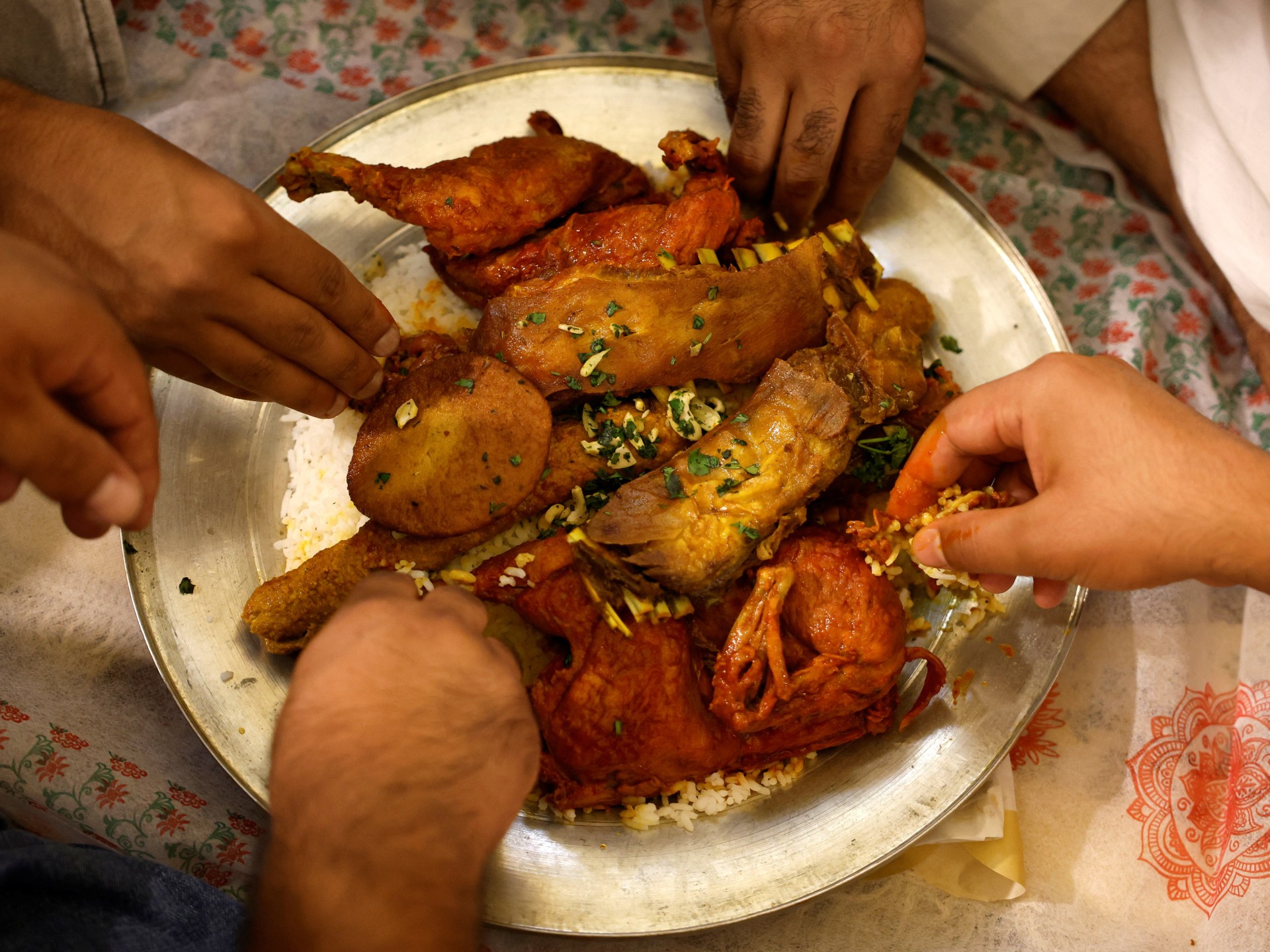
xwhatsapp-strokecopylinkgoogleAdd Al Jazeera on GoogleinfoDishes are served on a trami, a traditional copper platter, during a Kashmiri Wazwan wedding feast in Srinagar, Indian-administered Kashmir. [Sharafat Ali/Reuters]By ReutersPublished On 30 Sep 202630 Sep 2026As autumn approaches, the rhythmic thud of wooden mallets pounding lamb echoes across courtyards and back lanes in Kashmir, where cooks prepare Wazwan – a lavish, multi-course mutton feast that remains central to traditional wedding celebrations.
Wazwan arrived in the valley from Central Asia in the 14th century, when rulers brought skilled chefs along with the carpet and shawl weavers that later defined the region’s craft heritage.
Today, the feast is both a marker of social status and a powerful symbol of Kashmiri identity.
Among its guardians is 74-year-old Ghulam Nabi Baba, a veteran Wazwan chef who traces his lineage to those early migrants. His forefathers settled in Srinagar’s old city as part of a community of cooks known as Wazpora.
“There were only seven mutton dishes at that time. Over the centuries we added more, and now there are around 20,” Baba said.
He explained how the number of dishes and the amount of meat often reflect a family’s wealth.
“Forty years ago in Delina [a village in north Kashmir] I cooked 4,500kg (9,920 pounds) of meat. That was a very big wedding. Normally, at an average marriage we cook 200kg (440 pounds),” he added.
Despite the expanding menu, the core techniques have changed little. Lightly spiced meat is still pounded by hand before being simmered slowly over wood fires – a labour-intensive process Baba has followed since joining his father as a cook at 15.
But the pressures of modern life are reshaping the tradition. Baba’s son has chosen to open a restaurant rather than work weddings, saying the round-the-clock demands are too exhausting.
He believes he is still carrying forward the family’s centuries-old culinary legacy – just in a different setting, as Wazwan adapts to contemporary tastes and lifestyles.