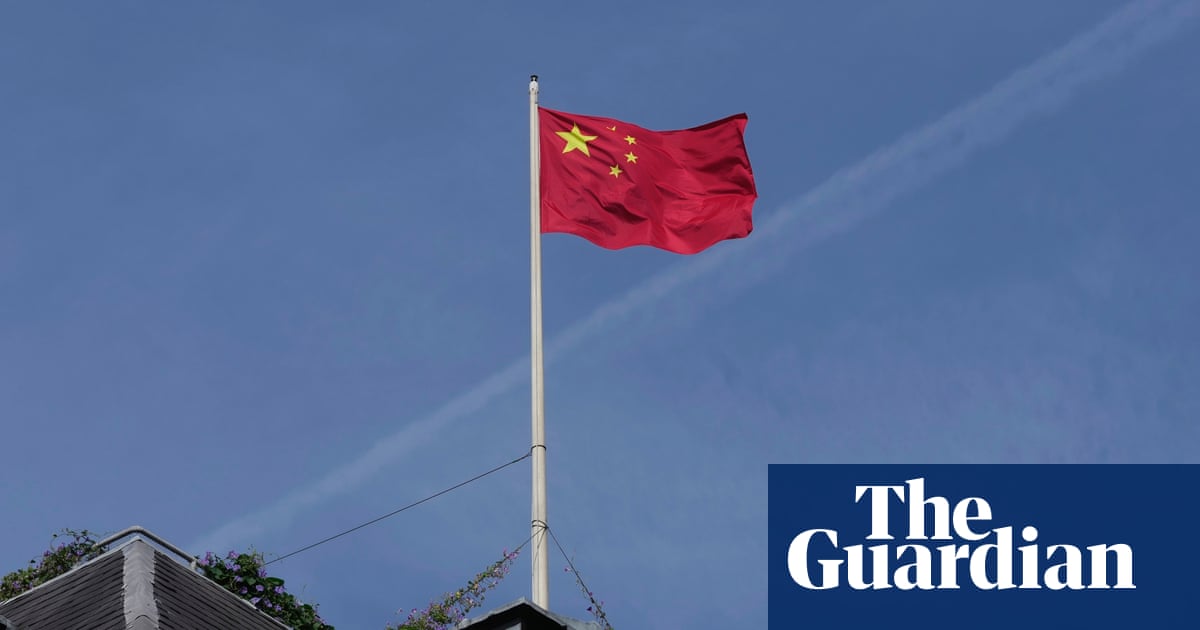
The Chinese national flag flies above its embassy in London. Photograph: Kin Cheung/APView image in fullscreenThe Chinese national flag flies above its embassy in London. Photograph: Kin Cheung/APMI5 issues spy alert to UK universities over Chinese front company stealing researchSecurity service says academics should stop taking grants from and working with firm backed by China’s intelligence service
MI5 China alert will send chill through UK’s cash-strapped universities
China’s intelligence service used a front company to pay grants to British universities and steal crucial research about technology projects, MI5 said on Wednesday in a rare public espionage warning.
Britain’s domestic security service said researchers and academics should cease work with the China General Technology Research Institute (CGTRI), sometimes also known as the China Academy of General Technology (CAGT). MI5 believes it poses a “significant threat”.
The Chinese organisation has given money to 100 or more academics at a string of universities across the UK, in return getting access to the research, which it is alleged found its way back to China’s intelligence service.
MI5 is now prepared to say publicly that the CGTRI is a front for Chinese intelligence, namely the Chinese ministry of state security (MSS). It said continued collaboration could be prosecuted under the National Security Act 2023.
Areas of research targeted include AI, cybersecurity, covert communications, and the embedding of data in pictures online called steganography. MI5 believes it has clear evidence of sensitive information being passed back to Chinese intelligence. The Guardian understands that as well as research money, some British-based academics were given awards, as in honours, by the Chinese.
Successive British governments have courted Chinese investment and encouraged cooperation.
In the alert issued on Wednesday, the Security Service said: “MI5 has identified that the primary purpose of CGTRI is to fund academic research that directly improves MSS technical capability for espionage.”
It said that the CGTRI had “very strong ties to the … MSS, China’s civilian intelligence and security service”.
It added: “Many academic institutions and individuals will to date have engaged with CGTRI in good faith given CGTRI’s obfuscated links to MSS.
“UK academic institutions are strongly advised to immediately review any ongoing or planned collaboration with CGTRI. This is to ensure MSS derives no further benefit from UK universities or research institutions. Further, academics are advised to establish the ultimate funding source when conducting any research collaboration with Chinese institutions, to ensure CGTRI is not involved.”
The alert warns of “potential criminal consequences”, in a section issued after consultation with the Crown Prosecution Service, which authorises criminal prosecutions in England and Wales.
“Through this espionage alert, MI5 has placed the fact that CGTRI has very strong ties to MSS in the public domain,” it states. “Going forward, academic institutions, staff and researchers should ensure they are aware of the National Security Act 2023, particularly offences under section 3 (assisting a foreign intelligence service) and section 17 (obtaining a material benefit from a foreign intelligence service).
“Under section 3, an offence is committed if the person a) engages in conduct that is likely to materially assist a foreign intelligence service in carrying out UK-related activities, and b) knows, or having regard to other matters known to them ought reasonably to know, that their conduct is likely to materially assist a foreign intelligence service in carrying out UK-related activities.”
Such is the scale of Chinese state espionage targeting the UK that MI5 has decided on a deterrence strategy via a public alert such as this, rather than pursuing every single case. It hopes universities will heed the warning and immediately cease their work with the CGTRI.
The Guardian understands that in one case uncovered by MI5, Chinese intelligence officers posed as researchers at a British university, thereby making it easier to pass material of potential value back to Beijing.
In another case, Chinese intelligence gained access to cutting-edge British research on scraping social media (searching and retaining useful information from social media sites).
The National Security and Investment Act 2021 could prevent a state such as China, assessed as having hostile intent towards the UK, from buying access to the technology on a commercial basis.
The security minister, Dan Jarvis, demanded universities end ties to the CGTRI. He said: “This alert exposes attempts by Chinese intelligence to covertly benefit from the expertise and research of our academics, undermining our national security and that of our allies.
“I have written to all university vice-chancellors to ensure they support their staff to end all arrangements with this company, preventing further benefit to the Chinese intelligence services and ensuring compliance with the National Security Act.”
He added: “International partnerships are vital to ensure our universities and research institutes continue to thrive, but we will take robust action to defend against the threats we face. That means supporting our police and intelligence services to expose and disrupt harmful activity, using the full force of the law.”
Responding to the MI5 alert, Vivienne Stern, the chief executive of Universities UK, which represents 142 institutions across the UK, said universities took their responsibilities around research security and national security extremely seriously.
“The sector has made significant investments in recent years to strengthen due diligence, risk assessment and research security processes, while continuing to support the international collaboration that is essential to world-leading research and innovation,” she said.
“Close engagement between government and the higher education sector is vital to ensuring that universities and the country continue to benefit from international collaboration while effectively managing national security risks.”
Libby Hackett, the chief executive of the Russell Group of research-intensive universities, said: “All our universities take national security responsibilities very seriously. Working closely with government departments and the security services enables universities to take swift action to protect UK interests – and we will continue to do so in the face of new and emerging threats”.
The Chinese embassy has been approached for comment.