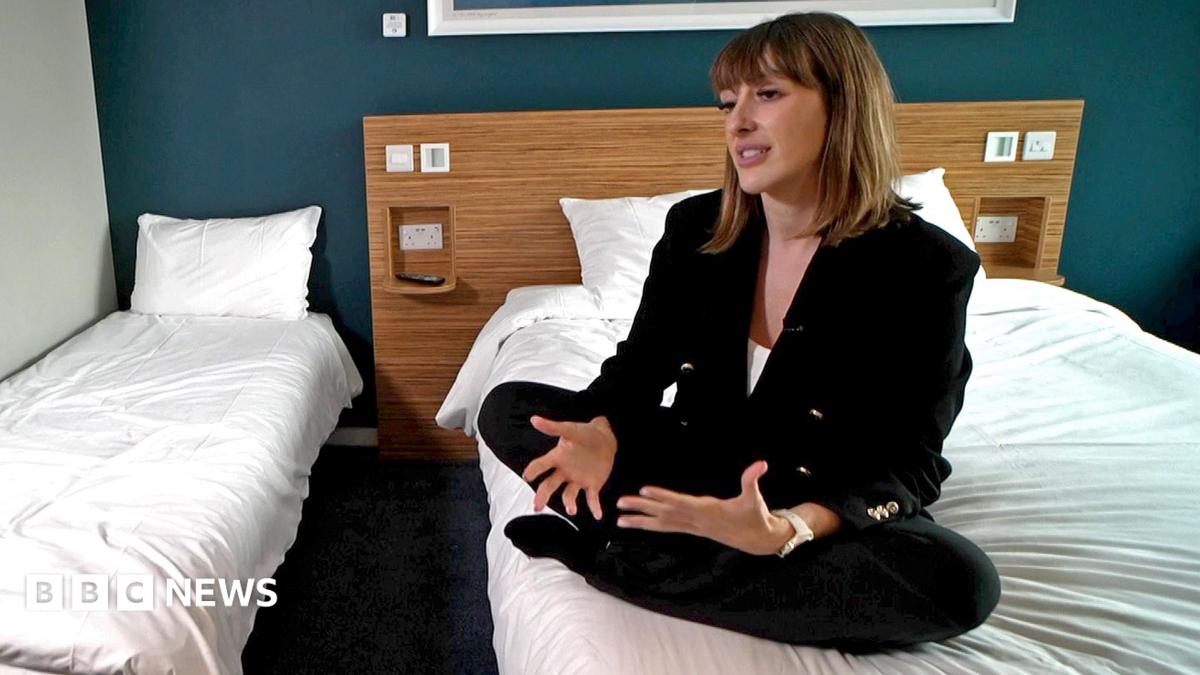
Image caption, Natasha Parcell is living in a hotel following a fire in the tower block where she owns a flat
When Natasha Parcell first got her foot on the property ladder little did she expect to be one of the latest victims of the cladding crisis.
"I was really excited to have something of my own," she says, "[but] very quickly in the first year I was told it was actually no longer safe or mortgageable."
The 33-year-old is currently living in a hotel after being evacuated from her flat, in east London, following a fatal fire in her tower block earlier this month.
All she was able to take with her were some plastic bags filled with clothes.
The blaze came just a day after residents got approval to have all the flammable cladding on the building removed.
However, she is worried new rules - which come into force on Wednesday - may allow the developer Barratt to backtrack on that decision. The rules state cladding can remain in place on blocks if the risk is deemed to be "tolerable".
"To find out that they're [the government] trying to change the standards in which they might remediate our buildings is quite terrifying," says Parcell.
Image caption, One person died in the fire at the block of flats in Poplar, east London
"Literally two weeks ago, we had a fatal fire in our building and we're still being told that they might change the rules and it might be a tolerable risk. I just don't understand when human life, or my life, became a tolerable risk to anybody."
The developer of Parcell's flat, Barratt Redrow, says despite the new rules it still intends to remove all the flammable cladding on her tower block as soon as possible.
It is nearly ten years since the Grenfell Tower fire, but almost 3,000 tower blocks in the UK with dangerous cladding still need to be fixed.
The new rules, known as PAS9980, grade the fire risk posed by a tower block's cladding system into four categories: high, medium, tolerable, and low.
Only those assessed as high or medium risk will require the cladding to be removed, but all categories permit the cladding to be flammable.
Cladding campaigners say this relies too much on the judgement of fire safety assessors, who are not independently appointed and often employed by the building's freeholder or developer.
The government declined to be interviewed about the changes.
But the Ministry of Housing said in a statement it would speed up the process of removing cladding, providing a more proportionate, clear and consistent approach to a complex issue.
It said repaired buildings would be audited to make sure the work had been carried out properly.
Ed Daffarn, who was the first person to warn about the dangers posed by cladding being added to Grenfell, watched the tower burn on the night of the fire.
He said he cannot believe, nearly ten years after the fire, that government officials, the fire safety industry and developers are still wrestling with the definition of what is safe.
"It shows the indifference and incompetence of the two different colours of government we've had in the last ten years," he says.
Daffarn said the building industry should also be made to fix fire safety defects in the buildings beyond the cladding if they're found to have not met the building regulation at the time of construction - a consideration removed from the new rules.
This approach is also supported by the insurance industry, and the Association of British Insurers says all flammable cladding should be removed.
When Natasha and other residents at her block were told a fire risk assessment showed the cladding needed to be removed, she says her buildings insurance went up by 94%.
As the flat is leasehold, the premium is included in her maintenance charges, which are now nearly £8,000 a year.
She and other residents are concerned that if her building is not fully fixed, and insurance premiums remain high if all the fire and safety risks not are addressed, it could remain unmortgageable and unsellable.
"I feel like I've been punished for getting onto the housing ladder so early," she says.
"It should be you buy a home, it's a safe place to be, no-one should have to be compromised or deciding whether they might live or not based on the home they buy."
Grenfell Tower to be taken down, government confirms