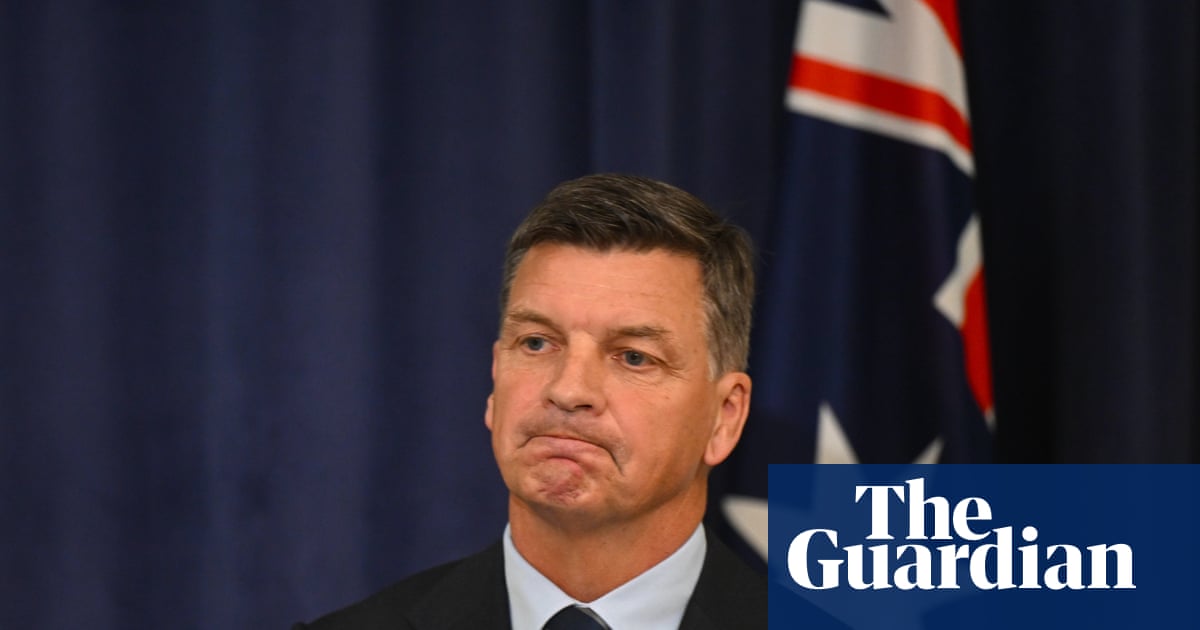
Angus Taylor’s opposition is now at its equal-lowest ebb in the Essential poll at 22%. Photograph: Lukas Coch/AAPView image in fullscreenAngus Taylor’s opposition is now at its equal-lowest ebb in the Essential poll at 22%. Photograph: Lukas Coch/AAPGuardian Essential poll: Coalition’s primary vote sinks to lowest ever as majority support hardline immigration ideasMore than half of Australians want to see the country’s migrant intake lowered while One Nation’s primary vote climbs to 25%
Get our breaking news email, free app or daily news podcast
The Coalition has failed to capitalise on growing criticism of Labor, with the opposition stuck at its lowest-ever primary vote in the Guardian Essential poll.
The poll also shows more than half of all Australians want immigration cut and have voiced support for hardline enforcement, such as forced deportation.
Despite growing scrutiny of Labor’s handling of the economy and inflation, its response to the OpenAI hack, and criticism of the government’s migration plan, the Essential pollfound the Coalition’s primary vote sank four points since last month, to 22%.
Angus Taylor’s Coalition is now at its equal-lowest ebb in the Essential poll, after last month scoring 26%. Labor attracted a primary vote of 29% in September’s poll, up from 26% in August.
Read moreBut amid a bruising and at times incendiary political brawl on migration, the poll – of 1,022 people last week – returned mixed results. While more Australians see migration as a positive for the country (46%) than see it as a negative (39%), 55% still want the nation’s annual migrant intake lowered.
Another 29% want the annual intake to remain the same, while 16% of Australians want more migrants.
There is also majority support for some One Nation and Coalition ideas to curb migration, including forced deportations of people overstaying visas (70% support), greater scrutiny of protection or asylum visas (68%) and preventing most international students bringing their family members here (62%).
The proposal by the home affairs minister, Tony Burke, to make it harder for temporary migrants to move between different types of visas to extend their stay was backed by 64% of respondents, while 74% backed directing skilled worker visas toward industries with shortages like health or construction.
“This week’s report shows that while there is support to cut the immigration numbers, there is actually growing numbers who see immigration as positive for the nation,” said Peter Lewis, executive director of Essential Media.
“The findings suggests it is important not to be dragged into a zero sum game here; most people want immigration slowed down with clear rules, rather than to stop it altogether.”
Among poll respondents who wanted immigration decreased further, “refugees” and “family members of people living in Australia” were most commonly selected as the categories they wanted cut.
While the Coalition is yet to announce its finalised migration policy, Taylor has proposed tying immigration numbers to new housing construction.
But 70% of poll respondents said that, even if the government built enough homes and expanded public services to keep pace with population growth, they would still want immigration reduced.
“Notably, there was strong support for the government’s suite of measures released earlier this month, but deep concerns about the impact of increased intakes on housing,” Lewis said.
Labor this month announced its plan to bring migration in line with its budget forecasts, with Burke proposing changes to working holidaymaker visas, applications for partners and families and stricter monitoring and enforcement of visa overstayers. It came days after One Nation announced plans to slash the number of temporary migrants by more than 750,000 over three years alongside hardline compliance measures.
Experts including Abul Rizvi, a former deputy secretary of the immigration department, claimed Hanson’s deportation model would cost “many, many billions of dollars” and would shut down aged care homes and construction sites around the country.
As federal politics is rocked by the resurgence of One Nation as a genuine third force, the primary votes for major parties are fluctuating month-to-month; in July, Labor’s primary was at 31%, dipping five points in August to 26% then recovering three points this month to 29%.
One Nation attracted a 25% primary in this month’s poll, up from 23% in August, while the Greens had a 12% primary – maintaining a consistent figure for several months now.
The Greens are expected to elect a new leader on Wednesday, after Larissa Waters stood down for health reasons. Some in the leftwing party have called for a more direct form of leadership and campaigning, to mount a progressive fight against One Nation’s rightwing populism.