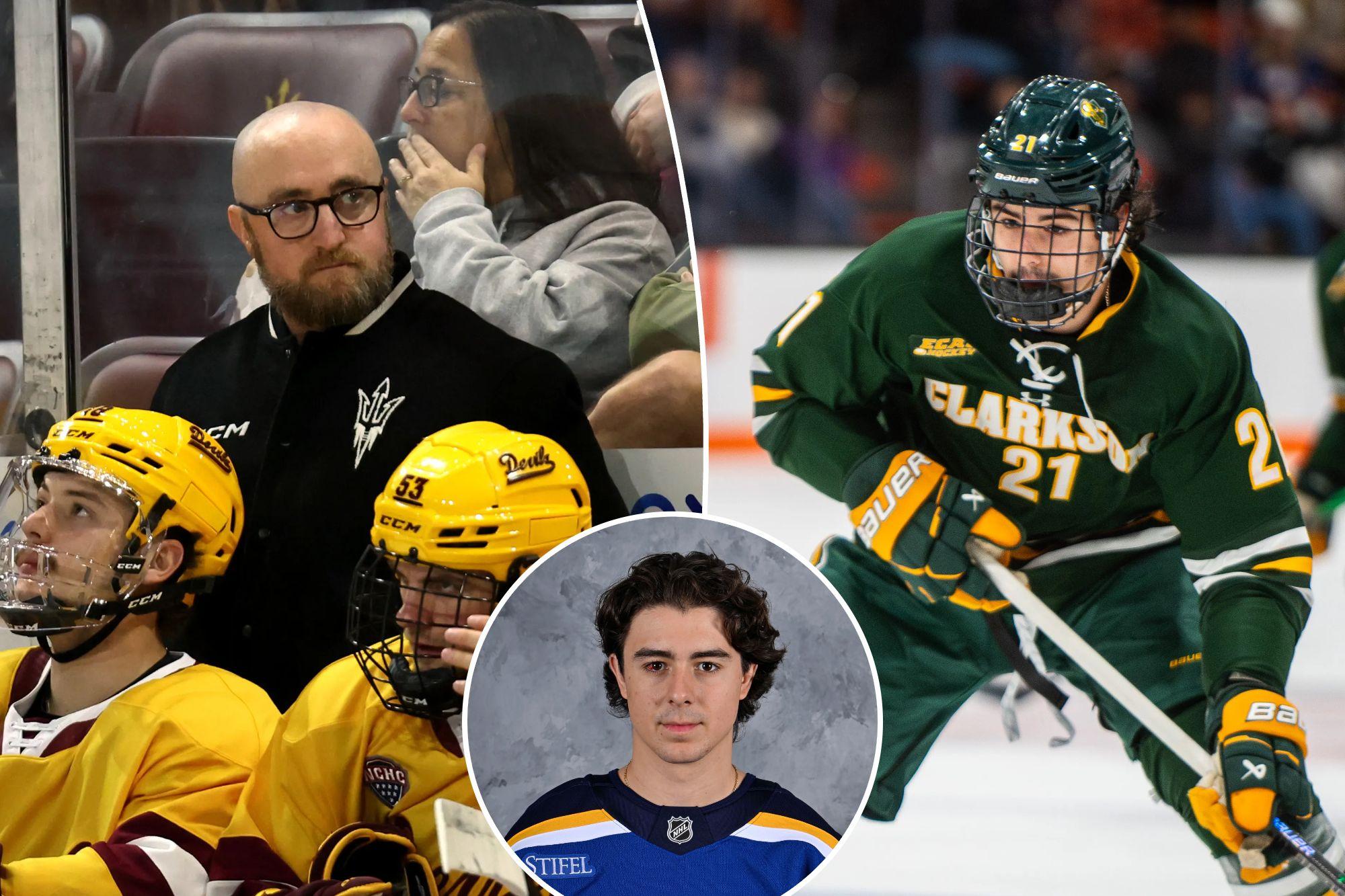
Make New York Post a Preferred Source Seven players on the Arizona State University hockey team have called on the school’s president to put the coaching staff on administrative leave and allow outside investigators to probe the workout that left defender Matthew Mayich on life support with no chance of recovery.
The damning 26-page letter, obtained by several media outlets, was sent to university president Michael Crow by seven current players and disputed numerous findings by ASU’s internal review of the Aug. 20 workout and alleges that head coach Greg Powers downplayed the severity of Mayich’s situation.
The letter disputes that Mayich received proper hydration during the workout and claims he did not receive adequate medical care after he collapsed.
It also states that Powers had downplayed Mayich’s condition to ASU players initially, allegedly saying that he only needed an IV after suffering “just a little head stroke,” according to The Athletic.
The letter was sent to the university anonymously through attorney Tim Casey due to concerns that players would face retaliation from Powers and his coaching staff, and it noted that additional teammates also wanted to share their views on the situation but feared retaliation.
“We should not have to choose between telling the truth about August 20 and keeping what we have worked our whole lives for,” the players wrote.
“These guys saw a friend and teammate go down. And now he’s in a vegetative state and he’s not going to recover. They want the truth to come out,” Casey told ESPN separately from the letter. “They want to make sure this never happens again.”
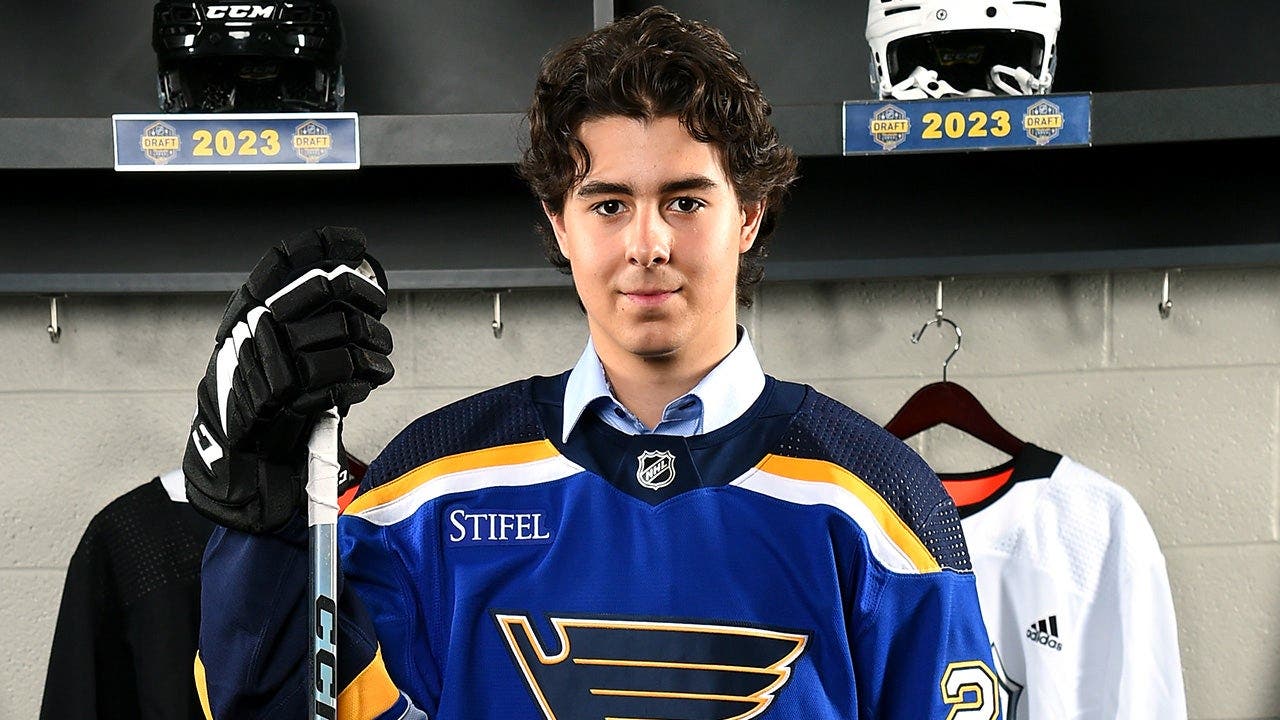
Mayich collapsed on Aug. 20 following a preseason workout conducted by Tim Ziesel, an ex-Green Beret, and suffered exertional heat stroke that caused a lack of oxygen to reach his brain, his family attorney Rob Carey explained.
Mayich, who had transferred to ASU from Clarkson University, did not have any preexisting medical conditions.
An internal review found that the coaching staff had not vetted the training plan for the workout, but the report did not identify anyone responsible for the lapses or provide measures for accountability.
In the letter, players pushed back on several claims from the university’s internal review, including that there was a water break roughly 20 minutes into the workout. Players said that their water break came 35 to 45 minutes into the workout that lasted approximately 75 minutes and alleged that it was mere seconds for them to hydrate.
The letter also stated that only the first finishers of a bear crawl drill got water during the break, which accounted for about eight players.
“Matthew showed signs of distress earlier, in the bear crawl and the buddy carry, well before the medicine ball task during which he collapsed. At the talk before the final event he was struggling to stand and leaning on a teammate, in front of Ziesel, the coaches, and the trainer,” the players wrote.
”No one at ASU properly monitored him during the workout and no one intervened.”
According to players, Mayich was kept in the direct sun for several minutes before he was eventually moved to shade, and there was no cold water immersion tub or ice chest on the field, a requirement under university policy.
When an ambulance left with Mayich, Powers allegedly told the players that they were “closer to making the Frozen Four because of the workout and Matthew having pushed himself to the maximum.”
The following day, Powers told them that Mayich would be fine, and the team practiced.
“From what we could tell, at no point did Coach Powers seem to appreciate the severity of the situation,” the players wrote.
The players refuted how ASU’s internal review characterized the acclimation process for Mayich, who, according to the letter, participated in workouts the week before that had roughly 15 minutes of outdoor activity and included water and rest breaks in climate-controlled rooms in between.
“The athletic department, the compliance office and the administration should have produced this report. Instead, the players did,” Mayich family’s attorney, Rob Carey, told ESPN. “Much of what the players describe is new to us, and it is far worse than we knew.”
In their letter, the players have called on the university to confirm in writing that they will not lose scholarships, playing time or roster spots for taking part in any investigation, which they’ve also called on an outside agency to conduct.