To play this video you need to enable JavaScript in your browser.This video can not be played
Aviva boss says it 'doesn't make sense' to be building homes in flood zones as risk increases
Homes are being built today that could become uninsurable in the future due to the risk of flooding, the boss of insurance giant Aviva has said.
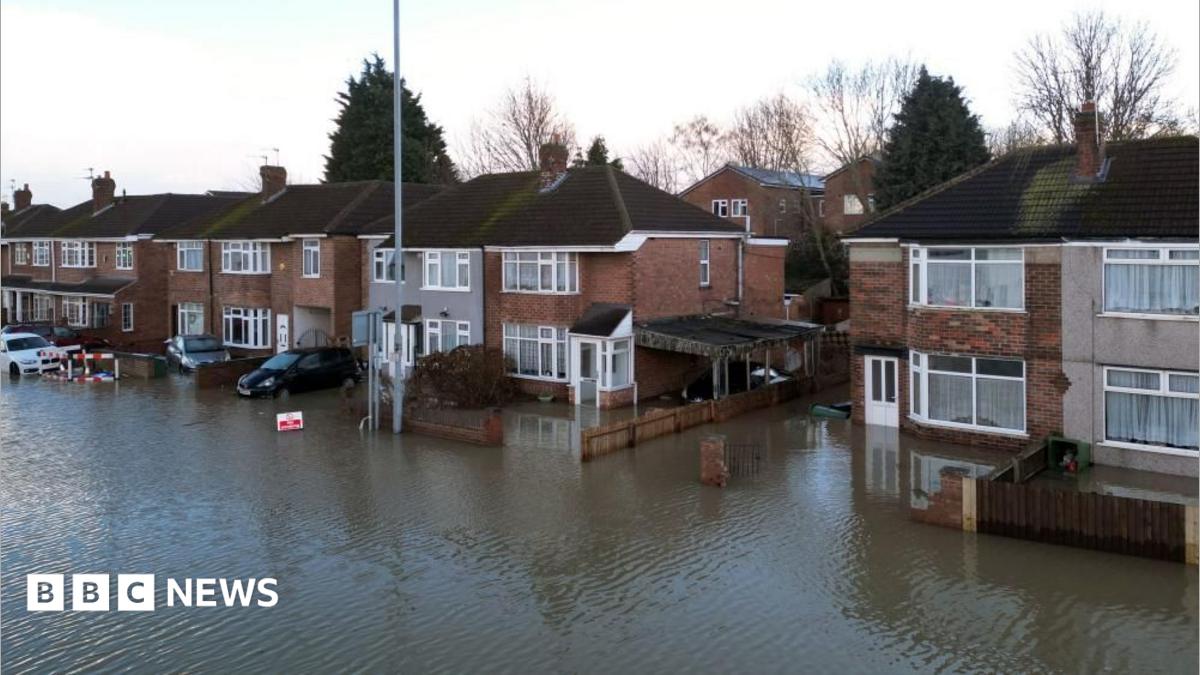
Amanda Blanc said the risk of flooding is "absolutely increasing", but based on current building patterns 115,000 new homes will be built in flood zones in the next decade.
"That doesn't seem to me to make sense. We need to think about where those homes are being built," she told the BBC.
About 6.3 million homes and businesses in England are at risk of flooding, according to the Environment Agency, and Aviva research found one in nine homes built between 2022 and 2024 are at medium to high risk of flooding.
Blanc told the BBC's Big Boss Interview podcast that England was "for sure" building homes that might be uninsurable at some point in the future.
"It's very well known where these flooding areas are. Let's think very carefully about homes that are being built."
Blanc said construction that borders those flood zones also needs a different approach.
"You can do all sorts of different things to your property to make it more or less vulnerable to flood," she said.
According to Aviva's research, nearly a third of new homes built in 2024 will be at risk of some flooding by 2050, and one in seven would be at medium to high risk of flooding as extreme weather becomes more acute.
Earlier this year the Met Office estimated that with current levels of global warming, record-breaking wet winters like the one experienced in the UK in 2023-2024 have gone from once in 80-year events to once in 20-year events.
The BBC has approached the government for comment.
Image source, PA MediaImage caption, Homes in Loughborough were hit by floods in January last year
In a wide-ranging interview, Blanc urged the government to avoid policy "kite flying" ahead of Chancellor John Healey's first Budget on 28 October.
Aviva is a major UK private pension provider, and Blanc said speculation over the last couple of Budgets about changes to pensions led to a significant increase in withdrawals.
"Effectively we saw in the last year 30 times the normal withdrawal from pensions that we would normally see, which is clearly something which customers may regret afterwards because once you take your tax-free lump sum out, you can't put it back in," she said.
"So we would say be very, very thoughtful about the things that you are testing, thinking about."
The few policy announcements ahead of the Budget so far have included a scheme to help first-time buyers get on to the property ladder, and a commitment from Healey to deliver a "new age of industrialisation" for the UK.
Big Boss Interview: Aviva's Amanda Blanc
Amanda Blanc tells Sean Farrington that we are building homes that could become uninsurable in the future due to the risk of flooding - and talks about how she approaches leading a company.
Listen on SoundsBlanc said Aviva was "ready with capital" to invest in infrastructure, pointing out that the company already invests more than £100bn in the UK, £35bn of which goes into infrastructure, from hospitals to schools to windfarms.
"We've got that capital. We want to invest, we're a big UK employer. We want to invest in UK infrastructure. It provides good returns for our pension holders and for the members of those pension schemes," she said, but added detail was needed to turn it into reality.
Asked about the current debate about the pension triple lock, which means the state pension rises by the highest of either average wage increases, inflation or 2.5%, and whether the government is looking to change that, Blanc said it was not for her to say what should happen.
But potential lower annual increases to pensions if the triple lock is changed would have knock-on effects, she added.
"If you've got a lower state pension then you need a higher private pension, don't you? So you need to think about that balance," Blanc said.