play Live Sign upShow navigation menuplay Live Click here to searchsearchSign upEconomy|Global Energy CrisisIraq looks for oil export alternatives to the troubled Strait of HormuzThe continued blockade of the Strait of Hormuz has forced Iraq to look for alternatives to export its oil.
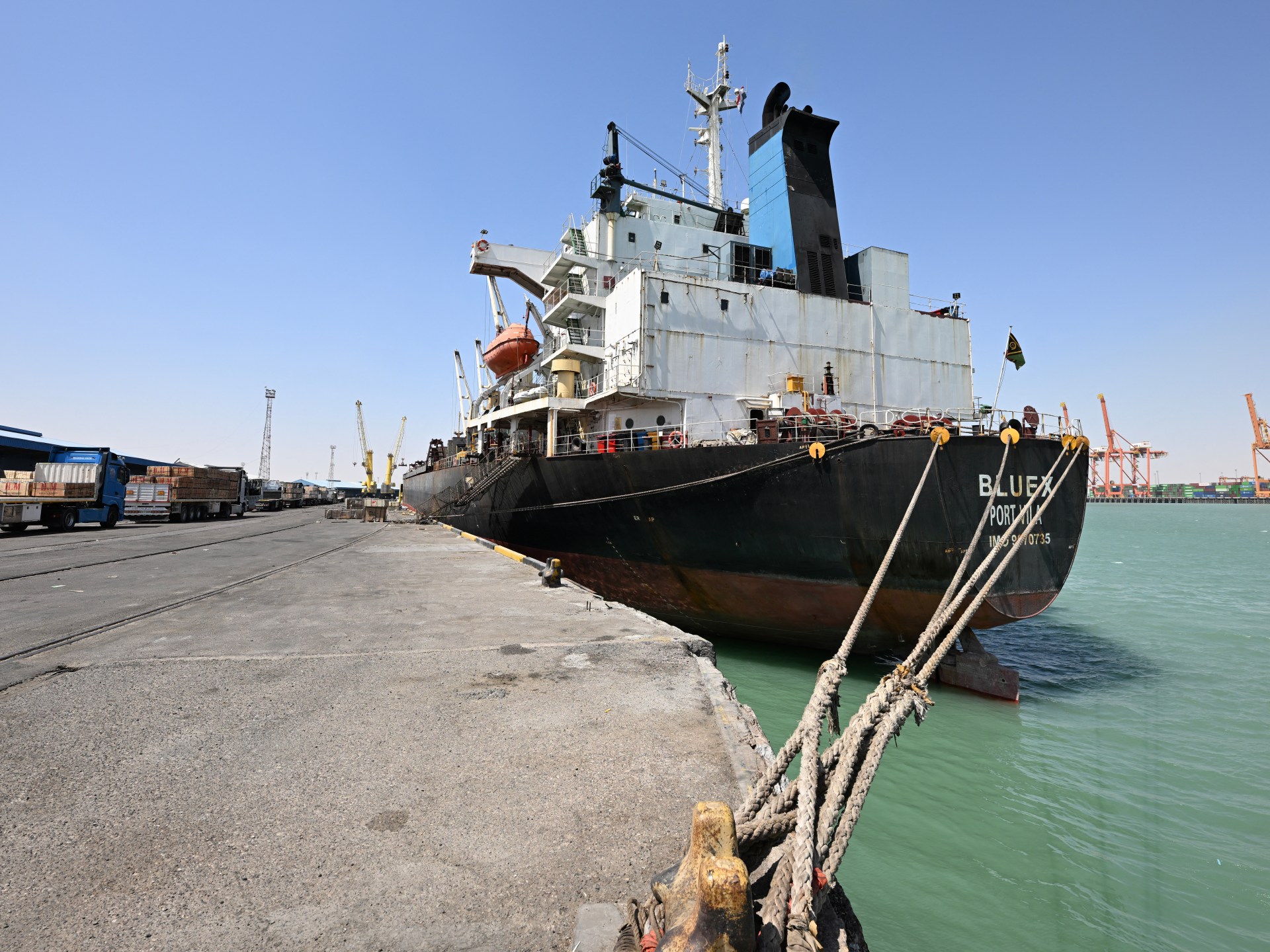
xwhatsapp-strokecopylinkgoogleAdd Al Jazeera on GoogleinfoThe bulk carrier Bluex docked at the port of Umm Qasr in southern Iraq, September 17, 2026 [AFP]By Waleed IbrahimPublished On 28 Sep 202628 Sep 2026In his speech at the United Nations General Assembly (UNGA) on Friday, Iraq’s Prime Minister Ali al-Zaidi spoke about the challenges his country has faced amid the ongoing war between the United States and Iran.
The closure of the Strait of Hormuz has cut off Iraq’s sea-based trade, including oil exports – a lifeline for the country.
Iraq has been unable to export about 90 percent of its oil via the Gulf and has lost $60bn in oil revenues since the war began.
“We are watching with concern the fallout over shipping and maritime freedom in the Strait of Hormuz, which has triggered a crisis of rising global oil price,” al-Zaidi told the assembly.
It is evident that the financial crisis caused by lost oil receipts has presented the Iraqi government with a mountain of challenges.
Oil revenues make up about 90 percent of Iraq’s federal budget and the decline in exports has impacted the government’s ability to pay salaries and prompted protests in Baghdad.
The Iraqi government is looking at a range of austerity measures to deal with the deficit, but they are unpopular with the population.
Al-Zaidi suggested that boosting oil production in the coming years and diversifying export routes could increase government revenues. That could be achieved by developing existing export channels, such as the Iraq–Turkiye Pipeline (ITP), or establishing new ones with Jordan and Syria.
But none of the proposals provide a quick solution to Iraq’s economic woes, with the Strait of Hormuz – for long the main gateway for Iraqi oil to the rest of the world – remaining effectively closed for the foreseeable future.
Iraqi political and security analyst Sarmad Al-Bayati told Al Jazeera that the lack of quick solutions for Iraq’s oil export conundrum is a major problem for the country.
“At present, the only option is to export through the Strait of Hormuz, which depends primarily on the situation in the strait,” Al-Bayati told Al Jazeera.
“Other alternatives, such as oil exporting routes through Syria or Turkiye, or even future plans to extend a pipeline through Jordan, are unrealistic and impractical at the moment, offering no real solutions to Iraq’s current crisis if the situation remains as it is in the strait.”
Iraq has relied on inefficient ship-to-ship transfers to get some oil out via Basra and other Gulf ports, with small boats carrying cargo through the Strait of Hormuz under US military protection.
Ali Nazar, the head of Iraqi Oil Marketing Organisation (SOMO), told a recent session in the Iraqi parliament that Iraq’s oil export capacity was 4.2 million barrels in September, but actual average exports were much lower at 2.5 million barrels. Before the crisis in the Strait of Hormuz, Iraq was exporting 3.5 million barrels per day.
SOMO is offering discounts of $26.5 for each barrel for medium oil and about $28 for heavy oil, he added. Despite that, the company is struggling to find buyers due to continued attacks on vessels transiting the strait.
“It isn’t an easy task. It is extremely difficult. It requires high-level coordination with shipping companies,” Nazar said. “The competition is very intense. Kuwait and Qatar have offered larger discounts, reaching up to $35 per barrel.”
Iraqi oil ministry spokesman Salim al-Rikabi said that 70 million barrels of oil were exported from Iraq in August, with revenues of around $4.5bn.
An oil ministry source told Al Jazeera that this was only oil exported from Iraq’s southern oil fields that went through Hormuz.
Iraq continues to export crude through Turkiye using the Iraq–Turkiye Pipeline (ITP). Basra Oil Company manager Bassem Abdul Karim recently said that 250,000 barrels of oil were being transported daily by road from Iraq’s southern oil fields to a storage facility in Kirkuk in northern Iraq.
With sea routes still largely blocked, there are plans to raise volumes to 750,000 barrels.
Last month, Iraq and Turkiye signed a one-year extendable agreement to export at least 750,000 barrels per day through the ITP to the Turkish Mediterranean port of Ceyhan, marking a significant step in diversifying Iraq’s export routes.
But industry experts say the Strait of Hormuz remains the only viable long-term solution for Iraq to overcome its financial burden.
“Honestly, Iraq has lagged far behind in finding export alternatives before the crisis in Hormuz began and failed to account for the possibility that it might one day lose its ability to export through the Strait of Hormuz,” Hassan Hafidh, a former OPEC spokesman and specialist in oil and gas affairs, told Al Jazeera.
“All the other alternatives the Iraqis are discussing will not solve their export crisis and the Strait of Hormuz remains at the current time the only way for Iraq to ship the quantities that secure the revenue that Iraq needs.”
Iraqi Oil Minister Basim Mohammed Khudair told parliament last week that the situation in the Strait of Hormuz remains highly unstable and tense.
Iraq could face a sudden blow to its ability to export limited amounts of crude at any time with Iran and the US no closer to reaching a deal to end the war and reopen the strait.
“Even if we can export three million barrels a day right now, there are no guarantees we can sustain this level due to the unpredictable future of the Strait of Hormuz,” Khudhair said.
“If the war drags on, exports will drop. The entire import and export operations hinge on one vital factor, safety in the strait.”