Make New York Post a Preferred Source Who owns Wall Street’s “Charging Bull” statue? Who knows!
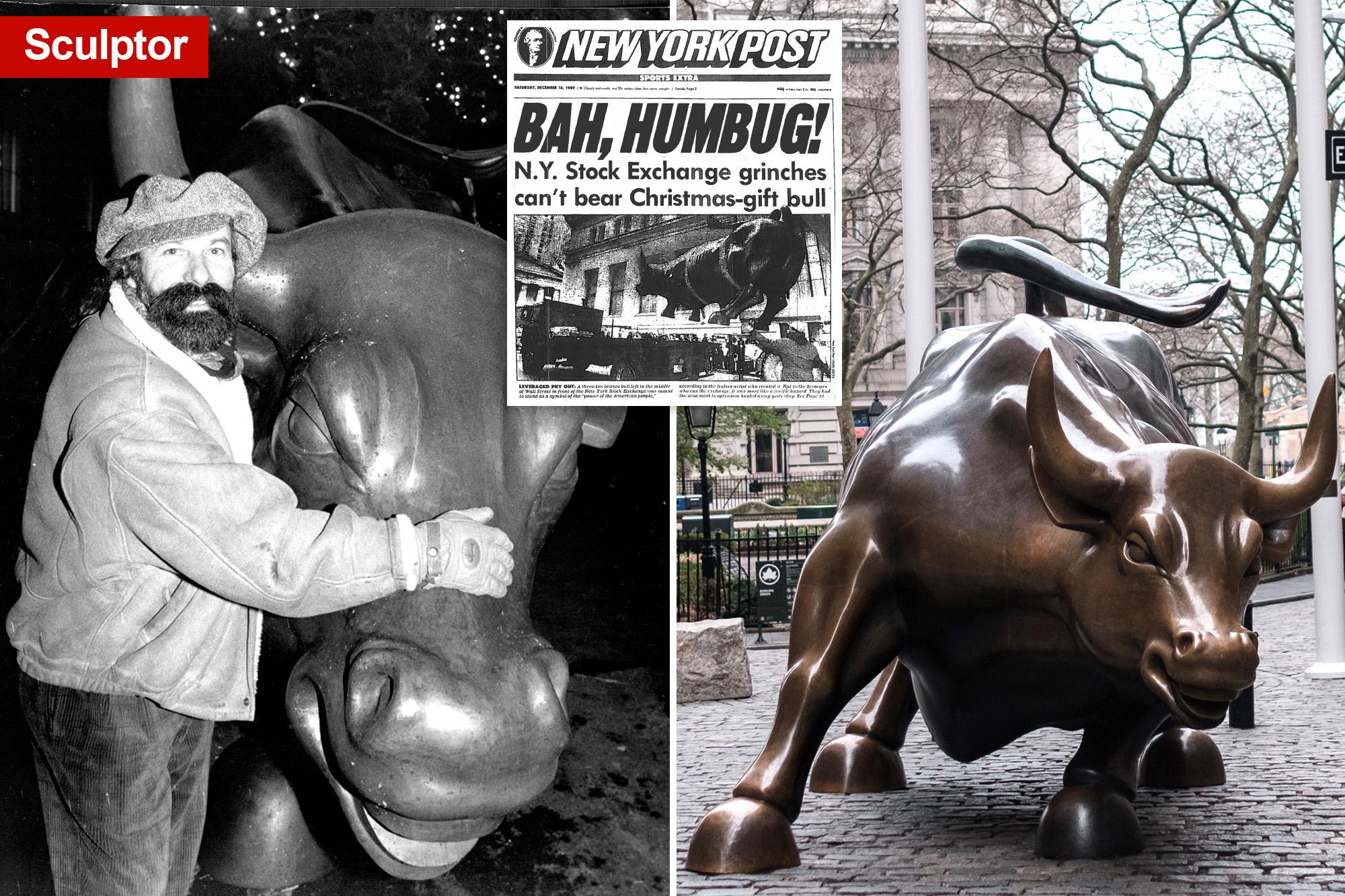
Nearly four decades after Italian-American sculptor Arturo Di Modica illegally plopped the 7,100-pound bronze bull outside the New York Stock Exchange, its ownership has become shrouded in mystery.
The famous bull — which draws scores of tourists to rub its famously shiny rear for good luck — was reportedly sold by Modica to British billionaire investor Joe Lewis in 2004 on the condition it couldn’t be moved, according to the The City Reporter, which first reported on the mystery
However, Lewis’s representatives say the family does not technically own the massive beast, which sits in its agreed-upon home in Bowling Green.
Jessi Blakley, a spokesperson for Lewis’ investment firm Tavistock Group, told the outlet the investor’s family owns the original cast and rights to reproduce the sculpture. But “the family does not own that bull,” Blakley said.
Lewis, whose family trust controls much of London’s Tottenham Hotspur soccer team, dodged prison for his insider trading conviction after claiming he may die behind bars due to his “frail” condition. President Trump has since pardoned him.
The city reportedly does not own the bull either — with a Parks Department spokesperson telling The Post the agency does not consider the statue part of its permanent public art collection and does not take responsibility for its upkeep.
The city maintained the sculpture from 1999 to 2004 with Di Modica’s permission and support from a charitable donation by J & R Music World, a massive electronics and music store located in Lower Manhattan.
The “Charging Bull” has no official landmark designation, so it lacks the typical preservation protections of other statues, like the Christopher Columbus monument at Columbus Circle.
The question of the bull’s ownership grew murkier after Di Modica died in 2021, with his estate’s attorney, Gaetano G. D’Antona, telling the City Reporter that he does not know who now owns the statue.
Di Modica copyrighted the work in 1998, more than a decade after he created the more than $300,000 sculpture to celebrate Americans’ strength and determination following the 1987 stock market crash.
He sued Random House in 2009 over a book cover depicting the statue and later blasted the city for placing a statue called “Fearless Girl” depicting a child in front of the bull — arguing it changed the meaning of his work.
Steven Hyman, a lawyer for Di Modica during that dispute, told The City Reporter he believed the sculptor held the copyright and had an informal arrangement with the city for the bull to stay put in Bowling Green.
A spokesperson for the Downtown Alliance, the nonprofit that manages the Lower Manhattan business improvement district, told The Post that while the group does not know who technically owns the bull, its members “clean it the best we can,” without a formal agreement in place.
Di Modica dropped the 16-foot-long bull sculpture outside the New York Stock Exchange without a permit just before Christmas in 1989.
The exchange quickly paid to have the bull removed, and it was tossed in an impound lot in Queens until Bowling Green Association chairman Arthur Piccolo spotted the statue on the front page of The Post — the copy of which still hangs in Piccolo’s office.
“it was 1989, we used the phone books back then. I saw a studio Di Modica at 54 Crosby Street, and I called,” he told The Post.
Piccolo tracked down Di Modica and convinced the sculptor to visit Bowling Green, a small, historic public park in the Financial District, to see if it could be the right place for the bull’s perch.
After coming to an agreement with then-Parks Commissioner Henry Stern and Mayor Ed Koch, the enormous sculpture was hauled downtown to Bowling Green in December 1989.
Piccolo said that he didn’t think it mattered who owned the bull, 37 years later.
“It’s the most popular single tourist stop anywhere. It’s here, it’s here,” he said.
The bull has faced numerous graffiti attacks, including during the Occupy Wall Street movement. In 2019, climate activists poured fake blood all over the statue and climbed it.
Its horn was also damaged and later repaired by Di Modico after a man wielding a metal banjo struck it.
Excited crowds of tourists were still lining up for a chance to touch the Charging Bull when The Post recently visited the piece of art.
Argentinian tourists Stefania and Daniel visited the sculpture with their two boys to get some good fortune before jetting back home.
“I have seen it in the movies and in the pictures of people that have come to see it,” Stefania said. “We know it brings good fortune,” Stefania added.
Akash Bhandari, 26, and Kushan Patel, 25, two students visiting from Dallas, Texas, waited in line for more than 40 minutes to take a picture under the bull with their pal and city guide, Yash Parmar, 28, from New Jersey.
“I’ve heard it’s good luck and you’ll get more money,” Parmar said. “At the end of the day, money is what matters.”
Blakley and attorneys previously representing Di Modica did not immediately respond to The Post’s requests for comment.