@glennganges Published March 10, 2026, 11:30 a.m. ET Where to Stream: Eloá the Hostage: Live on TV Powered by Reelgood More On: true crime Stream It Or Skip It: ‘Friends Like These: The Murder Of Skylar Neese’ On Hulu, A Docuseries About A Teen Who Was Killed By Her Best Buddies Stream It Or Skip It: ‘The TikTok Killer’ On Netflix, A Spanish Docuseries About A Missing Woman, The TikToker She Traveled With, And His Dark Past Stream It Or Skip It: ‘A Friend, A Murderer’ On Netflix, A Danish Docuseries About When A Member Of A Friend Group Is Found To Be The Perpetrator Of Heinous Crimes ‘Murder In Glitterball City’’ Directors Fenton Bailey And Randy Barbato Address The Doc’s Chilling Ending: “Both Should Be In Prison” Netflix’s onslaught of true crime content continues with Eloá the Hostage: Live on TV, a documentary about a harrowing 2008 incident in Brazil that found a disgruntled man taking hostages, among them a young woman who he believed was his romantic partner. The situation was dicey, the perpetrator was armed, and negotiations for the release of the kidnapped became protracted. But in interviews with family members, journalists who covered the incident, and representatives from law enforcement, Eloá the Hostage: Live on TV considers how the whole thing grew to such unimaginable size, actually ending the kidnapping got knocked down the list a few pegs. The hostage crisis continued for hours, then days, and then became a national story. “The media, they didn’t want it to end.”
The Gist: On October 13, 2008, Eloá Pimentel and a few friends from school arrived at her family’s home in a housing complex in Santo André, São Paulo. Nearly four days later, federal police carried Eloá from the apartment. What occurred in between became a media sensation in Brazil – “It was basically a reality show,” says one observer in Eloá the Hostage: Live on TV – and ultimately brought harm to the kidnapped teenager at the center of it all. But questions remain about why Eloá became a victim instead of someone who was rescued, the scattershot police response to the incident, and the swirling news media’s significant role within it.
Eloá the Hostage features interviews with Douglas and Ronickson Pimentel, Eloá’s brothers, as well as her parents, Ana Cristina and Everaldo, as the family describes a tense scene at the apartment when they realized Lindemberg Alves, a 22-year-old friend of Douglas’s, had barricaded himself inside with Eloá, her friend Nayara da Silva, and two boys from school, Victor Lopes and Iago Vilera. Lindemberg had a pistol, and a bag of bullets. “Back off or I’ll shoot you!” he shouted through the door, and by 9pm, police had arrived.
From the start of hostage negotiations, held by phone and with some line of sight through a bathroom window, Lindemberg was extremely erratic. While it was true he had shared a connection with Eloá, which the doc makes clear with earlier, puppy love-type passages read from her diary, the girl’s parents had forbidden their relationship. Now, Lindemberg was threatening to harm Eloá, the other hostages, and himself. The documentary’s on-screen clock continues to tick. 19 hours as a hostage. 27 hours. 43 hours. The media had joined a massive police presence on the scene, with reporters and cameras and hovering choppers, and every neighbor for blocks was out in the street, watching the negotiations unfold. But besides Lindemberg’s inconsistent statements to police, there was also implicit danger. “If she’s not mine, she’s not anyone else’s.”
Was there a line crossed by the media, in its clamor to feed a legitimately terrible story with more sensational elements? Eloá the Hostage interviews Luiz Guerra, a reporter who phoned the apartment and interviewed Lindemberg Alves live on air. What about the police? Were they too cautious with their negotiations? Should snipers have shot Lindemberg when they had the chance? Eloá the Hostage also interviews representatives of GATE, the federal SWAT team who coordinated the heavy police response. And finally, what about Lindemberg’s state of mind? Did the scope of the coverage prop him up as a figure of importance, when the focus should have been on the safety of Eloá and his other hostages? In retrospect, at least one observer thinks so. “He probably thought, ‘Oh my God! I’m a star now!”
What Movies Will It Remind You Of? The media meddling in a hostage standoff? It happens! Netflix also streams iHostage, a Dutch film that dramatizes a real-life crisis and standoff that occurred in an Amsterdam Apple Store. And the 2022 documentary Gladbeck: The Hostage Crisis, also on Netflix, analyzes how the news media complicated a dangerous situation in 1988 West Germany, when bank robbers communicated with reporters after taking hostages during their escape.
Performance Worth Watching: Eloá’s brothers, Douglas and Ronickson Pimentel, are the strongest interviews in Eloá the Hostage. While Douglas became integral to police representatives’ negotiations via phone with Lindemberg, Ronickson expresses lasting frustration and anger over how the hostage crisis played out. Where was his sister’s voice in the crush of media coverage? “Why do people need to romanticize the bad guy?”
Memorable Dialogue: When Douglas Pimentel spoke with Lindemberg Alves, he tried to get him to release Eloá and surrender peacefully. It didn’t work. “It’s so sad. You are on the other end of the line. You hear your sister being beaten by a guy who used to be your best friend. It doesn’t add up. That’s something I’ll never, ever forget. I will never forgive him for what he did.”
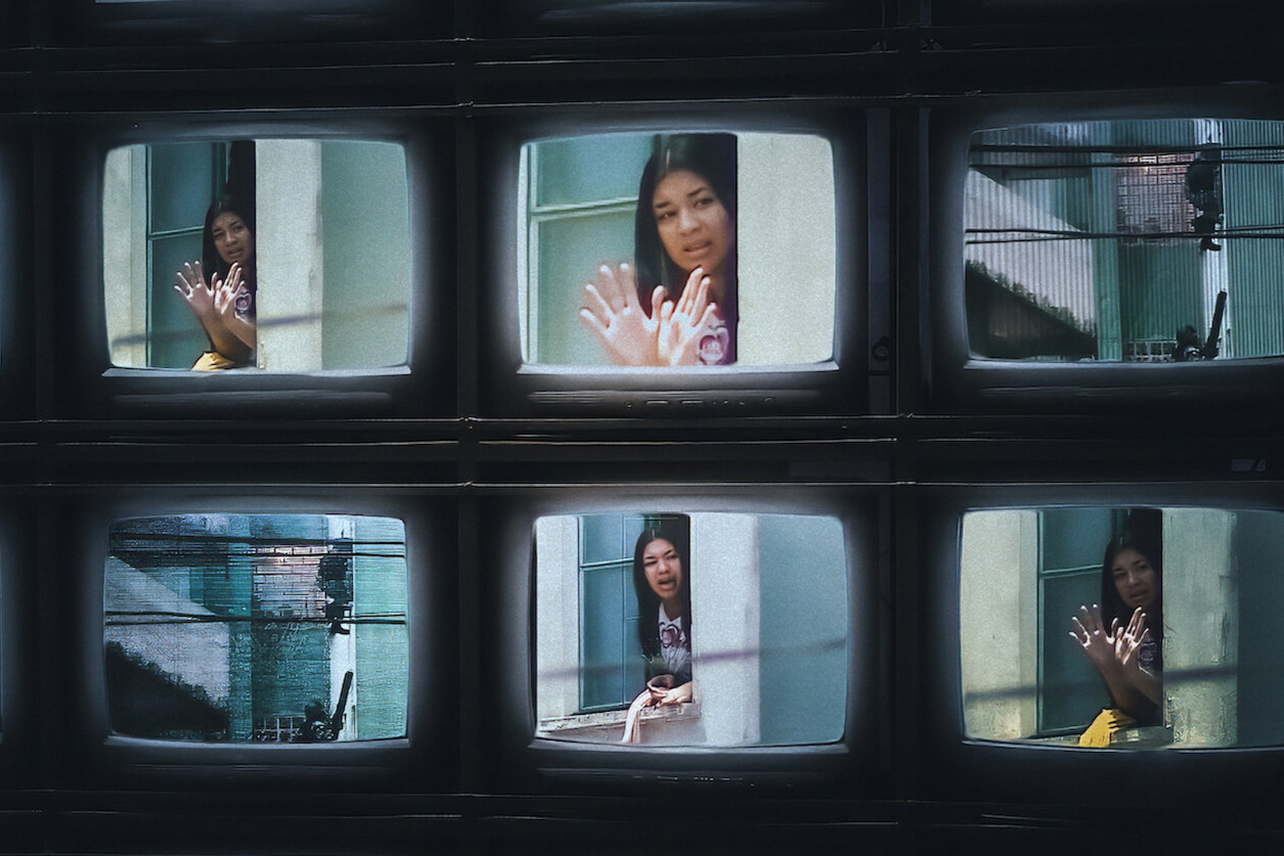
Our Take: Eloá Pimentel’s ordeal as Lindemberg Alves’ hostage really did play out “Live on TV,” so this documentary has access to and utilizes a huge amount of news footage. The camera lingers on the young woman as she appears at the apartment’s window, preaching calm with gestures while collecting an order of food. Other footage, this bit in black-and-white, takes the entire telephone back-and-forth between Eloá’s brother Douglas and Lindemberg, the former pleading for the release of his sister while the latter stays unwilling. Eloá the Hostage: Live on TV even includes nearly the entirety of a live interview between Lindemberg in the apartment and a reporter on television. But while this level of access is great for a documentary’s authenticity, it also made us wonder whether it positions this doc at a place similar to where the media was during the actual incident. Watching extended parts of the crisis play out feels as “live” as it must have during those four days of coverage back in 2008. We were anticipating a result, a break in the standoff, but it was elusive.
This could be part of the filmmakers’ point. That often, despite their constant presence at the hostage crisis scene, media outlets were mostly pointing their cameras at a bathroom window or blank apartment retaining wall, hoping for some action, or even willing it to occur. As it combines archival footage with reenactments of the crisis as the hours of tension mount, Eloá the Hostage becomes so engrossed, it has very little time for the breaking point – gunshots, and a breach by authorities – that ended the incident but spawned lots of questions. In bringing all of this up again, in recreating it and letting loved ones once again live through it, we’re not sure the doc provides them with anything new or substantive.
Our Call: STREAM IT, because you’ll be on Eloá’s family’s side in this true crime tale. No one could have predicted her kidnapping. But neither the hostages nor their loved ones deserved to be inserted into a larger media narrative that, when combined with the cops’ attempts at control, led to frustration and confusion during and after the incident.
Johnny Loftus (@johnnyloftus.bsky.social) is a Chicago-based writer. A veteran of the alternative weekly trenches, his work has also appeared in Entertainment Weekly, Pitchfork, The All Music Guide, and The Village Voice.