play Live Sign upShow navigation menuplay Live Click here to searchsearchSign upEXPLAINERNews|US-Israel war on IranWhat are the Ukrainian drone interceptors sent to counter Iranian attacks?Ukraine has battle experience with Iranian-made Shahed drones and has mass-produced cheap interceptors.
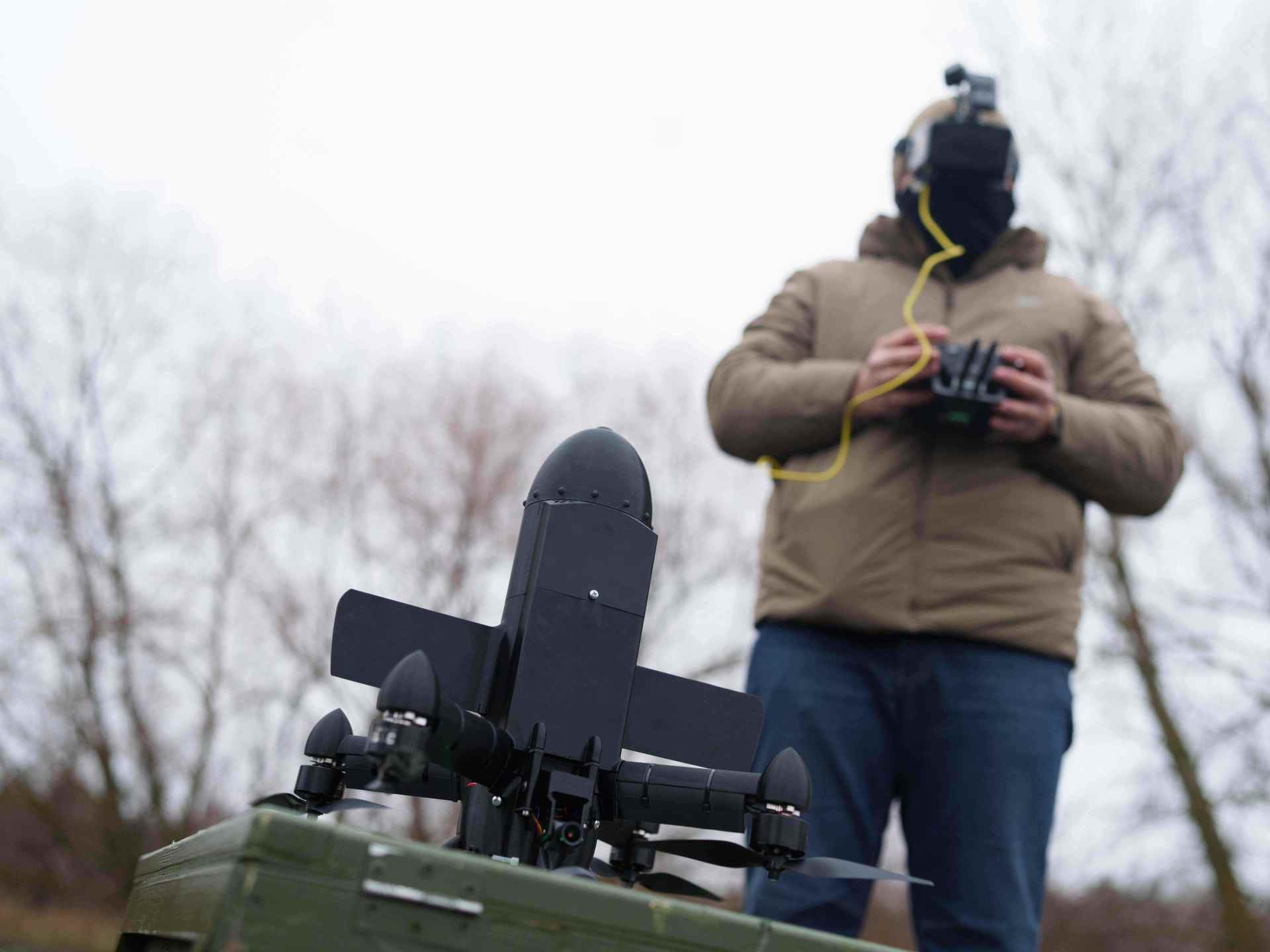
Listen to this article | 9 minsinfoA serviceman prepares an interceptor drone from the General Cherry company before a flight in Ukraine on December 4, 2025 [Evgeniy Maloletka/AP]By Shola LawalPublished On 10 Mar 202610 Mar 2026Click here to share on social mediashare2Share
googleAdd Al Jazeera on GoogleinfoUkraine has dispatched drone interceptors and military personnel to Jordan as Middle Eastern countries fend off Iranian strikes on infrastructure and United States military assets during the US-Israel war on Tehran.
President Volodymyr Zelenskyy confirmed that a Ukrainian team departed on Friday for Jordan, which has US military assets at its Muwaffaq Salti Air Base.
The move followed a request on Thursday from the US, Zelenskyy said, as Washington seeks cheaper technology for intercepting Iranian missiles targeting Israeli and US defence assets as well as other infrastructure across Qatar, Kuwait, Bahrain, Saudi Arabia and the United Arab Emirates.
At the moment, the US is using air defence systems such as Patriot missiles, Terminal High Altitude Area Defense (THAAD) batteries and Airborne Warning and Control System (AWACS) aircraft to intercept Iranian drones and missiles targeting its military assets in the region.
However, these types of systems are expensive, costing millions of dollars for each interceptor missile fired, and there are concerns that supplies of US interceptor missiles could run low.
Iran is deploying its cheap, domestically produced Shahed drones across the Gulf and is believed to have thousands in stock. These are the same drones it has supplied to Russia over the course of Moscow’s war on Ukraine. Kyiv, which has long sought more advanced US defence systems, has developed technology to mass-produce much cheaper interceptor drones to counter drone swarm attacks from Russia.
“Ukrainians have been fighting against ‘shahed’ drones for years now, and everyone recognizes that no other country in the world has this kind of experience. We are ready to help,” Zelenskyy wrote on X on Thursday, adding that Ukraine has asked for advanced US defence systems, such as the Patriot system, in exchange.
In a Monday post on X, Zelenskyy confirmed that 11 countries, including the US, Gulf and European countries, had requested Kyiv’s help and some requests “have already been met with concrete decisions and specific support”.
Here’s what we know about the Ukrainian drones the US and Gulf countries want to deploy:
Ukraine has been building thousands of low-cost interceptor drones to counter Iranian Shahed-type drones over the course of the Russia-Ukraine war.
After failing to receive enough high-end weaponry from its allies, such as US Patriot missile defence systems, Kyiv was forced to innovate in 2025. Now, it has become one of the world’s leading manufacturers of the “Shahed Killers”.
The cheap but powerful drones are designed to shoot down Russian attack drones before they reach their targets. They are operated by pilots tracking them on a monitor or wearing first-person-view (FPV) goggles. Each one is priced at about $1,000 to $2,000 – a fraction of the several million dollars it costs to manufacture, transport and fire a high-tech US interceptor.
Ukrainian manufacturers are producing thousands of them per month.
Analysts said the drones can counter a range of attacks but cannot intercept ballistic missiles. So far, they also require trained pilots positioned close to their area of engagement although manufacturers are now developing automated models.
There are several models that have been developed in Ukraine:
Russia has launched thousands of Iranian-designed Shahed drones at Ukraine, resulting in hundreds, if not thousands, of deaths and heavy infrastructure damage. Increasingly, they’ve been countered by Ukraine.
A New York Times analysis found that Russia sent about 5,000 drones into Ukraine in February and Ukraine downed 87 percent of them.
Iran, which has long supplied Moscow with weapons, has used the same models in its strikes on its neighbours as it faces heavy bombardment from the US and Israel. One drone hit Kuwait last week, killing six members of the US military, the Times reported.
Priced at about $20,000 to $33,000 each, the GPS-guided drones are about 3.5 metres (11.5ft) in length. They are loitering munitions and self-destructing vehicles mounted with explosive payloads and automated to blow up upon hitting programmed targets.
Moscow is believed to have incorporated its own elements into the Iranian design and now mass-produces thousands of the “kamikaze” models. Zelenskyy claimed in his X post on Monday that there were “Russian components” in the crashed remains of Shaheds that Iran has used on its Gulf neighbours.
The US has been supporting Gulf countries in intercepting Iranian missiles with expensive defence systems, including: