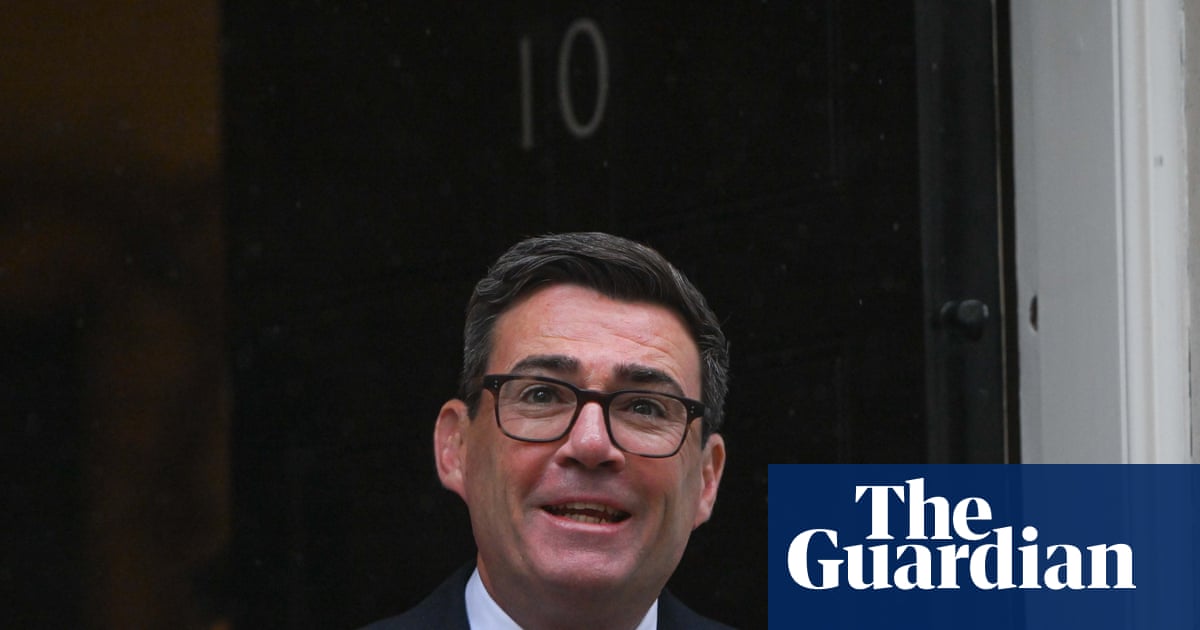
Andy Burnham is riding high ahead of the Labour party conference, with his party faithful excited by their uplift in the polls Photograph: Anadolu/Getty ImagesView image in fullscreenAndy Burnham is riding high ahead of the Labour party conference, with his party faithful excited by their uplift in the polls Photograph: Anadolu/Getty ImagesThe tricky tests awaiting Andy Burnham after Labour conferenceFrom a difficult economic landscape to decisions on oil and gas drilling, welfare spending and the Chagos Islands, we look at what’s on the horizon
Andy Burnham is riding high ahead of the Labour party conference after a successful first meeting with Donald Trump, and with his party faithful excited by their uplift in the polls. He plans to bring a message of hope and optimism to the autumn gathering in Liverpool, and will benefit from goodwill among members as he makes his first speech as leader on Tuesday.
However, the real tests will start to land from October onwards, with a difficult economic landscape, the ongoing impact of the war in Iran and domestic challenges to navigate. Here is what Burnham has to look forward to after the conference is over.
View image in fullscreenJohn Healey leaves 10 Downing Street. Photograph: Wiktor Szymanowicz/Future Publishing/Getty ImagesThis is the most difficult event on the horizon for Burnham, set for 28 October, as the global economic picture continues to look bad in the face of the Iran war pushing up energy prices and wider inflation. Burnham’s chancellor, John Healey, has little room for manoeuvre, with government debt interest payments rising and his headroom shrinking.
Big decisions on spending are likely to be put off until a bigger fiscal event in the spring, in the hope that the economic picture improves before then. But it will be difficult to maintain a mood of hope and optimism when Healey will have little good economic news to hold up. The best they can manage might be targeted help on the cost of living for those struggling the most with energy bills.
A key date will be 25 November, when the energy regulator announces the next price cap for January, as there are warnings that prices could have to rise hugely in response to surging gas costs. The government will also have to decide whether to extend the freeze on fuel duty, which is due to finish at the end of the year.
Some Labour MPs would like to see moves towards big wealth taxes to help plug the gap in the public finances, while Healey’s hands are tied by the manifesto promise not to raise income tax, national insurance or VAT.
This is an opportunity for Burnham to get some credit among pro-EU voters on the left and centre, if he can make some progress on closer ties with Europe. Building on work done by Keir Starmer’s administration, the UK is trying to break down more of the trade barriers caused by Brexit.
However, there are still key sticking points in the relationship, including rows over Brussels’s “made in Europe” policy prioritising procurement within the bloc, which will disadvantage the UK and others such as Canada and Japan. There is no fixed date for talks but movement is expected this autumn, possibly in the first two weeks of November.
View image in fullscreenZack Polanski meeting and greeting people on the streets of Holborn and St Pancras. Photograph: Andy Hall/The GuardianBurnham’s hopes of winning back more progressive voters lost to the Greens will be put to the test on 8 October in the Holborn and St Pancras byelection. Labour’s council leader candidate, Sagal Abdi-Wali, is pitted against Zack Polanski, the Green party leader, who lives in north London.
The party hopes Burnham’s bounce in the polls will be enough for them to hold on to this traditional stronghold, the former seat of Starmer. However, the Greens hope voters will be tempted by a free hit to make the government take notice of leftwing concerns and the lure of having a high-profile figure on the left representing them. If Labour wins convincingly, it will be a sign that Burnham is starting to make progress with Labour-to-Green defectors over issues ranging from Gaza to benefit cuts.
Burnham’s government has repeatedly signalled that it is more open to allowing new oil and gas drilling under existing licences in the North Sea than the previous administration. His energy secretary, Miatta Fahnbulleh, looked set to approve the Jackdaw field and later Rosebank, but these decisions have been delayed – some would say so as not to cause a row at Labour conference or ahead of the Holborn byelection.
When the green light comes through, expect widespread dismay from environmental groups and warnings that Burnham needs to take the climate emergency more seriously. He will get a chance to set out his thinking on the UK’s commitment to meeting its net zero target at the Cop31 climate change conference in Turkey in November.
One of the trickiest subjects for any Labour prime minister is welfare spending, which is particularly sensitive after Starmer was forced by his backbenchers to retreat from £35bn in disability benefit cuts. This autumn, a review by the minister Stephen Timms concluded that the disability benefit known as the personal independence payment (Pip) was not fit for purpose, while Alan Milburn, the adviser on health, has also conducted his review on getting young people off benefits and into work.
The government will decide in the coming months how to proceed with reforming the system, while trying not to antagonise either its MPs or voters. Burnham has signalled he is prepared to look at changes but in a “Labour way” that is aimed at helping people into work rather than making savings. At the same time, there will be pressure from the Treasury not to come up with any solution that leads to rising costs.
Burnham has made putting essential services under greater public control a key plank of his premiership but it remains to be seen whether his bold aims will survive the realities of office. The government will have to make a decision soon on what to do about Thames Water, which is due to run out of money this autumn. Full nationalisation could be expensive, especially if creditors challenge the terms of any government decision to tip the company into administration in order to take it over. The company, which has debts of £20bn, is now in effect being controlled by a group of 100 hedge funds and distressed-debt investors.
View image in fullscreenAn aerial view of Diego Garcia, the largest of the Chagos islands. Photograph: APBurnham was sitting next to Trump as the US president laid into the deal to give up sovereignty of the Chagos Islands to Mauritius, claiming it was a disastrous idea to lose control of a strategically important military base. The US president suggested the UK would reconsider its agreement to relinquish and lease back the base, and Burnham did not demur. But that leaves the prime minister and the UK government in the uncomfortable position of having to renegotiate or scrap a draft deal agreed by Starmer. It may not be his most pressing problem but it is a thorny international one that is taking up attention.
Burnham now has a wealth of data to show small boat arrivals and migration overall is reducing. But the issue is still going to be an extremely controversial one for the government this autumn, with Shabana Mahmood, the home secretary, set to finalise her package of changes to settled status very soon. Under the plans, she wants to make migrants wait longer before being eligible for settled status in the UK, which allows them to claim benefits and access NHS services.
The most difficult element is that she wants to apply these changes to people who are already in the country, alongside a series of other changes to the migration system, including forcibly deporting families who refuse to comply with removal orders. Mahmood has been consulting on some of her proposals and it is possible some of them will be watered down.