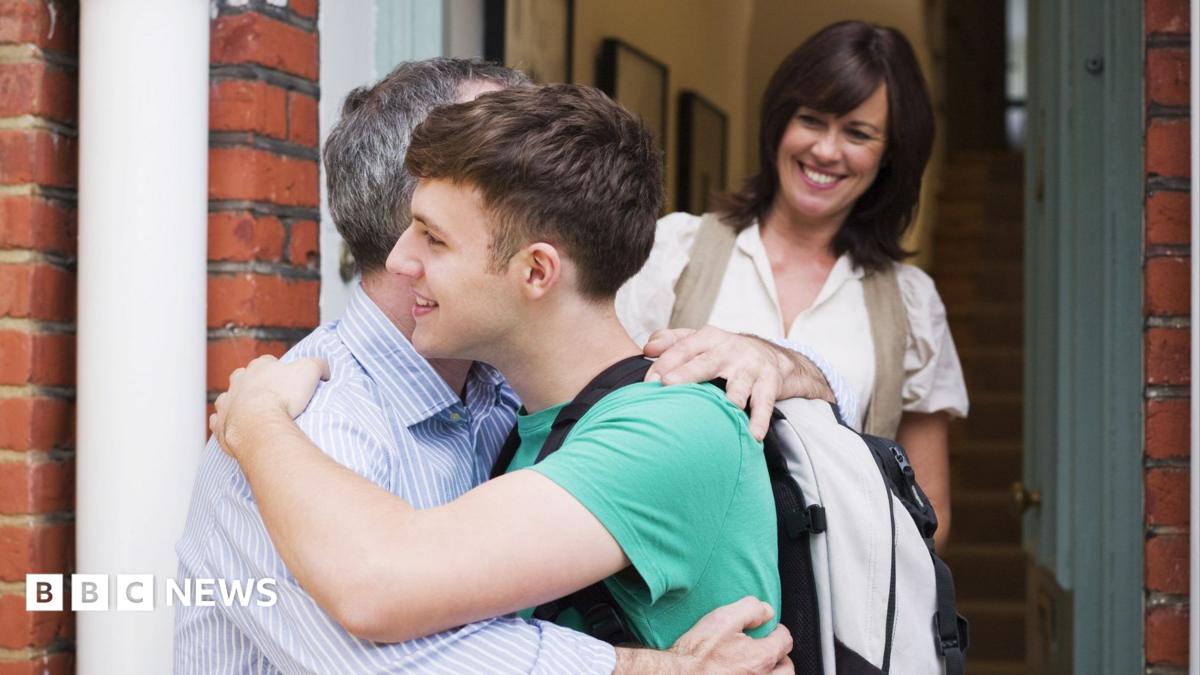
Image source, Getty ImagesByKirstie BrewerBBC NewsPublished1 hour agoLuke felt overwhelmed with both pride and grief after dropping his son off at university for the first time.
"It feels like a brutal adjustment," he says.
"After 18 years of seeing him every day and taking care of him, I miss him so much and I don't really know what to do with myself."
Like other parents we have spoken to, Luke (not his real name) and his wife have felt compelled to regularly check a Facebook group for parents and carers with children living in the same halls of residence, as well as a university-wide version with more than 2,000 members.
At first, being in these groups felt helpful for practical information, particularly in the weeks before his son headed to university, Luke says. But now they're feeding his anxiety.
"People will post things like: 'Is it normal to spend so much time in your room?'; 'I'm worried my daughter is struggling to make friends'; 'My child isn't replying to messages - how often are people hearing from theirs?'"
There have also been questions about Amazon parcel logistics, requests to borrow cereal bowls and what tog duvet other people's children were given.
Luke thinks these kinds of social media groups have fuelled his temptation to keep checking his son's location on a tracking app "to make sure he is going out enough and finding friends".
Because his messages and calls go largely unanswered, Luke will also watch videos posted on the university's social media accounts, hoping to catch a glimpse of his son among the throngs of Freshers. Other parents have sheepishly confessed they're doing the same.
Across universities, some enterprising parents have set up the sort of WhatsApp group chats you'd more typically find being used when children are at school. Only rather than asking after lost jumpers and what day PE is, these groups might be used to try to parent long-distance.
"Sometimes parents send their child to university and they're not even worried, but then these group chats create a worry that something might be wrong," says Rayyah Uddin, 20, a third-year student at the University of Nottingham.
She knows of WhatsApp group chats being set up by parents of first-year students at her university and has also seen parents use TikTok to share their worries about their child not making friends, and asking other parents for their help.
"These are issues the students should really be figuring out for themselves, and it is better if parents try and talk to their child rather than immediately jump to other parents," she says.
Not hearing from your child all the time isn't necessarily a cause for concern - "they might just be having a really good time and are getting absorbed into university life," Rayyah adds.
Parent social media groups can be useful, according to psychologist Charlotte Armitage, but not when they are used to share private difficulties, track movements or ask questions that the student is capable of asking themselves.
"Constant checking, tracking or intervening may soothe the parent in the short term, but it can inadvertently communicate to the young adult: 'I am not sure you can cope without me.'"
"Of course, where there is a credible safeguarding concern, a significant change in behaviour, or a known risk to their wellbeing, parents should act."
A big part of going to university is about being independent, says Manchester University student Archie Forde, 19, who has heard stories of parents "pinging phones at 3am and calling their kids 12 times a week".
He thinks parents turning to social media groups have "mostly fair concerns" but are going about things in the wrong way.
The groups can be "echo chambers where everyone just spins each other out about their kids", he says, and suggests having a proper conversation with your child about boundaries, before university starts.
Every family will have different ideas about what is overbearing, but a student shouldn't have the worry of choosing between "cutting back parents' communication and ruining that relationship, or responding to a flurry of texts at pre-drinks and detaching yourself from the social situation".
Image source, Archie FordeImage caption, Archie Forde, 19, says parents turning to social media groups are going about things in the wrong way
Writing a letter or sending a parcel - without the expectation of a getting a response - could be a good way to let your child know you're thinking of them, "without it feeling like a demand", says child psychologist Laverne Antrobus.
Perhaps negotiate a time to check in with them, "and be prepared to not always have long conversations," she says.
And when you do speak to your child, "make sure your curiosity is genuine, rather than half-informed by the surveillance you've been doing".
"Already knowing where they've been and what they've been up to makes for an unrewarding conversation with them and children are bright - they will know."
Rayyah says she looks forward to properly catching up when she goes home.
"If you've spent months being closely monitored it might feel as if you haven't really been away or gained any independence; it could feel frustrating."
Having seen three children off to university, Nichola McClellan wants to reassure parents that it does get easier. Based in Cheshire, she shares her experience of being an "empty nester" on social media.
"It's a huge emotional adjustment after years of your life revolving around your children, so we need to give ourselves time and permission to miss them.
"I think back to how lost I felt. I didn't know who I was without the kids.
"They're learning how to leave," she says, "but we're learning how to let go."
Rather than expect constant contact, Nichola sends "little no-pressure messages" on their family WhatsApp group.
"'Love you', 'proud of you' - things that don't require an answer."
They have a proper catch-up roughly once a week, and she has learned not to take it personally if she doesn't hear from them.
"Sometimes that is a really good sign, it means they're getting on with this new life you've spent all those years preparing them for.
"You don't stop being a parent when they leave home - but you do get the opportunity to rediscover parts of yourself that perhaps got a little lost along the way. There really is so much to look forward to."
Psychologist Charlotte Armitage shares her advice to help parents cope with this new stage of parenthood:
Think twice before you post on a parents' group Feeling anxious, bereft or excluded is normal, but those feelings don't always require action. Before posting on a group or stepping in, Armitage says ask yourself: "Is this a genuine safety issue? Have I given my young adult the chance to deal with it? Am I helping them become more capable, or managing my own anxiety?"
Steer clear of constant checking and tracking or intervening These may soothe you in the short term, but can inadvertently communicate to your young adult: "I am not sure you can cope without me." Of course, parents should step in when there is a safeguarding concern or risk to their child's wellbeing
The most valuable message you can send To help your child settle into adult life, Armitage says the most valuable message you can send is: "I am here if you need me and I believe you can do this."
Get in touchHave you been affected by the issues raised in this story?
Contact formContact formRelated topicsFamily & EducationUniversitiesStudentsMore weekend picksWhy more women carry the 'mental load' - and how couples can share it
I left my toxic mums' group because I'd had enough of being judged
Our family fell out. This is how we got back together
Why I left all my child's school WhatsApp groups