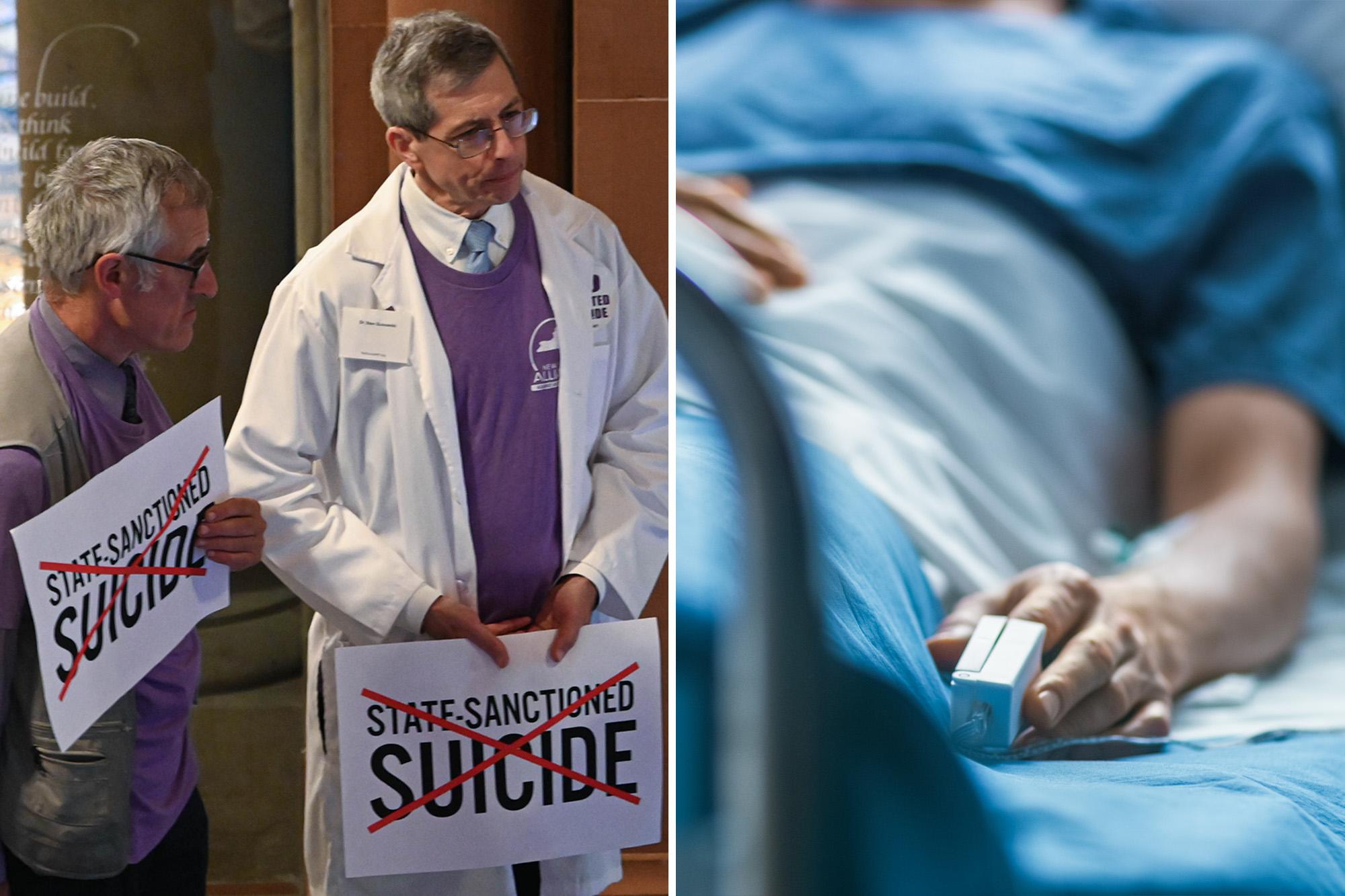
Add The New York Post on Google Approximately 20 terminally ill patients have chosen to end their lives under New York’s controversial new assisted suicide law — in just one month since the state program went into effect, according to an expert.
David Hoffman, assistant professor of professional practice in bioethics at Columbia University, estimated that 20 prescriptions for life-ending medications have been issued so far since the Medical Assistance in Dying (MAiD) program was enacted in August.
Hoffman based his findings on conversations with doctors, hospitals and organizations he works with, like the Completed Life Initiative, which has been involved in implementing the law.
“The state will have the data on a rolling basis. It’s an after-the-fact analysis,” he told The Post on Thursday.
But some lawmakers who opposed the “Medical Aid in Dying Act,” which took effect August 5, are already pressing for the state Health Department to release data about program participation they argue the public has a right to know.
“It is not good policy for New York to keep the public in the dark about how many people have requested and utilized assisted suicide,” upstate Republican state Assemblyman Andrew Molitor told The New York Sun, which first reported Hoffman’s estimate.
“The public should be told, at a minimum, what the person’s socio-economic status is, whether they have private health insurance or Medicaid, what was the terminal condition they were diagnosed with, when the prescription was filled and where it was administered,” he said.
New York became the 14th US state to legalize assisted suicide with the passage of the Medical Aid in Dying Act, which Gov. Kathy Hochul signed into law in February.
The State Assembly voted in favor of the measure 81-67 last April, and the State Senate followed suit in June, passing the bill by a narrow and highly contentious 35-27 vote.
In order to be qualify, patients must be 18 or older, and have been given a terminal diagnosis with six months or less to live.
They’re required to have the mental and physical capacity to administer the medication themselves, and two physicians must sign off on their eligibility.
New York residency is also required, while some states like Oregon impose no such restriction.
Patients ending their lives through the program must further undergo a psychiatric evaluation to verify their decision-making ability, and record an audio or video message in which they orally make the request.
The law imposes a five-day waiting period between obtaining and dispensing the prescription.
The mandate also requires that the health commissioner issue an annual report to the state Legislature with data on the use of the program.
But Hoffman pointed out that doctors inform the Health Dept. when the medication is prescribed to a patient who wants to die, but not whether the person actually followed through with the lethal dose, and noted that some may not.
Health officials have declined to provide precise numbers on how many have availed themselves of the program so far, with a spokesperson for the department saying only that it “will provide a publicly available annual report containing relevant data regarding the utilization of Medical Aid in Dying, as outlined in the law’s reporting section.”
“Decisions about end-of-life care are deeply personal and best reached on an individual basis in consultation with a person’s doctor, family and loved ones,” Health Commissioner Dr. James McDonald said in a statement.
“The Department has worked diligently and thoughtfully to establish guidance and to propose regulations designed to provide dignity and comfort to those who choose to use Medical Aid in Dying, while providing the necessary protections to ensure the law is not misused or inappropriately applied.”
Having to wait for the annual report also rankled Western New York Republican state Sen. George Borrello, who voted against the highly controversial bill.
“There is no reason New Yorkers should have to wait until the first annual report to receive basic information about how many prescriptions have been issued and how the law is being utilized,” he told The Sun.
Borrello said he feared the law’s passage would be a slippery slope, and that expansion would be inevitable as has been seen across the border in Canada since it legalized assisted suicide in 2016.
Start your day with all you need to know Morning Report delivers the latest news, videos, photos and more.
“When Canada first legalized this practice, it was limited to people who were approaching the end of life. In 2021, the law was expanded to include some people with serious illnesses and disabilities who are not dying,” he said.
“Now, Canada has approved another expansion that would allow people to qualify based solely on mental illness, scheduled to take effect in 2027.”
Medical assistance in dying is very popular in Canada, accounting for around 1 in 20 deaths nationwide by 2024, when a record 16,499 people utilized the country’s MAiD program.
Manhattan Borough President Brad Hoylman-Sigal, a former state senator who authored the law, told The Post he has no doubt the numbers would be forthcoming.
“I’m confident the state Health Department will follow the law and the regulations they drafted for transparency,” he said, praising the program as “ending suffering” and giving terminally ill patients “the option to leave this world with dignity on their own terms.”
“This is priceless for the patient and their family members.”