Add The California Post on Google A routine construction job in Southern California has dug up something considerably older than plumbing.
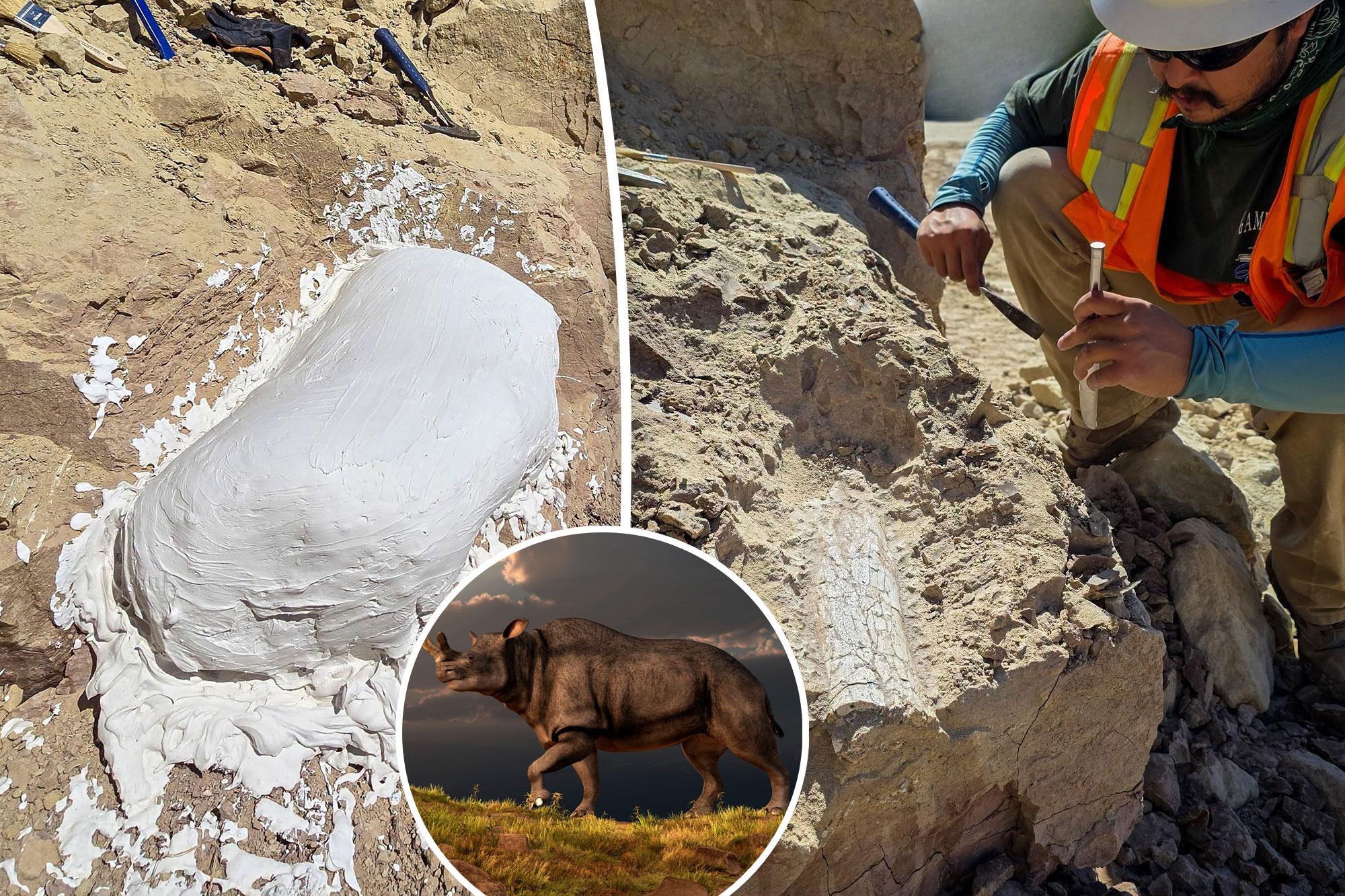
Hard-hat crews working on an Oceanside infrastructure project unearthed the fossilized remains of a rhino-like creature that roamed the Golden State some 45 million years ago — and scientists say it could be a brontothere, better known as the “thunder beast.”
Workers were about 12 feet below the asphalt earlier this month when they struck gold, or rather a trove of prehistoric limb bones, ribs and other fragments encased deep inside layers of mudstone and sandstone, city officials announced.
Rather than pouring concrete over history, on-site paleontologist Dr. Joseph El Adli scrambled to temporarily halt construction work to preserve the find. Over a seven-day rescue mission, his team carefully chiseled away tons of sediment to safely encase the ancient bones in plaster before hauling them off to a special lab.
Experts say the bones hail from Member C of the Santiago Formation — an Eocene-era rock unit known to harbor relics from prehistoric North America.
While scientists are still scraping away decades of muck, Dr. Adli believes the mega-beast boils down to two prime suspects from the odd-toed hoofed mammal family: a “thunder beast” or a “swamp rhino.”
A thunder beast is a hulking, rhino-sized vegetarian with a shoulder hump and a menacing, Y-shaped horn protruding from its nose. Also a vegetarian, a swamp rhino is a squat, hippo-like brute boasting short legs, a broad head, and sharp canine husks instead of a horn. Both are reportedly distant relatives of modern rhinoceroses.
El Adli believes the newly uncovered animal may have died and remained exposed long enough for its carcass to dry out, potentially attracting predators, before a flood buried the remains and ultimately preserved them, according to the San Diego Union-Tribune.
One of the largest finds reportedly appears to be a roughly 2 1/2-to-3-foot-long femur.
In the North County region of San Diego, Oceanside has become something of an accidental prehistoric graveyard. In 2015, Ice Age fossils belonging to mammoths, horses, turtles and a prehistoric bison were uncovered during construction at a Quarry Creek development site.
City officials are keeping the exact dig site location specific under wraps to keep rogue amateur Indiana Joneses from storming the active construction zone.
Once the lab work is complete, the fossils will take up residence in a museum for the public to admire.
California Post News: Facebook, Instagram, TikTok, X, YouTube, WhatsApp, LinkedInCalifornia Post Sports Facebook, Instagram, TikTok, YouTube, XCalifornia Post Opinion California Post Newsletters: Sign up here!California Post App: Download here!Home delivery: Sign up here!Page Six Hollywood: Sign up here!