play Live Sign upShow navigation menuplay Live Click here to searchsearchSign upNews|ClimatePowerful El Nino could cause more than 450,000 deaths, scientists sayHeaviest toll expected in poorer countries, already struggling with food insecurity and high energy costs, report says.
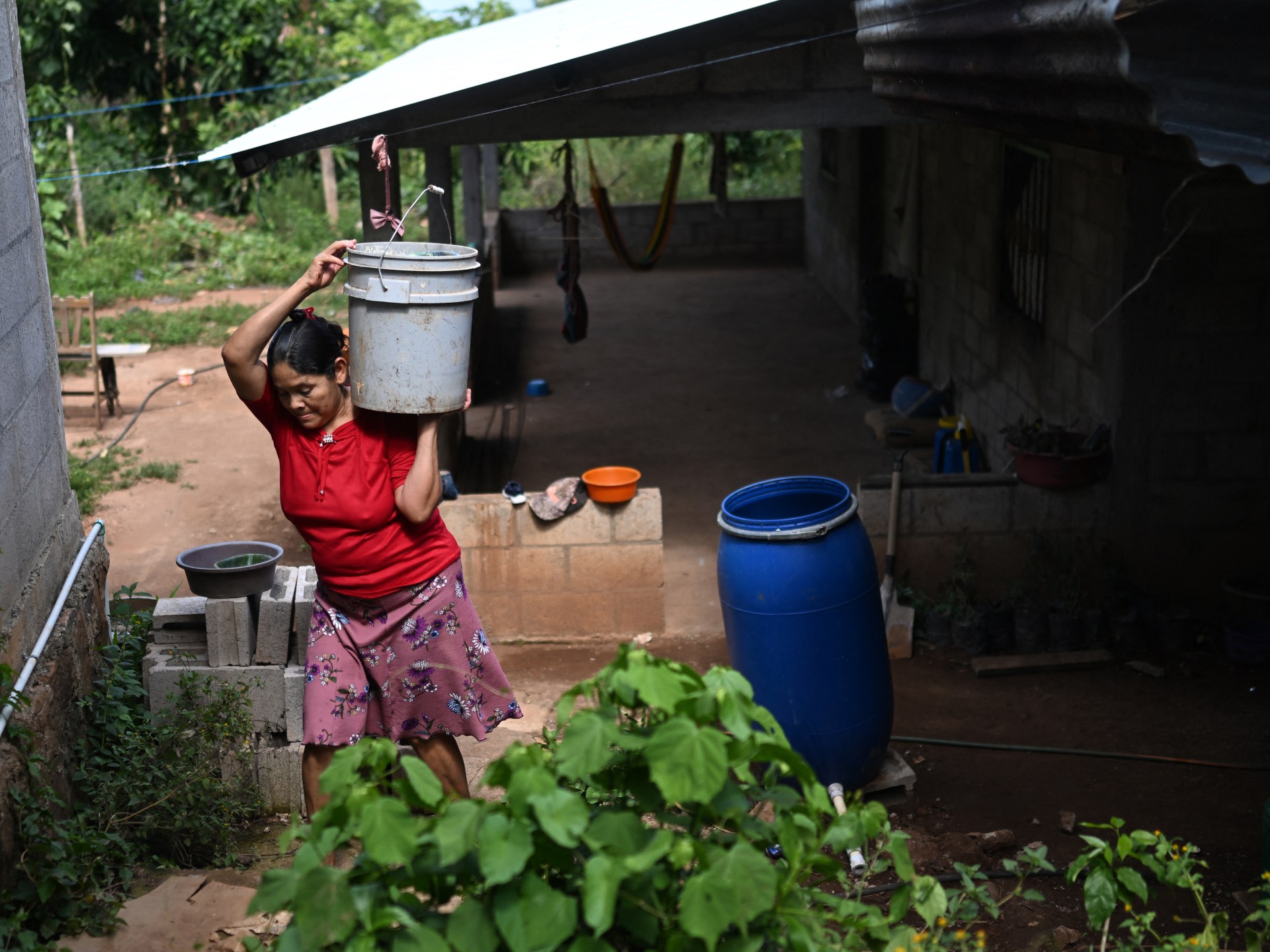
xwhatsapp-strokecopylinkgoogleAdd Al Jazeera on GoogleinfoA Salvadoran woman carries water to irrigate crops as the country experiences its worst drought in living memory, attributed to the powerful El Nino [Marvin Recinos/AFP]By Al Jazeera Staff and APPublished On 23 Sep 202623 Sep 2026More than 450,000 people are projected to die from additional heat due to the unusually strong El Nino event over the next six months, according to a research report.
The projection, published on Wednesday by the University of Chicago’s Climate Impact Lab, runs to February 2027 and compares estimates of heat-related deaths that could be attributed to El Nino with the level expected in a typical year.
Researchers estimate that global land temperatures could climb by about 1.2 degrees Celsius (2.1 degrees Fahrenheit), with extremely hot days 44 percent more frequent than in an average year.
Developing nations and Africa’s Sahel region are expected to be hit disproportionately hard.
The report projected about 66,800 additional deaths across the Sahel, with Nigeria having the highest projected toll of any single country at 31,400, ahead of Indonesia at 19,300 and Sudan at 17,600.
Elsewhere, the Philippines, Vietnam, Thailand and Cambodia are forecast to see a combined 19,400 extra deaths, with 15,800 projected in India and 13,300 in Brazil.
Michael Greenstone, cofounder of the lab and co-author of the study, said the findings show heat poses the greatest threat where temperatures are already high and incomes relatively low.
“If you’re already in a hot place, the extra couple of degrees are going to be much more dangerous,” he said.
Richer places tend to have better access to air conditioning, steady water supplies and health services, he added.
Greenstone said the heat risk was likely to outlast the El Nino itself, with repercussions stretching into next summer.
Abhiyant Tiwari, who specialises in heat at NRDC India, told The Associated Press news agency that the projections should spur action.
Funding and delivery remain weak points, he said, even in India, which has sound plans on paper.
“The real measure of our preparedness is not how many heat warnings we issue, but how effectively we protect people and reduce preventable deaths,” he said.
This year’s El Nino began developing in June and is expected to be one of the strongest ever. Experts say the natural weather pattern, which occurs cyclically, is being “supercharged” by climate change.
In early September, the United Nations’ weather agency reported a 100 percent likelihood that El Nino will continue through February 2027. But researchers say its dangers could linger into mid-2027.