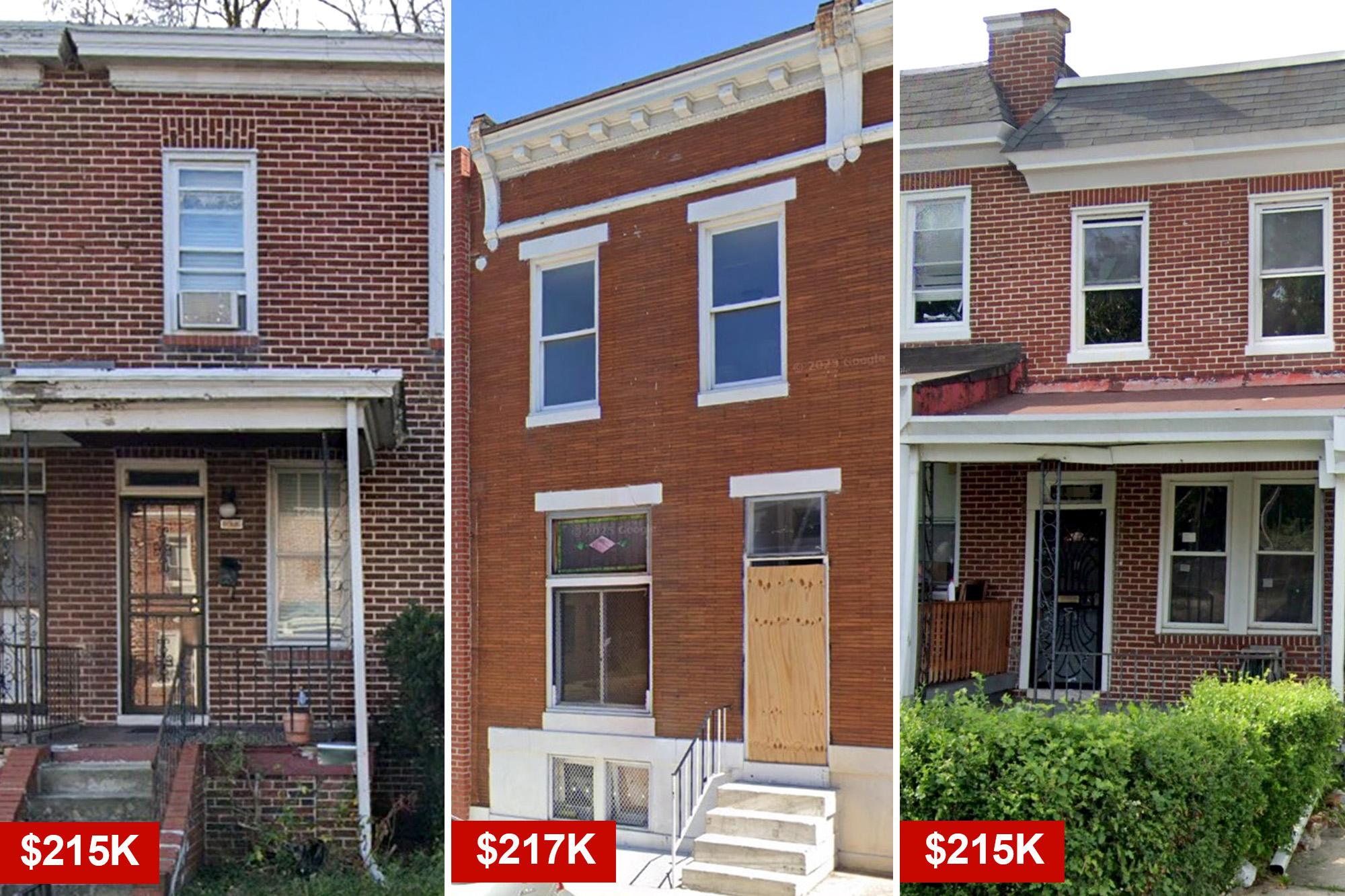
Add The New York Post on Google A Baltimore rowhouse sells for $40,000. Just months later, it changes hands again for around $200,000.
There’s just one problem: According to a new lawsuit, virtually nothing happened to the house in between.
That dramatic leap in value was allegedly repeated across dozens of Baltimore properties as part of a sprawling mortgage fraud scheme that one lender says left it with more than $14 million in losses.
AmeriTrust Mortgage Corp. filed a federal lawsuit in Maryland, accusing a network of real estate investors, a mortgage broker, appraisers and title companies of working together to make inexpensive properties appear far more valuable than they really were.
Companies tied to the scheme would buy homes in and around Baltimore for roughly $40,000 to $50,000, according to the complaint. Within months, and allegedly without making improvements, the properties would be sold to other shell companies for around $200,000 — a roughly 300% markup.
The much higher sale price could then support a much bigger mortgage.
AmeriTrust claims the new buyers applied for financing using appraisals and title reports that failed to disclose those recent, far cheaper transactions. In other words, the lender alleges it was being shown a $200,000 house without being told that the same property had recently been a $40,000 or $50,000 house.
Once the loan closed, the proceeds went to the seller.
Then, according to AmeriTrust’s charges, some borrowers barely bothered making payments.
The lender alleges the buying companies never intended to repay the mortgages and defaulted almost immediately, in some cases failing to make even the first few months of payments.
That left AmeriTrust in a bind. The company had sold the mortgages to investors, but once the loans went bad, it faced losses tied to mortgages that it alleges were far larger than the homes securing them were actually worth.
Multiply that process across roughly 90 loans and AmeriTrust says the damage reached about $14.1 million.
The lender is now accusing the defendants of fraud, conspiracy to defraud, breach of contract, negligent misrepresentation and civil racketeering under the federal RICO Act.
The defendants include mortgage broker FirstLoans Inc., title companies REXTAR Title Services and Fidelity National Title, as well as appraisers, investors and numerous LLCs. HousingWire reported that the defendants did not immediately respond to its requests for comment. The allegations have not been proven in court.
At the center of the case are DSCR loans, a type of mortgage that has become popular with real estate investors.
Unlike a traditional home loan, where a lender focuses heavily on the borrower’s salary and personal income, a DSCR loan is underwritten based on how much rental income the property itself is expected to generate.
That can make it easier for landlords to finance investment properties — but AmeriTrust alleges the Baltimore operation paired those loans with inflated appraisals and title reports that concealed earlier, lower-priced transactions.
And the lender claims its own loans may represent only a fraction of the alleged activity.
The lawsuit alleges the same basic scheme was repeated hundreds of times across Baltimore, while earlier reporting found that hundreds of investment properties had been purchased at sharply inflated prices using hundreds of millions of dollars in DSCR loans from dozens of private lenders. More than half of those loans ultimately defaulted, according to HousingWire.
The fallout, AmeriTrust alleges, is now being felt on the ground: foreclosures could drag down surrounding property values, while some abandoned homes tied to the troubled loans have become occupied by squatters — further destabilizing neighborhoods already dealing with vacant properties.