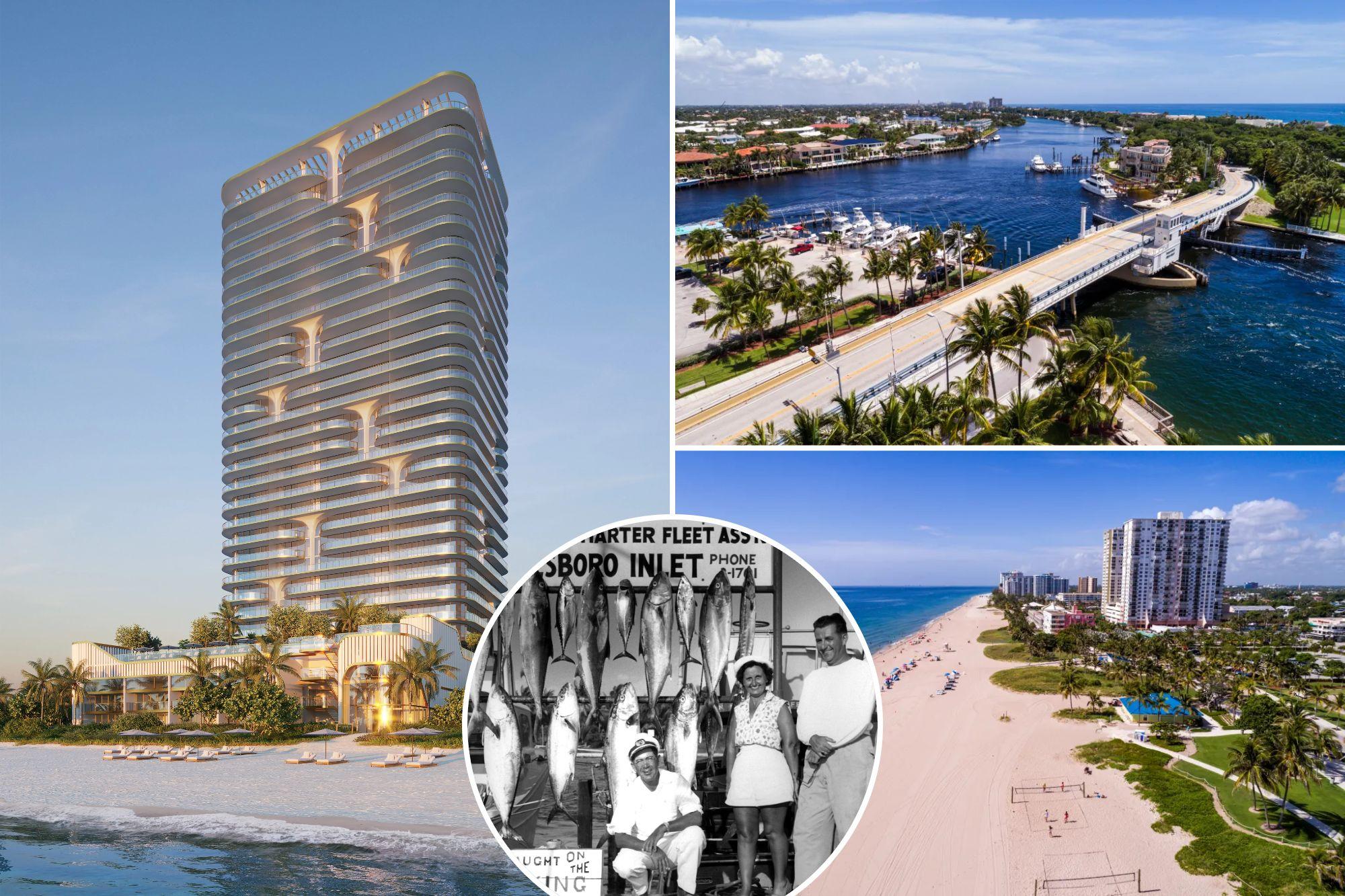
Add The New York Post on Google For decades, Pompano Beach was the sleepy South Florida alternative to its glitzier neighbors — a fishing town where waterfront living could still be had without Miami or Palm Beach prices.
The Broward County city is in the throes of a multibillion-dollar transformation, with a $2 billion downtown overhaul and a wave of ultra-luxury developments from Waldorf Astoria, Ritz-Carlton, W and Armani/Casa reshaping its once-low-key skyline.
At the center is a 75-acre redevelopment led by RocaPoint Partners in partnership with the city. Plans envision roughly 4 million square feet of residences, shops, offices, hotels, civic facilities and public spaces, anchored by a new City Hall.
But some of Pompano’s biggest changes are happening along the sand.
Miami-based Related Group has made a multibillion-dollar commitment to the city, beginning with a gamble it took long before Pompano became a magnet for luxury developers.
“We saw the fundamentals early: incredible oceanfront, a great location between Miami and Palm Beach, and pricing that was still accessible relative to other South Florida coastal markets,” Patrick Campbell, senior vice president of Related Group, told The Post.
“We actually bought the oceanfront site that would eventually become Solemar at a courthouse auction in 2011 and held onto it for nearly a decade,” Campbell said. “At the time, Pompano wasn’t yet viewed as a luxury destination, but we believed the ingredients were there.”
They were. Solemar, Related’s first project in the city, sold for an average of about $900 per square foot, Campbell said. Its latest sales at the under-construction Waldorf Astoria Residences Pompano Beach are now averaging roughly twice that, at $1,800 per square foot.
“Those numbers tell us buyers are willing to pay for exceptional product here, but there’s still a significant pricing gap between Pompano and comparable branded oceanfront residences in Miami or Palm Beach,” Campbell said. “That’s what gives us confidence there’s still room for the market to grow.”
The 28-story Waldorf tower, developed by Related and Merrimac Ventures with Hilton, will contain just 92 residences and is expected to be completed next summer. More than 85% of its units were under contract when the building topped out in May. It is also Waldorf Astoria’s first standalone residential development.
The project’s amenities are decidedly more resort than sleepy beach town, including a 20,000-square-foot oceanfront pool deck, spa and wellness facilities, concierge service and in-residence dining.
The new construction is attracting a broader group of buyers.
“We continue to see strong interest from the Northeast and Canada, along with a significant local component — South Florida and inland Florida buyers who want to be directly on the ocean,” Campbell said.
But he said interest is increasingly coming from Latin America and other overseas markets, particularly at the W development.
Despite the influx of big-money buyers and luxury brands, Campbell doesn’t think Pompano needs to turn itself into another Palm Beach.
“I don’t think Pompano needs to become the next Miami or Palm Beach…that’s what makes it interesting,” he said. “It still has that relaxed, Old Florida beach-town character, but the level of product and hospitality is changing dramatically.”
That balancing act could determine what Pompano becomes as billions of dollars pour in.
“Five years from now, I think you’ll have a much more established luxury destination while still being able to walk down to the pier, go fishing and feel like you’re in a real beach town,” Campbell said.
“The city is changing, but it’s retaining its character — and that balance is what will continue to differentiate Pompano.”