Do Trump's task force and a special envoy for artificial intelligence in the US indicate a move toward regulating this disputed technology, particularly vis-a-vis China?
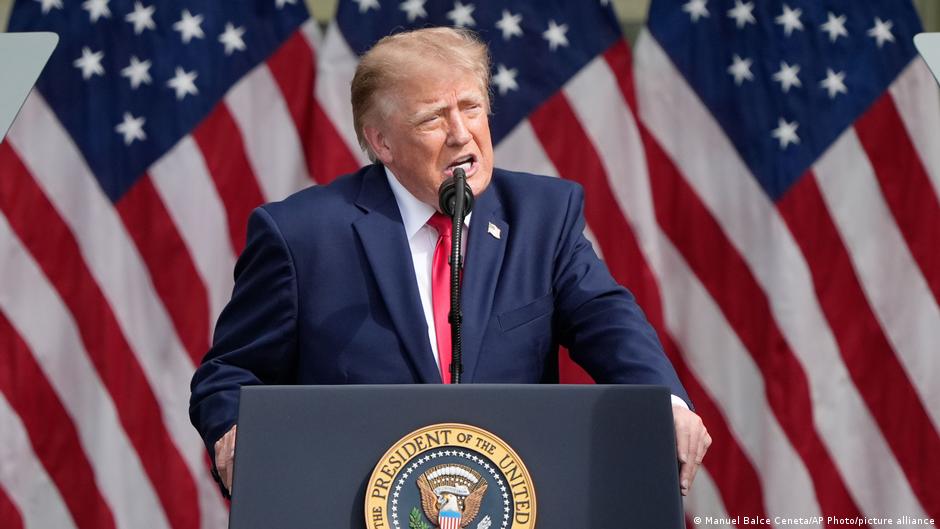
https://p.dw.com/p/5N2R5US President Donald Trump has announced a change of course in his AI policyImage: Manuel Balce Ceneta/AP Photo/picture allianceAdvertisementDevelopers warning against their own technologies and a government unwilling to take action — that was the situation in the first half of September amid concerns in the US that AI models were becoming too powerful.
Several developers and decision-makers from major AI companies had also called for slowing down the development of the technology.
In response, US President Donald Trump posted one of his typical all-caps tweets on his social media platform Truth Social: "AI taking over the World, destroying Humanity, and all other things bad, is a HOAX." Trump also asked "Concerning AI, when, in the History of Business, did anyone see the Leaders of an Industry call for Regulation that, if strongly implemented, will drive them into oblivion and bankruptcy?"
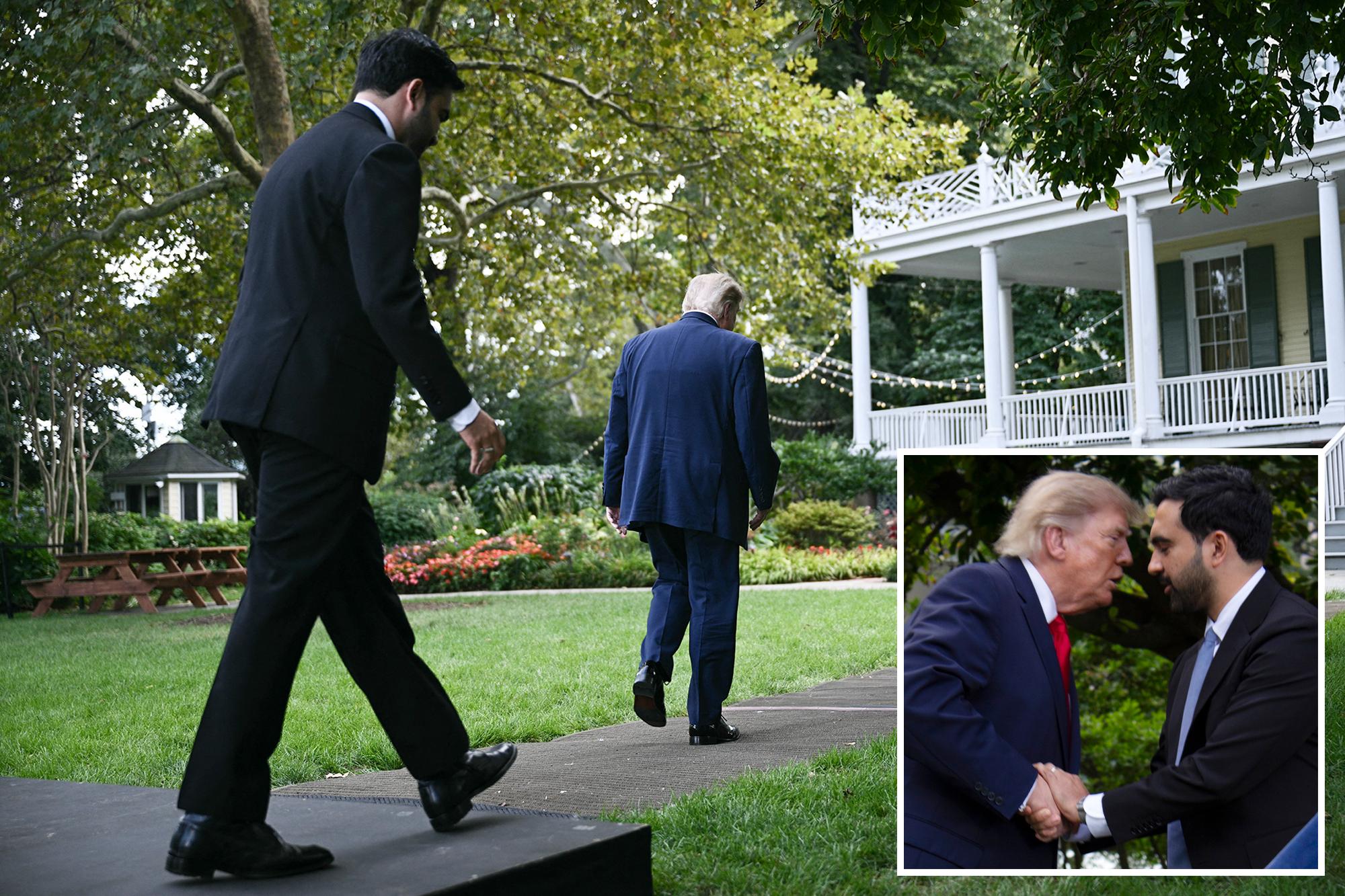
Against this backdrop, it comes as something of a surprise that Trump announced over the weekend — following yet another tirade about various alleged Democratic scams — that he would establish an "AI Force" and appoint a special envoy to address the issue.
In his post, Trump promised that he would by no means slow down the industry's growth. "However, we will also be looking for BAD, and we can do that, very easily, with our already existing Criminal and Civil Justice System," he wrote. "To that end, I will be announcing, in the near future, the AI 'Czar' — Only High I.Q. individuals need apply!" he added.
Trump left open exactly what the individual's duties and powers would be and what resources would be allocated to the position.
Trump's announcement could be an attempt to undermine an initiative by California's Democratic Governor Gavin Newsom. The previous day, Newsom had announced plans to establish a commission to regulate Silicon Valley-based tech companies.
Among other things, Newsom wants to require these companies to build an emergency shut-off switch into their programs, which would allow humans to stop AI agents that have spun out of control. Several states, including some led by Republicans, are pushing for regulation.
The current "AI race" between the US and China is often compared to the space race between the US and the former Soviet Union in the 1960s. Several US companies are currently considered industry leaders. To ensure this remains the case, Trump intends to continue giving them free rein.
However, this is not just about economic interests. There is concern that Chinese dominance in artificial intelligence could also lead to Beijing's rise as the sole superpower.
In a widely discussed essay, Dario Amodei, CEO of Anthropic, not only warned of the consequences of continued unchecked AI development; he also outlined the potential consequences of the AI competition between the US and China.
"If we greatly restrain our AI capabilities in the belief that China will do the same, and then China defects, AI could be so powerful that such a defection could lead to their geopolitical dominance. Therefore any agreement must either have ironclad verifiability, or must be limited enough that defection would not be militarily existential," Amodei wrote.
In China, technological developments have traditionally been much more closely tied to governmental objectives. As early as 2017, the State Council of China issued a development plan for a new generation of artificial intelligence.
Another strategy paper sets out milestones through which China aims to achieve global dominance in the field of AI by 2030. The regulations are primarily enforced by the Chinese Cyberspace Administration (CAC), which also issues licenses.
Regulation in China ensures that AI models do not run counter to official political doctrine. For example, the Chinese AI chatbot DeepSeek consistently provides answers loyal to the regime when asked politically sensitive questions — such as those regarding Taiwan, the Tiananmen Square massacre, or the oppression of the Uyghurs — as DW previously documented.
The underlying logic of Chinese regulation is thus based on the question: How does an AI system align with state objectives? This represents a clear distinction from the risk-based regulation envisaged, for example, by the European AI Act and now being called for in the US.
On Thursday, Trump will host Chinese President Xi Jinping at a state dinner at the White House. The topic of AI is likely to be very high on the agenda.
The US already proposed establishing a mechanism for exchanging information about serious risks posed by AI. The proposal was discussed at a meeting between Chinese Vice Premier He Lifeng and US Treasury Secretary Scott Bessent on Sunday in New York.
"We think that, just like with any cross-border activity, that moving from opaque to more transparency between the number one and the number two AI powers in the world is very important," Bessent said.
Whether they actually decide to act on this will likely be left up to the two presidents. After all, for them, potential transparency obligations regarding AI are by no means the only point of contention in the negotiations.
For years, trade restrictions on high-performance AI chips and rare earth elements have been a recurring issue and the extension of a basic trade agreement is also on the agenda.
Whether mutual trust is strong enough to lead to reciprocal concessions on AI will likely only become clear at the meeting.
This article was originally published in German.
How the US and China could end the AI raceTo view this video please enable JavaScript, and consider upgrading to a web browser that supports HTML5 video