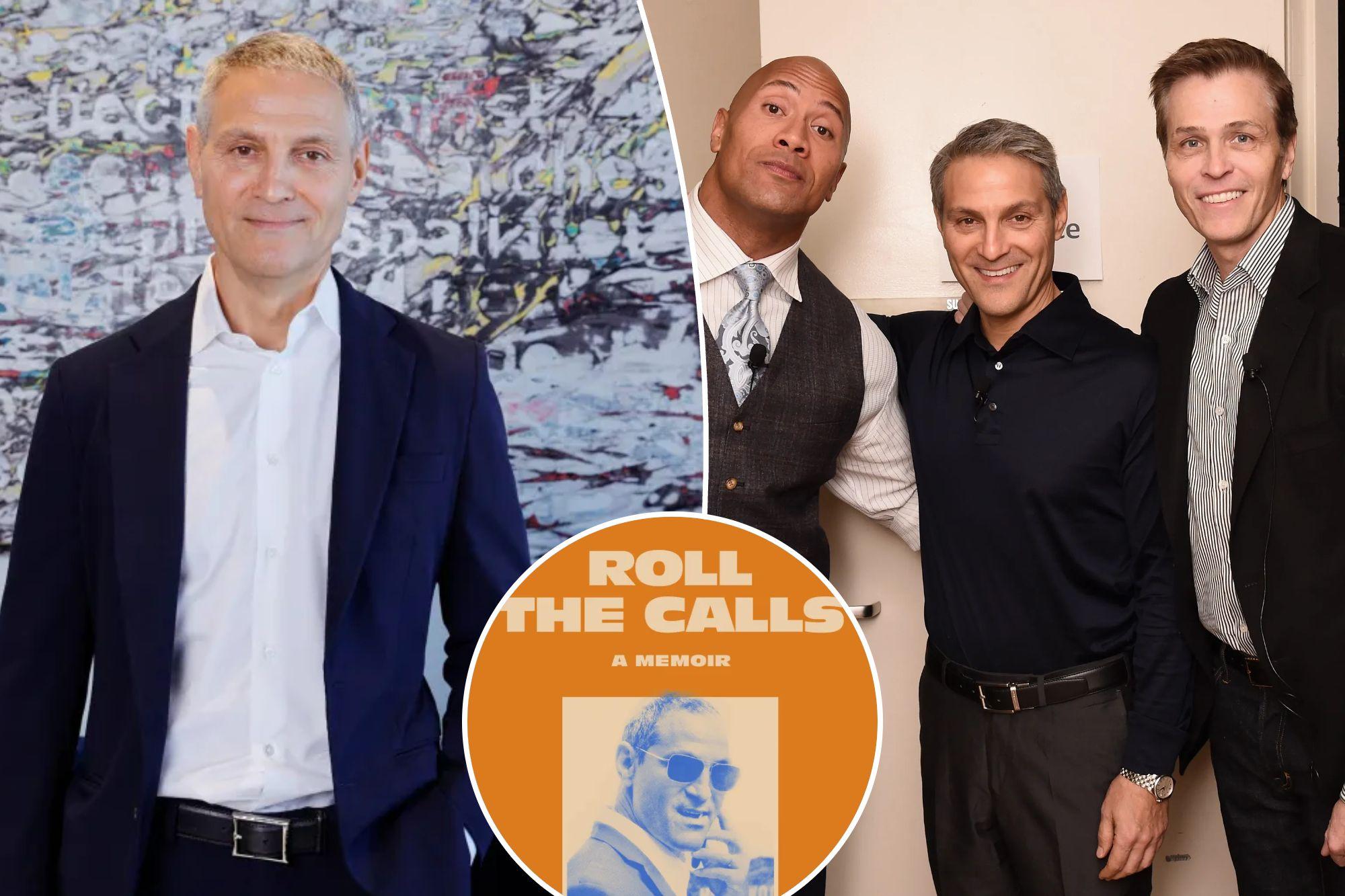
Ari Emanuel's memoir "Roll the Calls" comes out Tuesday. Zuffa LLC In a town where aura layering, somatic unwinding, cellular optimization and microdosing are de rigeur, Ari Emanuel‘s new memoir “Roll the Calls” is an incongruous LA ode to rage.
The staccato-prosed memoir — written in short bursts — blends business management techniques and Hollywood history, all wrapped in a deeply personal story about one man unapologetically embracing his aggression.
Emanuel, who has long struggled with ADHD and dyslexia, opens on the word “rage,” which the author and his in-demand ghostwriter, J.R. Moehringer, establish as the central motif of Emanuel’s life — not to mention the “secret sauce“ of his professional success.
As the youngest sibling to two high achieving brothers growing up in Chicago, Emanuel recounts being humiliated and bullied for his learning disabilities which resulted in consistently poor grades. That led to shame and rage which he calls his “formative childhood memory.” For a group of bullies who approached a high school-aged Emmanuel while chanting “r-tard” it didn’t end well:
“Slowly I stand, walk over. Tap the biggest bully on the shoulder. Not big myself, but zero body fat, standout on the wrestling team. Within sixty seconds I’ve beaten that bully’s ass. Finishing touch: smash a lunch tray on his head.”
Over the next 400-plus-pages, Emanuel uses an array of personal and professional anecdotes most of which are laced with his uncontrollable rage (that word again) to try and elicit a range of emotions from his readers: awe for his work ethic and cunning; sympathy for the man willing to publicly bear his psychic scars; revulsion for his vulgarity and treatment of certain friends and colleagues — his former partner Patrick Whitesell being one of them — who failed to match his manic drive.
Memoirs allow powerful individuals to control their narratives. But Emanuel doesn’t seem overly concerned with winning over his readers. He’s an anti-hero who works tirelessly for the good of his clients and his colleagues. And yet, by the end of the book it’s unclear if anyone is actually rooting for him.
That’s largely because for a typical reader his volatility and incivility is hard to stomach. Does calling Amazon’s Jeff Bezos and former Disney CEO Bob Iger “motherf–kers” to their faces make Emanuel a truth-teller? Or someone who is just unhinged?
In Emanuel’s life story, there’s a thin line between his trauma (again, rage) and physical violence. There’s the time after the MTV awards he beat up a “punk rocker” with a mohawk and tattoos at the Times Square subway station while the director (and Emanuel’s best friend) Pete Berg looked on; or the time when he hoisted a chair above his head threatening to destroy everything in the office of then-CAA chairman Michael Ovitz; or the time when he was thrown out of a swanky country club for lunging at a loud-mouthed and disrespectful linksman who bottlenecked the fairways.
Incongruously, this rage-aholic is also a devout vegan who chastises rivals for not biohacking.
Anticipation for “Roll the Calls” has been building for the past weeks, with many across the industry wondering how scorched earth Emanuel was willing to go. The answer: not very.
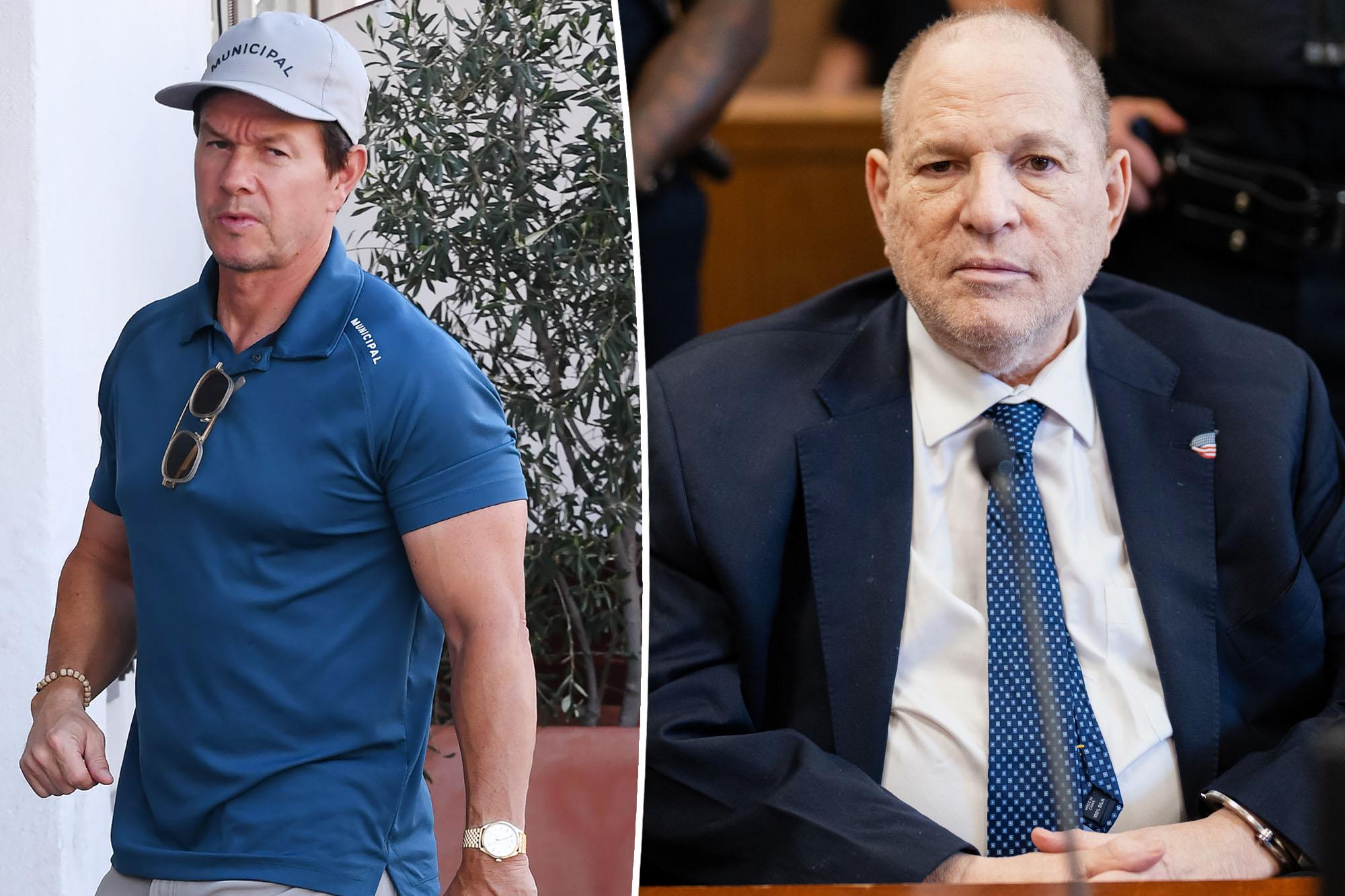
Certain execs like DreamWorks’ Jeffrey Katzenberg and Miramax’s Harvey Weinstein come in for repeated drubbings. He recounts a meeting where he called Weinstein a “f—king a—hole” and is so repulsed by Katzenberg that he asks a waiter at the Bel-Air Hotel to seat him at the other end of the dining room, then relishes later smooching his date (and future wife) in front of his rival at the valet stand.
Former William Morris Agency CEO Jim Wiatt, who Emanuel ousted after Endeavor merged with WMA in 2009, is also portrayed as a rube.
But Weinstein sits in a prison. Katzenberg is now a peripheral figure in town and no one has heard from Wiatt in years. Few people who wield any real power today — including President Trump and Saudi Arabia’s crown prince Mohammed Bin Salman — come in for any scorching criticism. That’s because the 65-year old Emanuel, who currently serves in top positions at TKO Group Holdings Inc. and WME Group still has some game left in him.
As he is in the process of courting his second wife in the book, the designer Sarah Staudinger, he recounts a story involving the CEO of the chewing gum company Trident:
I tell her about the time Trident discontinued my favorite flavor. Tropic Something. I made my assistant hunt down the Trident CEO. Poor old guy was sitting in a rowboat on Lake Something or Other, in Bumf–k, Wisconsin, fishing for largemouth bass, and someone rowed his phone out to him so that I could rip his head off.
What did you say?You dumb motherf–ker, where do you f–king get off canceling the only good flavor your shi—y f—king company makes!
He wound end up sending me the last dozen cartons of the stuff—we’re friends now.
She finds this story … frightening? Deranged? But also endearing.
Readers of “Roll the Calls” may have a similar response upon completion. (He even appears on the cover on the phone with gum, presumably Trident Tropic Something in his mouth.)
Emanuel’s story is remarkable — and anyone who has witnessed the seismic shifts in the industry over the past three decades will likely find value in this book. Love him or hate him, the mega-agent has emerged as a Zelig of Hollywood. Whether he was positioning himself to merge Endeavor and William Morris, acquire the UFC and WWE or become besties with Elon Musk, Emanuel is still ready to instigate.