Add The New York Post on Google Sleep away the stress.
How well you sleep at night and how stressed out you feel during the day are intertwined. Get a bad night’s rest, and you could be anxious all day, while racing thoughts or chronic problems can keep you up at night.
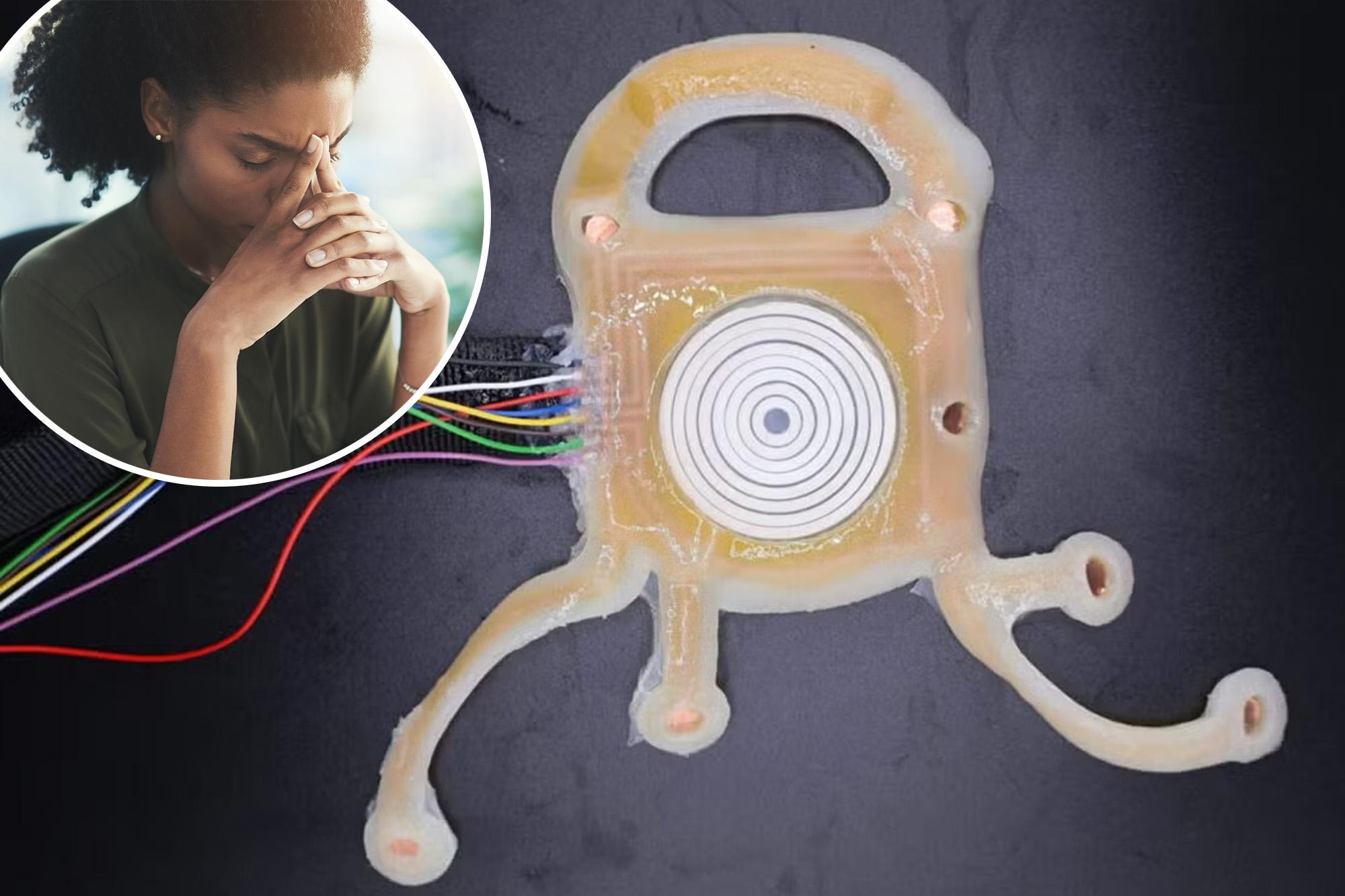
A wearable patch you put on at night could be the solution to daytime stress, though, without any invasive surgeries or medications necessary.
A newly developed patch worn on the skin while sleeping has been shown to improve stress during the day. A. Frank/peopleimages.com – stock.adobe.com Developed by researchers at the University of Texas at Austin, NEUSLeeP is a soft, wearable device that boosts rapid eye movement (REM) sleep.
While all the stages of sleep are important, REM sleep in particular is crucial for mood regulation, memory consolidation and cognitive function.
“REM sleep is not just about dreaming — it’s about emotional reset and stress adaptation,” project co-principal investigator Gregory Fonzo explained in a press release.
Worn by 28 people, the patch helped participants reach REM sleep 43 minutes faster and stay in it about 16 minutes longer on average, while also improving heart rate variability — a marker of healthy stress response.
Brain scans also showed changes in emotional circuits, suggesting additional mood benefits.
The patch worked for both healthy sleepers and those with sleep problems, and wearers also reported it was comfortable and safe, with minimal adverse effects.
NEUSLeeP boosted rapid eye movement (REM) sleep, which is linked to mood regulation, cognitive function and more. Huiliang âEvanâ Wang “By enhancing REM, we may help people better cope with stress and improve their overall well-being,” Fonzo said.
Disrupted REM has been linked to several mental health issues, including anxiety and post-traumatic stress disorder (PTSD).
There’s also a strong link between REM sleep and Alzheimer’s disease, as a study published last year found that people who took longer to reach this stage had the highest risk of developing the neurodegenerative disease.
But many of the treatments for sleep disorders don’t address the underlying issues causing disturbed rest or bring about side effects.
For instance, while many reach for white noise machines to help them get to sleep faster, the broadband noise may actually be compromising deep rest and decreasing the amount of time spent in REM sleep.
The skin patch brings a new method of understanding and treating sleep issues, right in the comfort of people’s homes.
Larger trials are needed to confirm the study’s findings as well as look into the potential of NEUSLeeP as a treatment for chronic insomnia, PTSD and depression.
“Our vision is a future where patients with mental health disorders can optimize their sleep with a noninvasive and safe treatment,” project co-principal investigator Vincent Mysliwiec said in a press release.