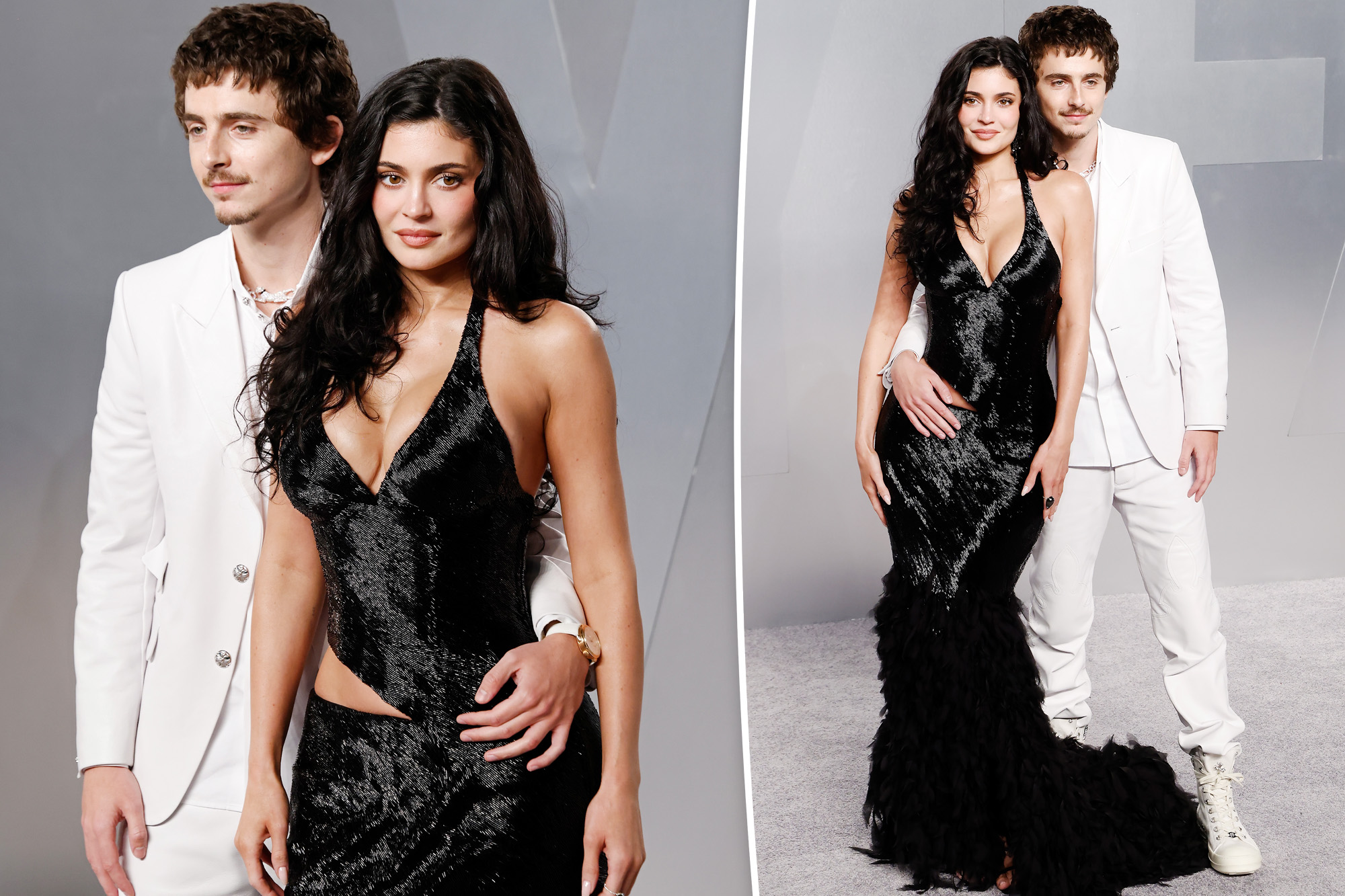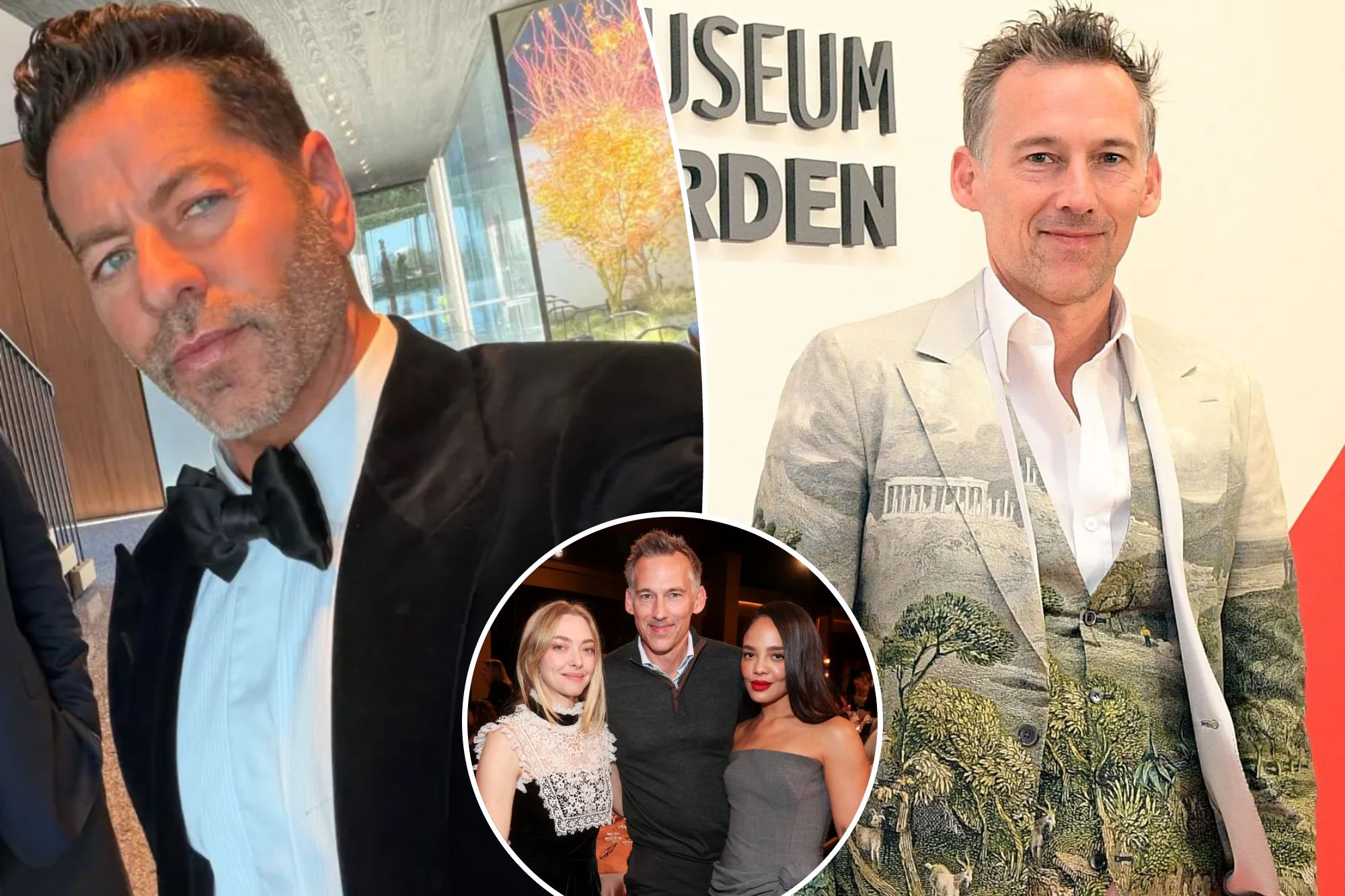
Joel Lubin attends the 19th Annual Hammer Museum Gala on May 04, 2024 in Los Angeles. Getty Images for Hammer Museum A couple years ago at Frieze LA — the contemporary art fair now owned by Ari Emanuel — I was perusing the booths with my former Hollywood Reporter colleague Chris Gardner when we ran into a particularly fashionable fellow.
He had long flowing hair and wore a hand-knit, chunky, grandma cardigan that looked like it was ripped from the latest Loewe ad. The slouchy chic look was finished off with a stack of sick necklaces and perfectly preppy horn-rimmed glasses. I just assumed he was some young gallerist at, say Gagosian, Zwirner or Hauser & Wirth. But as we walked away, Chris mentioned that he was in fact “a big agent at CAA” and rattled off his A-list clients.
It didn’t add up. CAA? The Century City death star which was built on the backs of black Armani power suits? I struggled to square the image of the amped-up agents who I spent years covering as a trade reporter in the early aughts and the new fashion forward crop.
“I graduated from college and went from a t-shirt and flip flops to the William Morris mailroom wearing a suit every day of my professional life [for decades],” says one top agent, who admits he now has only “one blue suit” left in his closet these days that he wears to bar mitzvahs and weddings.
Back in the day at William Morris, if you broke ranks on the unofficial uniform, it did not go unnoticed, he said. “You had Ed Limato,” the late famed and feared agent who repped clients from Marlon Brando to Meryl Streep, recalled the exec. “I saw Ed in the elevator one morning — he always had these handsome guys around him — and he was looking me up and down, then said, “No belt today? Very European of you.” That left him shaking in his wingtips.
Over at CAA, “They took dressing so seriously there,” said a source. “If Bryan Lourd walked in with a three-piece suit and vest, you’d see a bunch of guys the next week in three-piece suit and vest. And if Bryan wore knit ties, everyone was wearing knit ties the next week.”
Then again, we hear the best dressed agents today are all at CAA, including Joel Lubin, Todd Feldman and Alex Mebed, stylish sources say.
But when did the “suits” stop wearing suits?
When Mike Ovitz started CAA in 1975, he recalled in an interview last year: “We sent all our executives to the Beverly Hills [Armani] store… because it was the look we wanted,” adding that he wore the Italian suits, “every day but Sunday in those years.”
Before Ovitz, Hollywood legend Lew Wasserman (whose grandson Casey is currently embroiled in the whirlwind Epstein Files scandal) made the dark suit the de facto uniform of Hollywood agents when he took over MCA in 1946. Before that, agents wore peacocking, gaudy, goofball get-ups.
“When I became a talent agent for MCA, the word ‘agent’ was synonymous with ‘pimp,’ ” Wasserman once said. “Talent agents wore green suits and hung around street corners with big cigars in their mouths…. I wanted to change the image.” So he created the banker-inspired dress code.
When Wasserman died in 2002, the LA Times wrote a piece on his place in fashion history under the headline, “The Original Man in Black.”
Late UTA co-founder Marty Bauer said at the time, “Every CAA agent I’ve ever seen wears a suit, and the ICM agents wear suits.” The piece added: “Most of the other large talent agencies, including UTA, Endeavor and William Morris, are recognized by their sharp-dressing agents. Many agents adhere to some variation on the dress code Wasserman instilled in the late 1940s when MCA invaded Hollywood.”
Marty Bowen — who just produced Netflix’s hot title “People We Meet on Vacation” — said as a young 33-year-old agent at the time, “Agents wear suits so their clients don’t have to.”
Another source recalled to us that as an agent for years, they wore navy, grey or black suits every day, while “casual Friday” meant no tie.
“Wherever I’d go, I was in a suit,” recalls an agent who is now in his 50s to P6H. “If I was on set, they were like, ‘There’s the agent.’ At lunch they were like, ‘There’s the agent.'”
And it’s not just agents. This lurch towards leisure happened across the industry but agents seem to stand out more because they have long been synonymous with a certain aesthetic. So what explains it? The culture of Silicon Valley and the dominance of titans like Apple, Netflix and Amazon certainly changed the vibe. Hoodies and sneakers became acceptable workplace attire. But the real culprit in all of this was COVID.
“We thought it was going to be two weeks and didn’t know it was gonna be two years,” said an agent of work attire during the pandemic. “We didn’t even know how to dress anymore … As soon as everyone started getting out of their PJs, you kinda got back in the office” and saw colleagues in Vuori and Lululemon. “You realized, ‘OK, I’ve only seen these people in suits and ties!’ It got weird.”
That’s also when, “Young kids [at agencies] started dressing funkier than they should’ve, and it just got weird fast,” said the talent rep. “Then you saw the rich guys all got stylists and it’s like, ‘Dude WTF? Did you just buy that off the mannequin?’”
Business suits for women were also the customary code, bringing to mind Diane Keaton in “Baby Boom.”
But when we were at a recent glam Golden Globes party, one top female exec was getting down on the dance floor in an outfit so fashion-forward that another woman partygoer whispered to us as she passed, “Look! An agent who forgot her pants!”
The abandonment of suits for all genders led to alternate uniforms, resulting in a free-for-all.
“You’ve got these old guys wanting to wear Air Jordans and designer sneakers,” said one source, while, “the young kids were coming in in sweatpants and tank tops. I was like, ‘Dude, you can’t wear wife beaters!’”
Things devolved to the point where HR departments had to send staff-wide emails imploring employees to dress appropriately, sources said.
“After COVID, I’m not gonna say it was kimonos, but there was definitely, like, some flowing robes. It’s all settled down now.”
Either way, the result has been a more casual, fashion-forward workforce. The suits are gone.
“We all started asking each other, ‘Where do you get your pants?'” relays an agent. Some started hiring stylists, like Andrew Weitz –the former Endeavor agent, and brother of WME co-chairman Richard Weitz –who’s now a favorite industry sartorial sage via his outfit, The Weitz Effect.
Weitz recalls his days as an agent when reps only wore black, navy and/or grey suits, and “no tie on casual Friday.” But, “I cared about how I dressed and how I showed up,” he told us. “I started wearing three-piece suits. Double breasted suits. Pocket squares. Lapel pins. Pocket watches. And OMG, designer sneakers with a suit. People thought I was nuts.”
The trend was further fueled thanks in part to Emanuel, when, “We were in a Monday morning staff meeting,” Weitz recalls. “I’m sitting near the end of the boardroom table. Ari’s in the middle of the room talking about Mark Wahlberg’s movie box office opening and mid-sentence, he stops and looks at me and says, ‘What the f—k is that?’ I’m thinking, is he talking to someone else? He points at me and says again, ‘What the f—k is that in your pocket?’ I said, ‘It’s a pocket square. It’s a piece of fabric that enhances your look.’ He then says, ‘Well, I think it’s f—king ugly.’ I didn’t say anything and we moved on.”
But as soon as the meeting ended, Weitz headed straight to Turnbull & Asser around the corner from the office and bought 10 new pocket squares. “I just doubled down,” he says. “I kept wearing them.” Not long after, “Crazy, Stupid, Love,” hit theaters and the Endeavor team was back in the same Monday morning staff meeting when a senior agent opened with, “Big weekend.” Then he added, “Did everyone see Ryan Gosling playing Andrew Weitz?” “And that was the moment I realized I understood style and knew what my calling was,” Weitz says.
He eventually launched a successful styling business after colleagues and clients began asking him for advice. “At the time, many men had dress shirts that were two sizes too big,” he says. “You’d look at the back of the shirt and see all this excess fabric. I’d think, ‘Oh my God, I just want to tailor your shirt!'”
After helping a wealthy pal who was misguidedly “dripping in Versace and Dolce & Gabbana,” the grateful guy called the refined results “The Weitz Effect.”
Weitz recalls, “I was on my honeymoon in Hawaii, I looked at my wife and said, ‘That’s the cheesiest name ever. That’s the company name.’” “Back then, it was rare for a male executive to work with stylist — especially one who came from their world,” he recalls.
Maybe it’s all cyclical. Ovitz has said: “When I started in the agency business, some people wore suits, but for many it had become casual, jeans or corduroy coats, which wasn’t very business-like.”
Graydon Carter told us during an email exchange: “On the dressing front, Lew was brilliant. There’s nothing like a uniform to make the mornings less stressful. Black suit, white shirt, black tie. And he always looked good!”