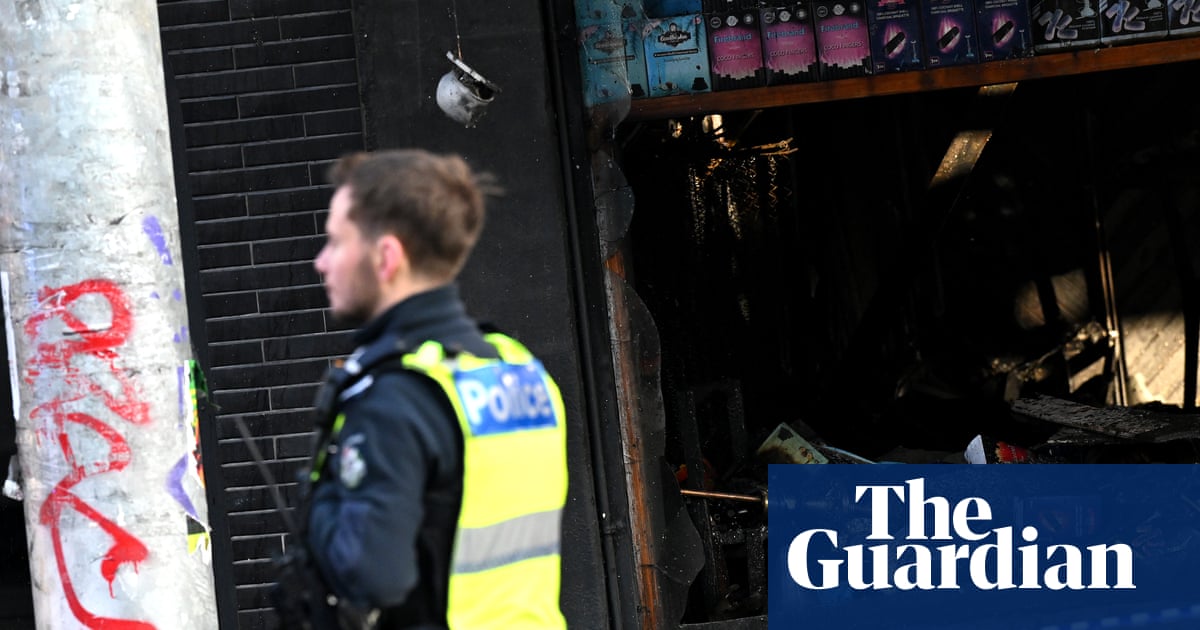
A fire-damaged tobacco store in Coburg in Melbourne’s north in 2024. Photograph: James Ross/AAPView image in fullscreenA fire-damaged tobacco store in Coburg in Melbourne’s north in 2024. Photograph: James Ross/AAPAs tobacconist firebombings intensify in Melbourne, nearby stores are being denied insuranceArson attacks related to illegal tobacco trade are also causing revenue and reputation problems for neighbouring businesses
Get our breaking news email, free app or daily news podcast
Small businesses located near tobacconists are being denied insurance or priced out of coverage as rising arson attacks turn neighbouring shops into collateral damage.
The problem has intensified after a spate of firebombings, which includes a recent Melbourne blaze that destroyed a Richmond tobacco retailer and nearly a dozen neighbouring shops, requiring 80 firefighters to contain.
Crime syndicates have been implicated in more than 200 firebombings of commercial and residential premises in Australia since 2023, according to government data, as rival groups vie for control of the illicit tobacco market.
A Melbourne retailer, who asked not to be identified, told Guardian Australia their insurer refused to renew a policy because they were a “few doors down” from a tobacconist.
“Even if we re-located, which is not really an option for us, who’s to say a tobacconist doesn’t move in next door?” the retailer said.
The retailer said they’d received quotes from other insurers that don’t include fire cover.
Read moreLegitimate tobacconists have also reportedly been targeted by syndicates expanding their revenue base, making it difficult for them to secure coverage as well.
Skye Cappuccio, the chief executive of the Council of Small Business Organisations Australia, said accessing or affording insurance for businesses located near tobacconists was becoming problematic.
“Small businesses should not be left carrying the financial consequences of criminal activity that is beyond their control,” Cappuccio said.
“We need a comprehensive effort from governments, law enforcement and regulators to address the illicit tobacco market, alongside broader action to address rising insurance costs and access to affordable cover for small businesses.”
Small businesses close to tobacco market-related firebombings are also affected by loss of foot traffic, revenue and reputation, according to the Australian Criminal Intelligence Commission.
While insurers have not disclosed what constitutes “close proximity”, brokers generally consider it to be within about 20 metres of a tobacconist. Tobacco retailers within shopping complexes are seen as a lower risk.
Illicit tobacco accounted for 80% of the cigarettes smoked by Australians in 2025, according to the Australian Bureau of Statistics, with untaxed packets costing as little as $10 compared with more than $40 for a legal packet.
The surge in demand has sparked a political debate over whether Australia should reduce the tobacco excise to make legal cigarettes cheaper in order to curb illegal sales. Health experts have called for a focus on enforcement, which includes intercepting illegal products that enter the country through Australia’s ports.
A spokesperson at Suncorp said the insurer no longer offered insurance cover for tobacconist retailers, including renewals for existing customers.
The representative said businesses located near tobacconists may still be eligible, with underwriting decisions based on a range of factors, including the nature of the business and location-specific risks.
“As with all commercial insurance, applications are considered on a case-by-case basis,” the spokesperson said.
A QBE spokesperson said decisions were assessed individually.
“Where risk profiles change, this can influence the price, terms or availability of cover,” the spokesperson said.