Big spectacular images and keenly observed human emotions don’t clash, they harmonize. When your television show juxtaposes nuanced depictions of love and lust with grand-scale visuals that cause the viewer to ooh and ahh in awe, it makes an implicit connection between the two. Those feelings may be trapped inside two or three human beings, but the magic of cinema allows them to be represented on camera in allegorical form anyway.
Industry and Monarch: Legacy of Monsters, to name two shows of recent vintage, both do this in very different ways: Industry through druggy nightlife psychedelia and ostentatious Kubrickian shot compositions, Monarch through, well, King Kong and Godzilla. But I can’t think of a show that’s explored sexuality with the frankness of the former or romance with the rapture of the latter. (No, seriously, the King Kong/Godzilla show is romantic as hell.) Industry’s “Blinded by the Lights” London vistas and Monarch’s colossal monster attacks visually represent the emotional stakes.
Unlikely though it may seem, creator-writer-director Steven Conrad’s black comedy about a trio of middle-aged Missourians and the bizarre love triangle that left one of them dead with his beer gut exposed can be added to the list. DTF St. Louis is quickly emerging as one of the most thoughtfully shot shows on TV this year, utilizing brutalist architecture and expressionist lighting and shot compositions to create the sense that something massive is happening, even if it’s just about a bunch of horny people catching feelings and getting killed in a Dateline NBC sort of way.
The visual panache stems largely from the police station where Detective Homer interrogates Clark Forrest and confers with his junior partner Detective Plumb. It looks like something out of Gotham City, or Metropolis — the Fritz Lang movie, not the Superman city. Cavernous concrete cubes house high-ceiling skylights or focused spotlights that bathe the people below in a cold white light. The beam of a projector cuts through the gloom like a laser. Homer and Forrest are shot small against their cold gray backdrops, each looking like the last man in the world as Homer pecks away at the case.
But Conrad doesn’t check the cool shit at the door when he exits the station. A tense interview between Plumb and Carol Smernitch (excuse me, Carol Love-Smernitch) shifts from traditional close-ups to high-angle extreme ones when Carol’s pointed disrespect hits the next level. (“Can you speak up?” she keeps asking, in an openly insulting fashion, when they both know she can hear Plumb just fine.)
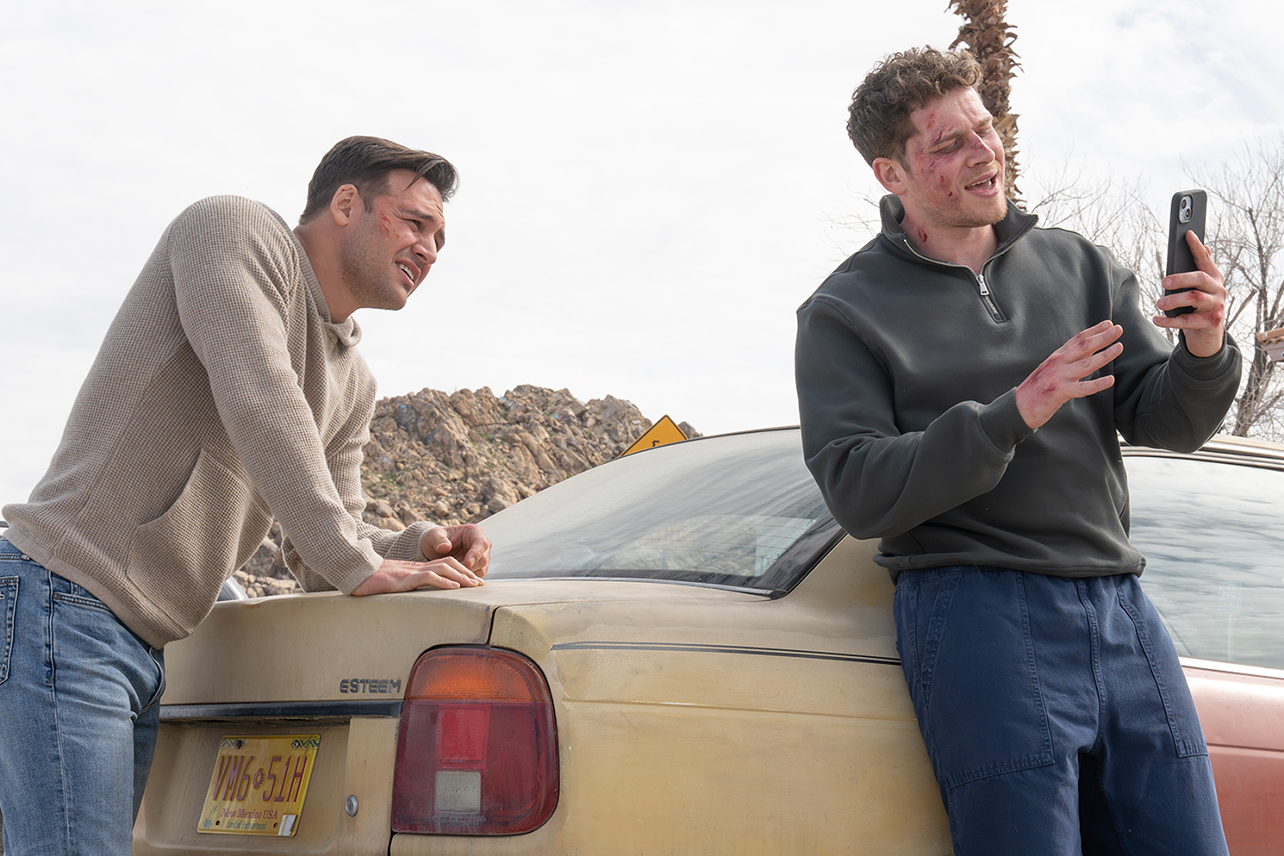
Elsewhere, Floyd begins telling Clark the (apparently long) story of how his penis was injured; it has something to do with running late for a job interview because the news interviewed him about saving a disturbed young man from traffic, and he doesn’t get to finish it. But along the way there’s an uncanny shot of him riding the L in Chicago as buildings flow past on either side as if they’re mere feet apart. Things can look cool rather than boring if you’d like them to!
But let’s face it, we come to DTF St. Louis not for the cinematography, but to see if these people are, in fact, down to fuck. I’ve got good news on that front! Carol Smernitch and Clark Forrest set about seducing one another with gusto, if not with equal effectiveness. Clark’s main contribution is making up a second job as the founder and director of a Canadian off-shore demolition company, earning him the nicknames “The Bangmaster” and “The Big Bang.” Carol, who wants to find this man attractive, chooses to believe him at first.
Carol is the real instigator, however. It starts with the opening shot, where all she really has to do is stand there looking beautiful for Clark to fall for her instantaneously. Every time they encounter each other, she deftly (if none too subtly) steers the conversation in the direction of double entendres. She leans hard on the Bangmaster nickname. She repeats the phrase “pussy out” over and over just so Clark can hear her say the word “pussy.” She tells him all he needs to do to restart her loser husband’s dead car is touch it with his hand and it’ll start right up.
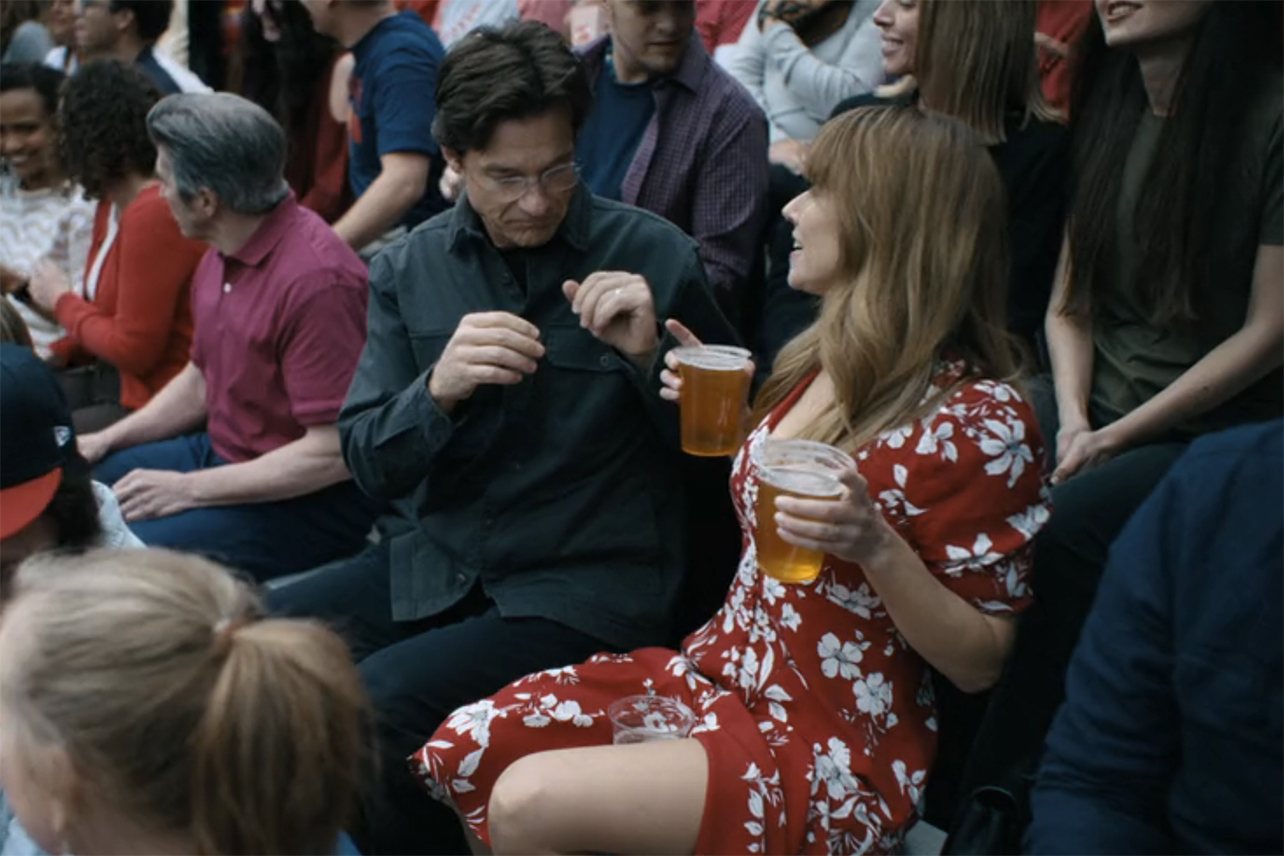
In the incident that gives the episode its title, she gets herself invited to a Cardinals game alone with Clark, holds his beer between her legs with her dress hiked up, and tells him to “snag it.” Within seconds they’re making plans to meet while Floyd is out of town. From end to end, it’s an expert depiction of how a few strategically placed comments and questions, glances and touches and points of emphasis, can jumpstart a love affair.
The actual sex is fascinating, too. Carol is very much in charge, parting first her feet and then her legs to welcome Clark into the promised land like Moses parting the Red Sea. It’s her idea to turn their liaisons into what Clark tells Homer they called “dream meetings,” where — at her insistence — they made each other’s sexual dreams come true. For Clark, this mostly meant “weight placement”: Carol would sit her whole weight on his face and make phone calls to customer service or whatever, as if he wasn’t even there. (God saves his hottest middle-aged women for his most submissive middle-aged men.) It’s a powerful promise to make when you’re two deeply unfulfilled people who’ve suddenly found a way to fulfill yourselves.
Everything’s going great, until Carol, Clark, and Clark’s wife Eimy attend the big outdoor concert festival where Floyd serves as an ASL interpreter. When his and Carol’s failson Richard refuses to take dance classes, Floyd winds up taking them instead so that he can better transmit the groove of the music to his deaf audience. It’s hilarious seeing the big guy dance to Lil Mama’s “Lip Gloss” with elementary school kids or get the fuck down in front of a massive festival crowd, but it’s also genuinely adorable. Seriously, I wrote those words down in my notes even before I saw how Floyd’s performance moves Carol to tears and makes her realize she wants to grow old with this man, not leave him.
After that point, Carol pumps the breaks on the affair…and Clark calculatedly gets closer and closer to Floyd, until he feels comfortable bringing up DTF St. Louis as an option for their marriages. What he does on the app is fuzzy: Clark insists with apparent honesty that Floyd didn’t use it to meet men, but a Bowie-fixated hookup with the username Modern Love (Peter Sarsgaard) would seem to indicate otherwise. At any rate, someone posed as an account named Tiger Tiger to lure Floyd to the site where he’d be poisoned and killed. Homer ties the account to Clark’s IP address and credit card and makes his arrest.
But that’s a little too easy, even if you ignore the fact that Eimy would also have access to the same card from the same IP address. Going through Floyd’s personal stuff with Carol’s grudging permission — she ignores the label saying the contents are both sharp and just a bunch of boring work papers — Plumb uncovers multiple copies of the same issue of Playgirl found at the crime scene. Carol confirms Plumb’s suspicion that Floyd wasn’t jerking off to that nude Indiana Jones, he is that nude Indiana Jones, or was when he was much younger.
You almost feel bad for Homer, who has the bookish and fragile vibe of a Severance character, when he realizes his theory of the case now needs serious revision. You feel nothing but happiness for Plumb, who deserves an L after all the shit she gets served. And again, it’s simply nice to see one of the most underutilized members of Wednesday’s strong cast get a chance to go blow-for-blow against the likes of Jenkins and Cardellini, whose characters really put Plumb through her paces.
Limited series about murder and infidelity are to the current era of prestige TV what sociopathic leading men were to the form’s first wave. Even so, don’t let the familiar format fool you. DTF St. Louis stands out from the pack, combining sumptuously dystopian photography with a suite of quirkily captivating performances. Color me captivated.
Sean T. Collins (@seantcollins.com on Bluesky and theseantcollins on Patreon) has written about television for The New York Times, Vulture, Rolling Stone, and elsewhere. He is the author of Pain Don’t Hurt: Meditations on Road House. He lives with his family on Long Island.