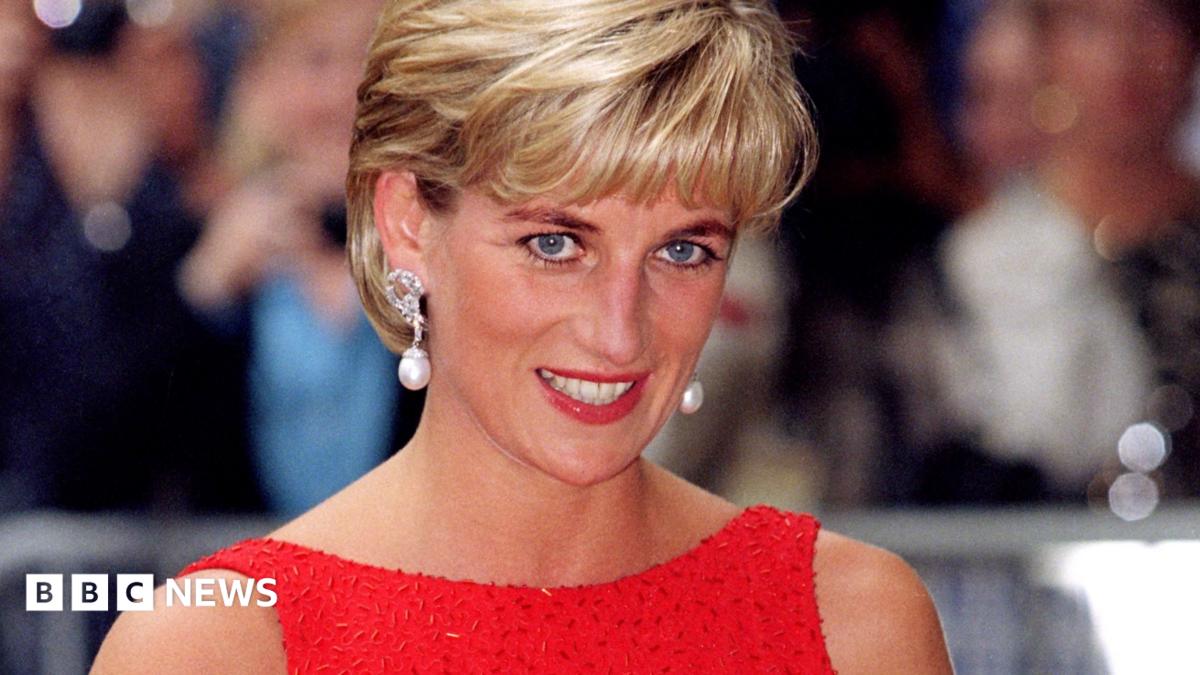
Image source, Mark Cuthbert/UK Press via Getty ImagesBySean CoughlanRoyal correspondentPublished9 minutes agoThe legacy of the shocking death of Diana, Princess of Wales, is still the rawest of wounds for the royals, as demonstrated by the no-holds-barred memoir from her brother Earl Spencer.
It might be almost 30 years ago, but Buckingham Palace's unusually angry rebuttal to the book's allegations of a callous response to his ex-wife's death from the then Prince Charles shows how much this still matters.
That late summer in 1997 was a moment when the Royal Family looked out of touch, lacking in empathy for Diana's loss, and at peril of losing public support, as people laid siege to the palaces with flowers.
While the royals dealt with their own private grief, they were also facing a reputational disaster, at risk of becoming the focus of public dismay at the sudden death of the "People's Princess" in a car crash in Paris.
Image source, Liba Taylor/CORBIS/Corbis via Getty ImagesImage caption, An outpouring of public grief saw flowers laid outside palaces and Diana's homes
"It was a very febrile mood. Everyone was taken by surprise by the strength of feeling, and the strength to which the Royal Family was unpopular. The palaces were deemed to have treated Diana badly," recalls royal author Valentine Low.
Low was inside Westminster Abbey for Diana's funeral and vividly remembers the public response to the electrifying speech made by Earl Spencer.
"I heard this noise. I couldn't quite make out what it was, and then I worked out it was the crowd outside the abbey, who'd been listening on the speakers," he says.
"That noise appeared to come through the stone walls of the abbey and it was the most extraordinary thing - as people then started to applaud inside the abbey. It was so astounding, in front of Charles and all of the Royal Family."
'I'm telling the truth': Earl Spencer defends Diana book claims about Charles in BBC interview
"We have all been trying in our different ways to cope. It is not easy to express a sense of loss, since the initial shock is often succeeded by a mixture of other feelings: disbelief, incomprehension, anger - and concern for those who remain," said the late Queen.
A fresh-faced new prime minister, Tony Blair, was said to have been a modernising influence on sending such a direct message - an intervention later depicted in the movie, The Queen, starring Helen Mirren.
Image source, Anwar Hussein/Getty ImagesImage caption, There was disagreement about whether it was right for the princes to walk behind Diana's coffin
So many of the current tensions in the royal world can be traced back to the trauma of those events. The death of a mother at such a young age was inevitably a huge shaping influence on her sons - and it can feel as though those unresolved tensions are still playing out.
In the Duke of Sussex's memoir Spare, Diana's absence is a huge presence, his sense of loss unabated. There is still a graphic sense of his distress at walking behind her coffin, with Prince Harry mentioning Earl Spencer's opposition.
"Mummy's brother, Uncle Charles, raised hell. 'You can't make these boys walk behind their mother's coffin! It's barbaric'," wrote Harry.
Harry's accusation that the interests of the institution of the monarchy had been put above the happiness of individuals has been part of the narrative that saw him stepping down as a working royal and remaining at loggerheads with his brother, Prince William.
Image source, JOHN STILLWELL/AFP via Getty ImagesImage caption, There was a wave of applause from outside Westminster Abbey when Earl Spencer finished his eulogy
The disputes that followed Diana's death, within the family and between in-laws, are still being aired loudly in Earl Spencer's book - Swan Song: Diana, My Sister - and in the global news coverage it has triggered. It opens up old questions about King Charles's character, his treatment of the young princess and his relationship with the now Queen Camilla.
On social media, Diana's fans are believing Earl Spencer's version of events, says Prof Pauline Maclaran. She says the royals remain "highly vulnerable" to anything that evokes the story of a "beautiful princess whose life was cut short in such tragic and ambiguous circumstances".
Royal commentator Jenny Bond described it as a "fantastically hostile, absolutely rude book... it's a very unpleasant portrayal of a man - but it's his memory of it, and who knows who's right?"
Image source, Princess Diana Archive/Hulton Archive/Getty ImagesImage caption, Prince William was 15 and Prince Harry just 12 at their mother's funeral
At issue is Earl Spencer's account of a conversation with the then Prince Charles after the death of Diana, with the prince accused of telling Earl Spencer: "We'll forget her soon enough."
He is accused of sounding "giddily elated" and like a "lottery winner" after the news of her death.
Buckingham Palace hit back with a response, which although dressed in courtier-like politeness, was essentially saying the conversation had never happened like that.
The King was said to be "mindful that the pain of fraternal grief can cloud reason, affect judgment and colour memory in ways that others do not recognise".
Anyone who has lost someone knows how feelings can run high, people can hear different things about the same conversations - and families can fall out, or come together, in the wake of a death.
Psychotherapist Nick Hatter says he doesn't have a view on which version of events is correct, but he says that during traumatic events memories can be "distorted". A phone call doesn't have any of the visual clues or body language to give a fuller picture, he adds.
Hatter says there can be very different and unpredictable responses to grief, including a condition known as "bereavement mania" where someone can seem inappropriately hyper or even euphoric after the loss of a loved one.
The first opinion poll on who to believe has been published by YouGov - and it suggests a very split view, with 31% believing Earl Spencer's allegations, 36% suspecting it's not true and 33% saying they don't know.
Low thinks the book is unlikely to change many opinions, as "people have settled into their camps about how they regard Charles, how they look back on the Diana years".
There could also be a feeling that it's "tawdry" to rake up these claims so many years later, he says.
That's echoed by historian and author Sir Anthony Seldon who says Earl Spencer showed great courage at the time of Diana's funeral, but says his memoir is a "sad and unnecessary publication".
Royal commentator Richard Palmer says the book threatens to take the royals back to the difficult days of 1997.
"This book and the run-up to next year's 30th anniversary of Diana's death threaten to undermine the Royal Household's three decades of work to rehabilitate Charles and Camilla's image," he says.
Image source, Jayne Fincher/Getty ImagesImage caption, King Charles walks with Diana's sisters Lady Jane Fellows (left) and Lady Sarah McCorquodale to meet her coffin as it arrives in England
We are still to hear from Earl Spencer himself about why he has written this book now, so many years later.
But he is fiercely defending the accuracy of his claims, in interviews over the weekend, including with the BBC's Laura Kuenssberg.
In it Earl Spencer doubles down on his allegations about King Charles saying: "I can tell you here and now, those are exactly the words he said.
"I was hyper alert to what he was saying and those are precisely the words that he said and I promise that to you now. Genuinely, that is what he said. I don't hear him saying he didn't say that."
To play this video you need to enable JavaScript in your browser.This video can not be played
Watch: Earl Spencer says he's 'telling the truth' about what Charles said after Diana died
In person, Earl Spencer is a very affable and charming figure, a writer who has had a first-hand view of some big royal moments and has the stories, sometimes scandalous, to show for it.
What makes his claims more potentially damaging is that he isn't writing as a pundit or commentator, but as someone who was sitting around the table with his in-laws and his own sister. It's a close up, emotional, insider's view, not a long lens and a headline.
If this book shows that the royals haven't escaped the legacy of Diana's death, then it also shows that neither has he.
You can watch Earl Spencer's interview with Laura Kuenssberg on Sunday from 16:00 BST on BBC iPlayer and on BBC One at 18:30.
Palace in war of words with Earl Spencer over claims in Diana book