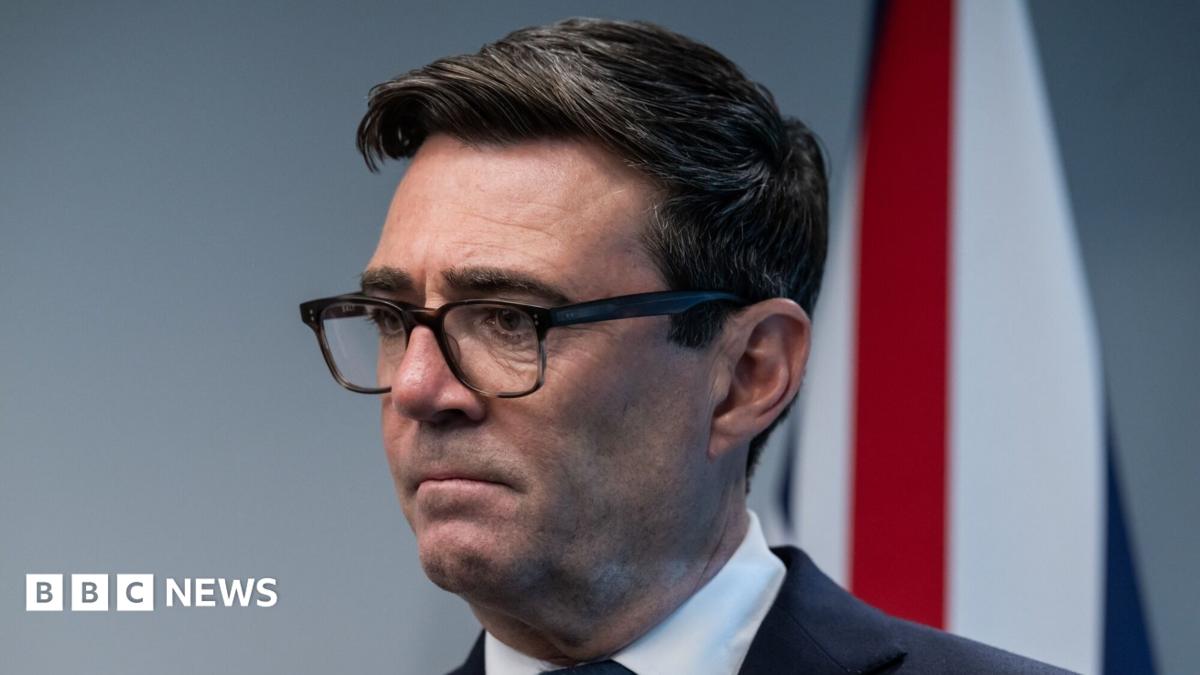
Image source, EPAImage caption, Prime Minister Andy Burnham has pledged to reform adult social care in England
Prime Minister Andy Burnham is facing calls to set a national waiting-time target for dementia care in England.
An Alzheimer's Society proposal to set an 18‑week referral‑to‑treatment target has been backed by Professor Sir Mike Richards, England's former national cancer director, and Baroness Louise Casey, who's leading a major review of adult social care.
In a report, Alzheimer's Society and the King's Trust said a "cancer-style revolution" was needed to improve dementia care, which they described as being "stuck in the 20th century".
In a speech at Alzheimer's Society conference on Thursday, Social Care Minister Alison McGovern expressed support for the report, external.
She said: "The report that the Alzheimer's Society published today on going on the journey that we've been on with cancer, with Alzheimer's and dementia, I think that's spot on."
The minister said dementia had been "neglected for far too long".
She added: "And nowhere is this division between health and social care felt more sharply than by people living with dementia in their families, too often left to navigate a shattered system at the most difficult time in their lives."
The government has committed to appointing a top official to oversee dementia care and publish a new plan - a modern service framework - to speed up support for those with the disease by the end of the year.
McGovern said the government would "appoint a dementia tsar, backed with real expertise".
Currently there is no waiting-time target for dementia in England.
In contrast, the NHS sets waiting-time targets for cancer diagnosis and treatment.
Professor Richards was the national cancer director when these cancer targets were introduced in 2000, and said he thought an 18‑week referral‑to‑treatment target for dementia patients was achievable.
He said setting such a target would require "political initiative" and extra funding.
"All of that is going to cost more money but remember the toll that this condition is taking at the moment, both on the people affected by dementia themselves and their relatives," the professor said.
The same proposal has been made by Baroness Casey.
In a letter to former Health Secretary Wes Streeting in March, she said the government should look at "how dementia can be put on a level playing field with other conditions, for example by setting national standards for dementia diagnosis, including an 18‑week referral‑to‑treatment target".
Speaking to the BBC, Baroness Casey said she agreed with the proposal to emulate cancer care.
She said: "I think the National Health Service and more generally all of us have stuck our heads in the sand about it, and it's time we started saying, yes, we should have a similar mission, and we should do as much as we possibly can on dementia, and now."
Baroness Casey is expected to publish her recommendations on social care reform next summer.
About one million people are living with dementia in the UK, a figure expected to reach 1.4 million by 2040.
Burnham cancelled his engagements earlier this week after the death of father, Roy, who had Alzheimer's disease.
Returning from compassionate leave, he said his father would have wanted him "back out there" to bring forward "the changes that he always pushed me to make".
In July, Burnham spoke about his father's condition and said it had influenced his drive to reform adult social care in England.
Burnham has said he will wait for Baroness Casey's recommendations before deciding what changes to make to social care and how it's funded.
Burnham thanks well-wishers following his father's death
'I'm determined to fight this and break the stigma'