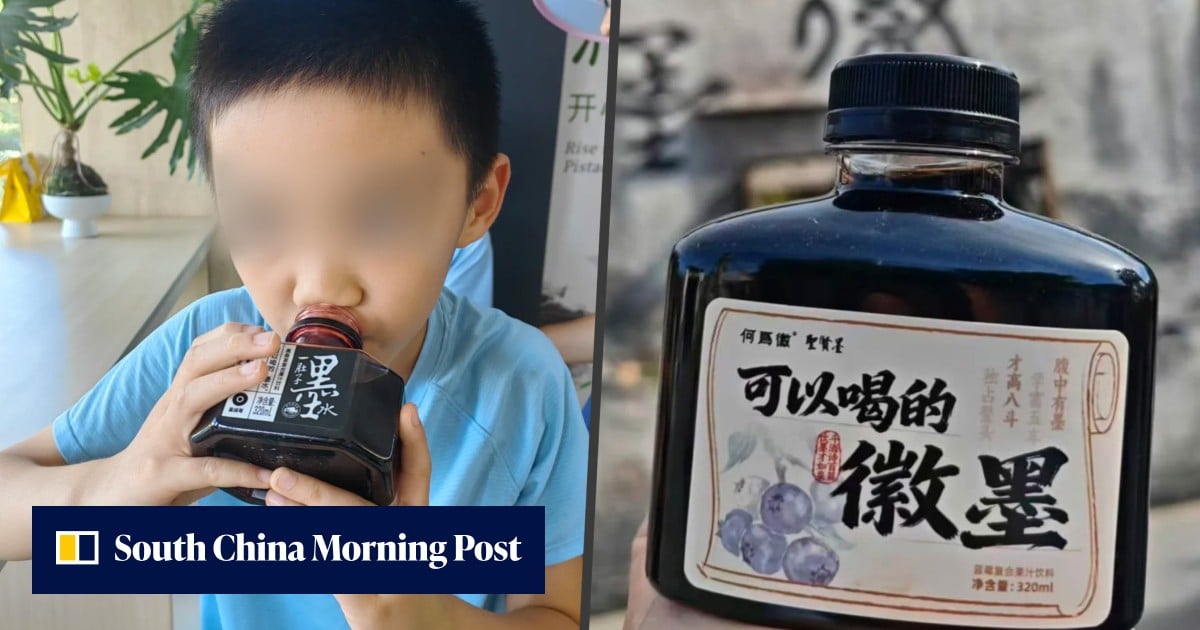
Unlike today’s inks made from industrial pigments, ancient Chinese ink was produced using soot from burning natural plants or animal oils
2-MIN READ2-MIN ListenFran Luin BeijingPublished: 6:27pm, 17 Sep 2026While the Chinese idiom, “Having ink in their stomach”, serves as a metaphor to commend the knowledgeable, the act of ingesting ink was a common practice among ancient literati.
The earliest documentation of ink drinking dates back to the Northern and Southern dynasties (420–589), where it was used as a sanctioned punishment for scholars with illegible handwriting.
According to the Book of Sui, the official history of the Sui dynasty (581–618), during an exam administered by a palace attendant to assess local officials, scholars who presented poor handwriting faced the penalty of consuming one sheng of ink. This traditional Chinese unit of volume varied by dynasty, with one sheng equating to 600 millilitres during the Sui period.
This rule was abolished after Li Shimin ascended the throne in the Tang dynasty (618–907). Nevertheless, some scholars willingly consumed ink to enhance their literary skills.