Add The California Post on Google San Francisco homeowners are facing a double-edged sword with the city’s transit system.
Either they pay a property tax to fund the transit system, or they watch their home values fall due to reduced service.
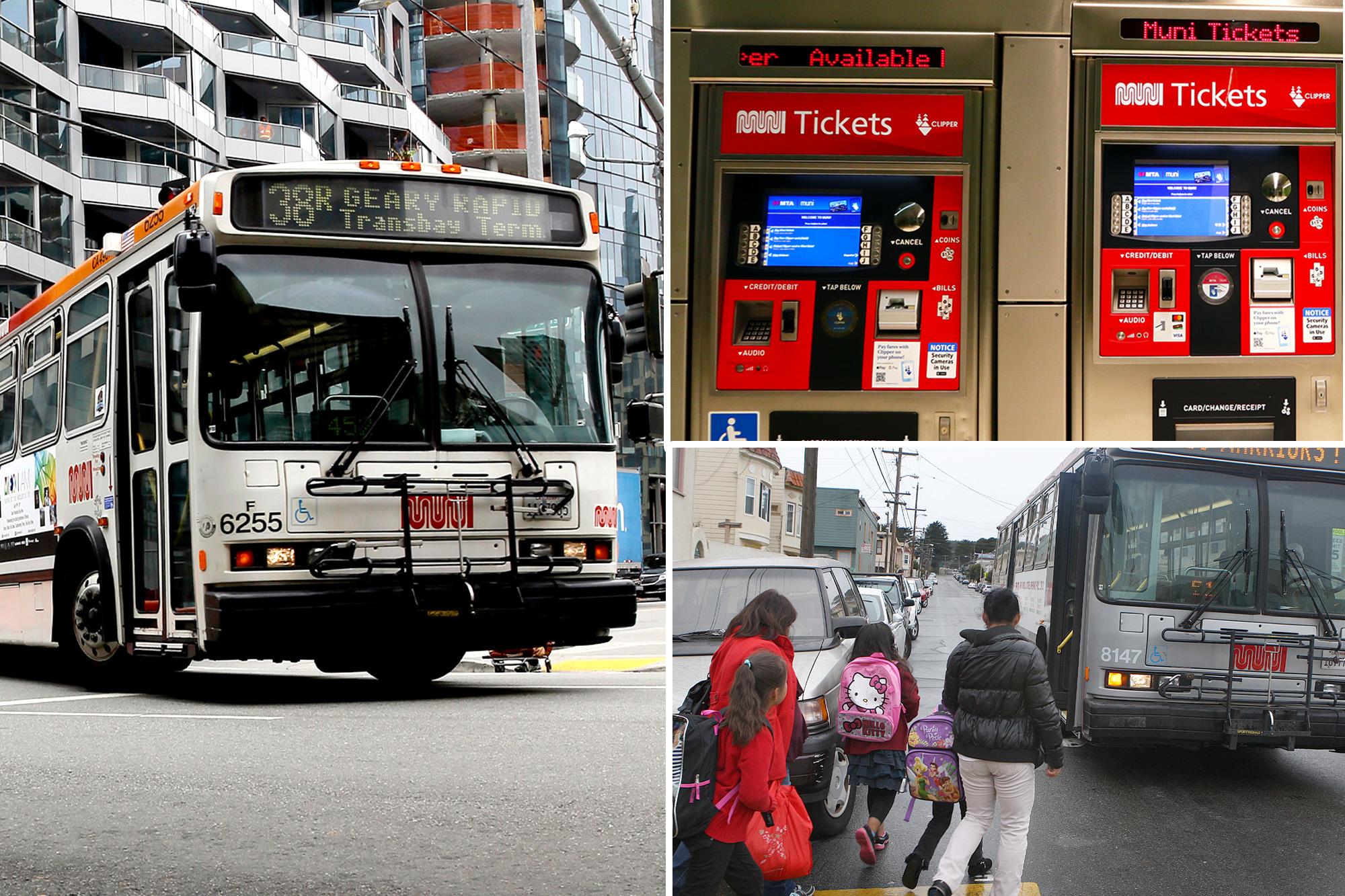
Muni, the transit service of the San Francisco Municipal Transportation Agency (SFMTA), is staring down a “fiscal cliff” after pandemic-era federal relief funding ran out this year in July, and the city is trying to save the transit system by taxing homeowners.
However, if Muni remains in a financial crisis and has to reduce service across the city, residential property values could fall sharply, according to a new analysis.
A report from the SF Controller’s Office claims that San Francisco home values could drop by 0.6% to 0.9% on average across the city, if Muni service is reduced.
“A buyer would pay that much less for a house, on average, if the parcel tax did not pass and the potential cuts went into effect. Given current typical housing prices in the city, this effect translates into a $9,400 – $14,100 drop in the value of an average house,” the report stated
Non-residential properties, including offices, retail space and hotels, could face even greater impact with the property value reducing between 1.1% and 1.2%.
San Francisco has put the Prop. H parcel tax on the November 2026 ballot to fund the city’s transit system. According to SFMTA and the Controller’s Office estimates, the proposed tax of $129 and up, depending on the size of the parcel, could generate an annual revenue of $184 million.
Under the proposal, single-family homes and condominiums would be charged a base rate of $129 per year, plus $0.42 per square foot for building area over 3,000 square feet and $1.19 per square foot over 5,000 square feet.
Multi-family residential parcels would pay a $249 base rate, along with $0.195 per square foot for building area over 5,000 square feet.
Meanwhile, non-residential parcels would face a base rate of $799, alongside tiered rates of $0.76 per square foot over 5,000 square feet, $0.84 per square foot over 50,000 square feet, and $0.99 per square foot over 250,000 square feet, capped at a maximum tax of $400,000.
Mayor Daniel Lurie, who supports Prop. H, called the measure essential to San Francisco’s economic comeback in a statement. “The alternative is devastating Muni cuts, more traffic congestion, and longer commutes. San Franciscans would spend an extra 15,000 hours sitting in traffic on the way to work or school every weekday—costing residents more than $100 million a year,” Lurie said.
Over the 15-year life of the proposed parcel tax, the Controller’s Office projects that the tax would lower residential property values by an average of 0.2% while the cuts would drive it down by 0.6% to 0.9%.
“Residential property owners are clearly better off by avoiding the [Muni service] cuts with the tax,” the report suggested.
San Francisco home values have hit staggering new highs this year thanks to the artificial intelligence boom, with median prices for single-family homes surging past $2.2 million in July.