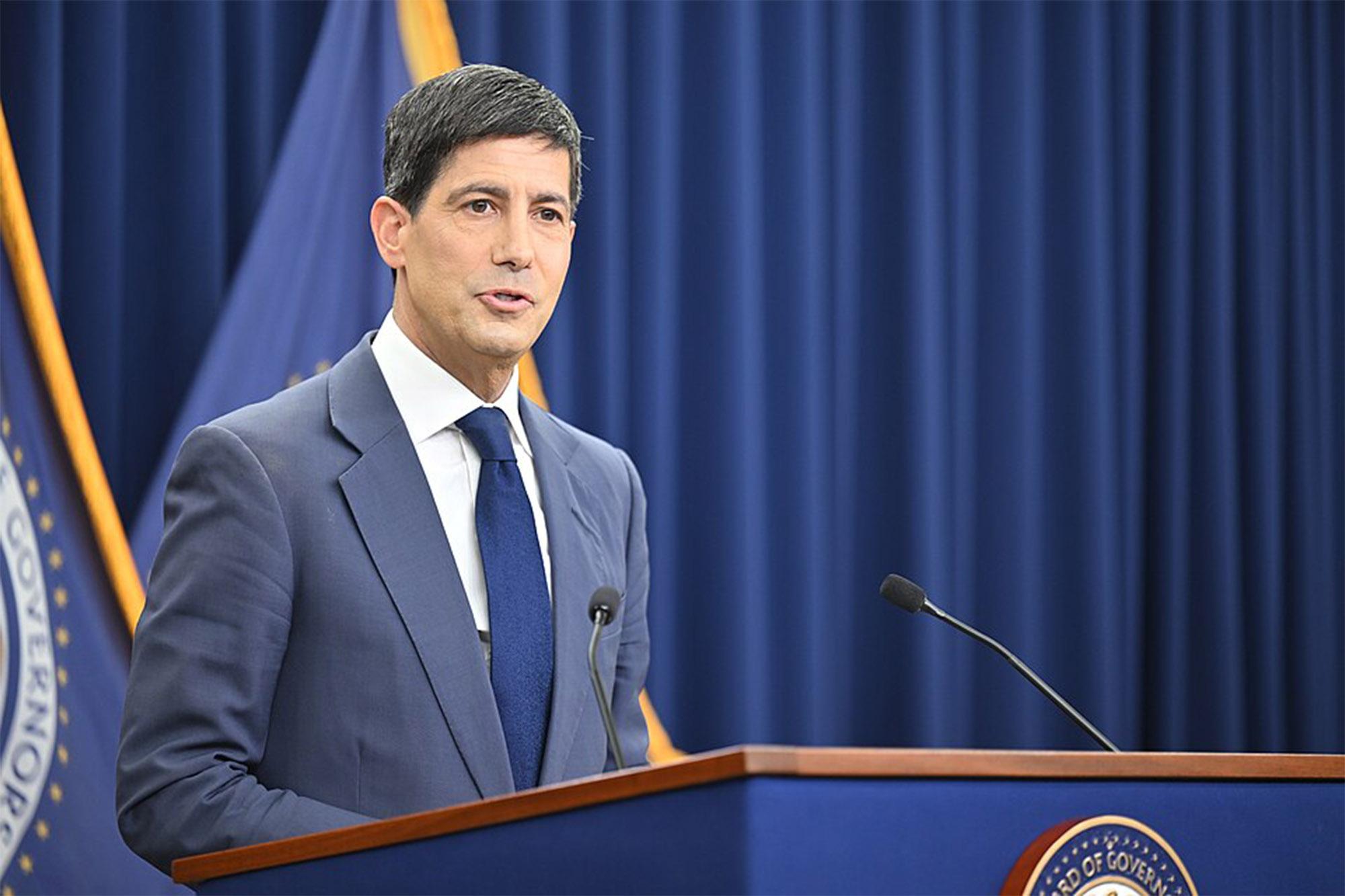
Chairman Warsh answers reporters' questions at the FOMC press conference on June 16, 2026 wikimedia commons See more of our coverage in your search results.
Add The New York Post on Google The Fed announced today that it was going to increase the target range for the federal funds rate by one quarter percentage point to 3.75% to 4.00%.
The rate increase was widely expected, and in the immediate aftermath of the announcement, stocks traded down with the Dow shedding 0.80% and the S&P 500 losing 0.24%. Treasury yields on 10-year notes remained below the psychologically important 5.00% level.
The relatively muted reaction from markets may have been an expression of mild relief that the central bank isn’t beholden to political pressure from the Executive branch, which has been pushing for an interest rate cut since Trump took office in January 2025. It may also signal some faith that the Fed is willing to take the appropriate steps to quell remaining inflation.
But the rise in short-term rates should be making individual borrowers ask what that means for their debt. According to the New York Fed, total non-household debt (everything but the mortgage) in the U.S. was $5.1 trillion in Q2 2026.
An analysis by The Motley Fool calculates the average American has $11,694 in unsecured personal loan debt with an interest rate of 11.86% on a 24 month loan, and according to the consumer credit bureau Experian, the average credit card balance is $6,659. Bankrate data puts the current average interest rate on all credit cards at 19.56%.
Even when the Federal Reserve began to cut rates late last year in the face of a softening job market, credit card rates in 2026 did not drop proportionately. Issuers have maintained a high margin (the Prime Rate + 12% to 13%), keeping the floor for consumer revolving debt painfully high for most. The current hike in interest rates should only push the interest on credit cards higher.
The debate on whether this rate hike will be good for the average American has revolved around two views that can be summed up by a tweet from market researcher Jim Bianco:
The crux of the debate between Bianco and Moody’s Chief Economist Mark Zandi is whether the Fed hiking rates into a supply shock could result in pushing U.S. growth “below potential” and induce “layoffs, rising unemployment” and ignite a “self-reinforcing negative cycle.” Bianco, on the other hand, argues that a more aggressive Fed will bring down 10-year yields by signaling it’s taking inflation seriously.
Other market experts also see a silver lining in the Fed’s more aggressive stance. Melissa Cohn, Regional Vice President of William Raveis Mortgage, argues that when the Fed pulls the trigger on short-term rates, it signals backbone to financial markets, giving traders “more confidence that the Fed is actually going to fight inflation,” which will lead to lower long-term rates. That may have a trickle-down effect on mortgages, which could see some relief from recent highs of 7.22%.
In a recent survey by Newrez, 84% of homeowners with credit card debt say paying off their credit card debt is a high priority and the same number of respondents say owning a home is one of the best ways to build long-term wealth. In addition, more than half of respondents (52%) say they researched debt consolidation options during the past year, while many are considering additional strategies that could help them pay down debt more efficiently.
Consumer worries about debt appear to be as complicated as the monetary and economic picture facing the Fed. Americans have record amounts of equity in their homes, but they have been adding credit card debt as inflation has spiraled. The solution could be tapping that equity for debt consolidation in concert with belt-tightening.
The most hands-on, immediate approach for paying down individual debt involves well-known repayment strategies like the debt avalanche, which prioritizes paying off accounts with the highest interest rates first, and the debt snowball method, which focuses on clearing the smallest balances first to build psychological momentum.
For those looking to streamline multiple payments, debt consolidation is a highly effective tool. By taking out a single personal loan with a lower interest rate than your credit cards, you can pay off multiple rotating balances. This leaves you with just one predictable monthly payment and reduces the amount of interest accruing each month.
When your debt feels entirely unpayable, structured relief options come into play. Credit counseling from non-profit agencies can enroll you in a Debt Management Plan (DMP) and negotiate with creditors to lower your interest rates and waive fees, allowing you to repay the full principal over three to five years.
The best way to not get squeezed by higher interest rates is to act now to get your debt under control.
This article was written by Brooklyn-based financial journalist and Commerce Editor for the New York Post Will Kenton. Specializing in investing, personal finance and retirement planning, Will’s expertise is rooted in behavioral economics — a field he explored as associate editor of the New School Economics Review. Will aims to help readers navigate the “predictable irrationality” that influences financial decisions, providing practical real-world solutions to student loan debt, investments, mortgages and more. Before joining The Post in 2026, Will covered the intersection of money, economics and culture for Investopedia, AP News, Business Insider and TIME Stamped.