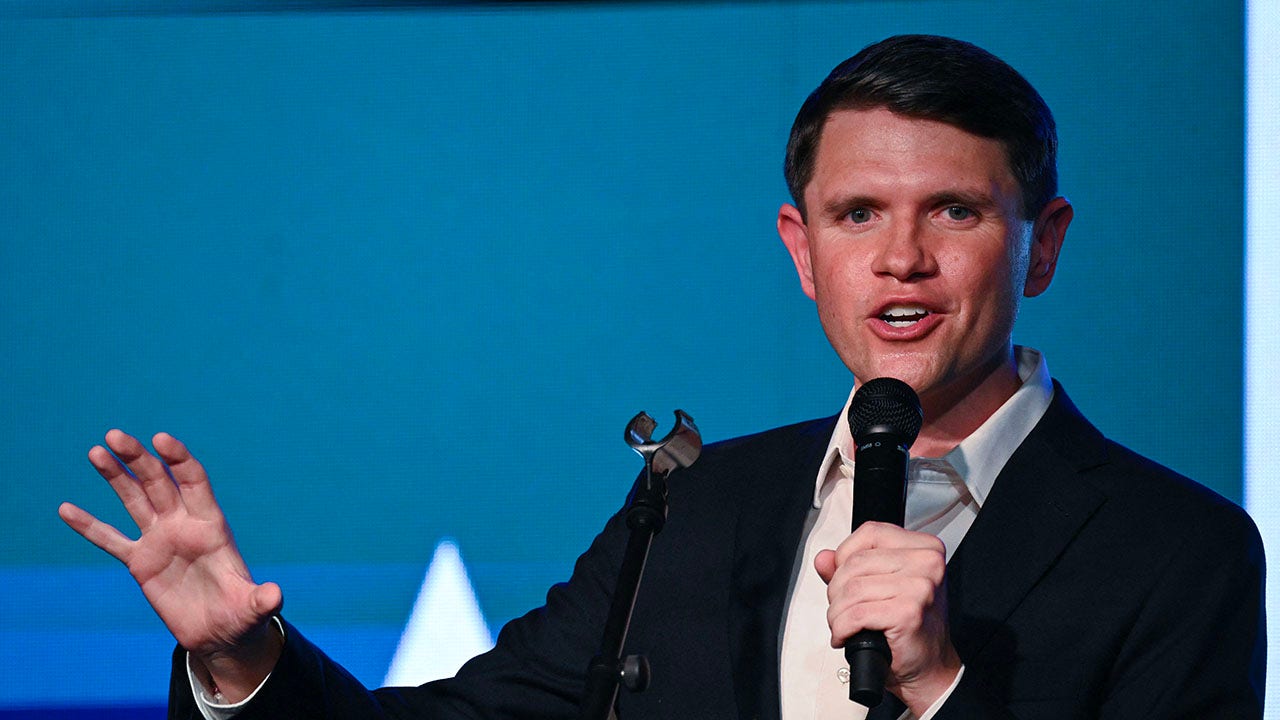
Social Democrats react to the presentation of an exit poll during the party's election night watch party in Stockholm, Sweden, 13 September 2026. Photograph: Jonas Ekstromer/EPAView image in fullscreenSocial Democrats react to the presentation of an exit poll during the party's election night watch party in Stockholm, Sweden, 13 September 2026. Photograph: Jonas Ekstromer/EPASweden voted against more power for the far right – but are centrists listening?Even as the ‘extremist’ AfD seeks further election gains in Germany, Europe’s leaders can learn from Sweden’s dangerous embrace with far-right ideology
Don’t get This Is Europe delivered to your inbox? Sign up here
Europe’s focus turned nervously to Sweden on Sunday, after an explosive election in Germany just a week earlier placed a far-right party, officially classed as “extremist”, on the brink of power in a German state for the first time since the Nazi era. A party with neo-Nazi roots has been pulling the government’s strings in Sweden for the last four years – would the country’s general election put the far right formally in government? Or would enough Swedes opt for a gear change, having seen the Sweden Democrats’ hardline (some would say poisonous) agenda in action?
Votes were still being counted on Wednesday but it was immediately clear that the far-right Sweden Democrats had suffered a setback; their first loss of support among voters since it entered parliament for the first time 16 years ago. The party slipped from being the country’s second biggest party to its third.
The centre-left Social Democrats appear poised for a return to power, although it could take months for their leader, Magdalena Andersson, to form a coalition. Strong results for the left and green parties gave her left bloc a wafer-thin, three-seat majority.
Is the far right’s regression, however modest, a turning point? Have Swedes reached the limits of a taboo-busting experiment with populist, nationalist rightwing prescriptions? And is there a message for mainstream leaders across Europe, many of whom seem fatalistic about a continental far-right surge? France goes to the polls in April while governments in Italy, Spain and Poland, all face their electorates later next year.
The Dutch political scientist Cas Mudde says elections in one country are a poor guide to what will happen in another. Specific local factors in Sweden, including a scandal, may have dented the far right’s support. For Mudde, the scale of the AfD’s win in Saxony Anhalt, however, was “a black day for Europe” – and with far-right ideas gaining ground across the continent, he warned mainstream politicians that “today’s key fight is for democracy, rather than for party or power”.
This is where Sweden offers a cautionary tale. Its political establishment had “fully normalised” the far-right party, Mudde said. “Its nativism is now shared by all the major parties, albeit in lighter form, from the Moderates on the right to the Social Democrats on the left.”
But the decline in the far right’s support, for now, he thinks, “at the very least creates space for mainstream parties to focus on issues other than immigration”.
Ann-Cathrine Jungar, a professor of political science at Södertörn University in Stockholm, is very sure that the Sweden Democrats are not on the way out. Electoral rankings go up and down, she said, and the party’s influence will endure. More important now is how the mainstream parties respond.
“We focus a lot on the extreme and radical right parties, but the key to their influence is what the other parties do. Why have Sweden’s mainstream parties adopted the far right’s policies? The Social Democrats have co-opted their ideas, even though they are counter to the country’s needs. In Sweden, we need competent, talented people who want to come and live here, we need labour for health and social care. Yet nationalism seems to be the prevailing ideology now.”
In a widely read Guardian essay headlined How Sweden lost its soul – and stopped being Sweden, published before the vote, Martin Gelin documented his country’s transformation after 2022. Rightwing parties that year signed a Faustian pact with the Sweden Democrats, buying its support for a minority rightwing government. The deal? The far right was given a direct hand in shaping policy. “A new Sweden has emerged, cruel and cold for migrants”, wrote Gelin, with xenophobic and ethno-nationalist ideas “now comfortably embedded in the political mainstream”.
Most shockingly, Andersson’s Social Democrats, modelling themselves on their hardline Danish counterparts, had bought into the far right’s framings on crime and immigration.
Will Sweden’s Social Democrats now learn from their worst performance in more than 100 years, and embrace an agenda that does not involve deporting toddlers to Iran, people with dementia to the UK, or locking up 14-year-olds?
Jungar is sceptical. “When it comes to linking crime and immigration, this is the new normal,” she said. “The Social Democrats will not pursue policies that are more liberal.”
Yet the political centre in Sweden could articulate a clear alternative to the far right, Mudde says. The Left and the Greens did significantly better among young voters in this week’s election. “This reflects a development we see across Europe, namely that young people prefer outspokenly leftwing parties over centre-left parties.”
View image in fullscreenUlrich Siegmund (centre), head of the AfD state parliamentary group in Saxony-Anhalt, celebrates his party’s election win with parliamentary leaders Alice Weidel (left) and Tino Chrupalla (right). Photograph: Michael Kappeler/DPA/APLike Giorgia Meloni’s party, Brothers of Italy, and Marine Le Pen’s National Rally in France, the Sweden Democrats have “deradicalised” in selective ways, to broaden their appeal, Jungar told me.
By contrast, what was striking in Germany, was how the AfD doubled its score to 44% of the vote, on what Constanze Stelzenmuller in the FT called “a programme of stunning malevolence”.
Two further regional elections this Sunday in Berlin and Mecklenburg-Western Pomerania will be closely watched, including by the AfD’s American backers such as Elon Musk. Mecklenburg-Western Pomerania has economic and demographic conditions comparable to Saxony Anhalt.
For those struggling to understand the appeal of the AfD in eastern Germany, Carolin Würfel’s essay offered an original insight. Born in the former East Germany, Würfel believes that many voters there don’t actually know or care about the AfD’s detailed policies. But the party had tapped into a legacy of grievance about the economic impact of reunification in the 1990s. “Villages and small towns that had been hollowed out, some of them ghostly and depopulated, were suddenly told again: you matter. Everyone else may have left you behind, but I, we, the AfD, care.” The AfD won’t improve life in east Germany, Würfel wrote, “but that was never the point”.
As in Sweden, the political centre in Germany is now being warned that time is running out to offer a credible democratic alternative to the far right. As Florian Ranft of the Das Progressive Zentrum thinktank wrote: “Waiting for the AfD to fail is not a strategy.”
To receive the complete version of This Is Europe in your inbox every Wednesday, please subscribe here.