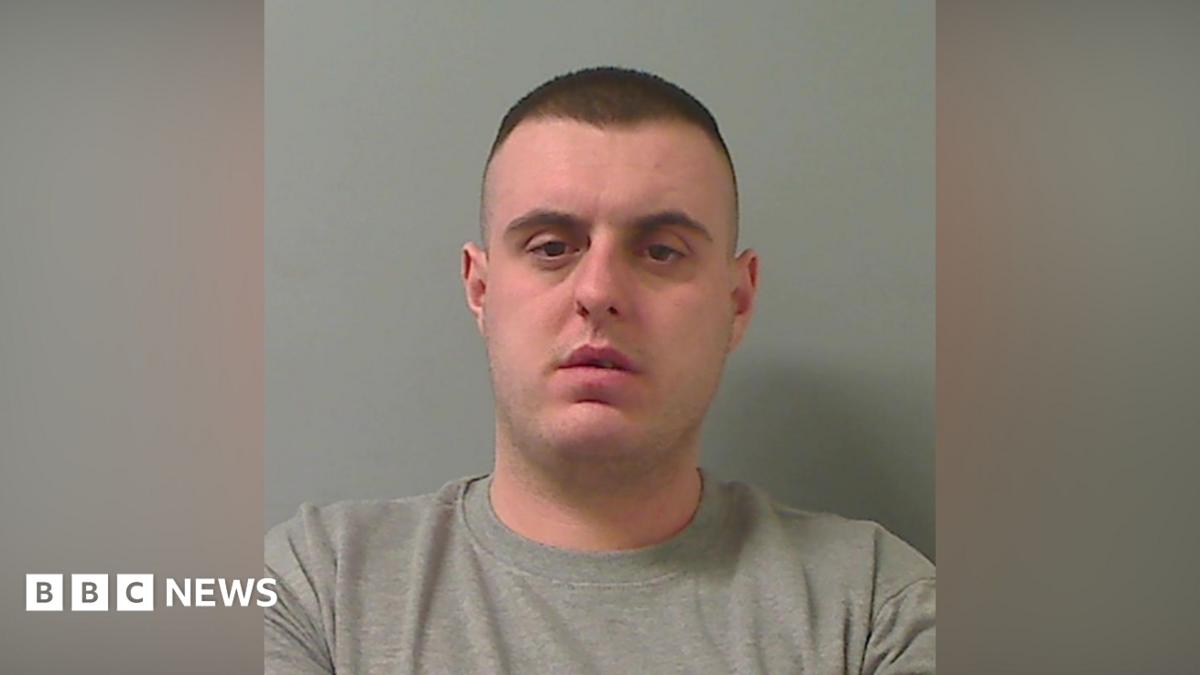
Image source, PSNI HandoutImage caption, Gary Anderson, who is serving a 15-year sentence for the murder of Karol Kelly, remains on the run
Northern Ireland's top judge has explained a court's decision to grant convicted killer Gary Anderson temporary release to attend his father's funeral, despite opposition from prison authorities.
Anderson, 29, who is one of two brothers jailed for life in 2023 for the murder of Karol Kelly in Londonderry in 2018, failed to return to Maghaberry prison on Monday.
The prison service had refused to grant Anderson compassionate temporary release (CTR) to attend the funeral, but that was overturned by a court on Sunday.
The Office of the Lady Chief Justice (LCJ) said the court had held that the governor's decision not to grant CTR was "not substantiated by the evidence provided to the court".
Image source, KELLY FAMILYImage caption, Karol Kelly died after being stabbed in the Grafton Street area of Derry in 2018
"This was an individual judicial decision, and it is not appropriate for this office to make any further comment," the Office of LCJ said.
Anderson's brother Sean, who is serving 17 years for the murder of Karol Kelly, also challenged the decision not to release him from Magilligan Prison to attend the funeral, but that was upheld.
"The application was brought on the grounds that the decisions breached the European Convention on Human Rights (ECHR) rights of the applicants," the Office of the LCJ said.
"The court found that the decision by the governor in respect of Sean Anderson was carried out lawfully and refused the application for leave to challenge the decision."
Anderson was released from Maghaberry Prison on Monday to attend his father's funeral, but absconded from his court-approved chaperone.
It is unclear who that chaperone is or what powers, if any, were given to that person.
The funeral took place at St Mary's Church in the Creggan area of Derry on Monday morning followed by cremation in Letterkenny, County Donegal, that afternoon.
It is unclear if Anderson had been granted permission to cross the border to attend the cremation.
Image source, PA MediaImage caption, Justice Minister Naomi Long said it was not about apportioning blame and that lessons had to be learned from the episode
Speaking on Wednesday, Justice Minister Naomi Long said she believed the prison service had reached "the right conclusion" in relation to Anderson's release.
"They have the experience of doing these assessments on an ongoing basis. They felt it wasn't safe on this occasion for him to be released," Long said.
"But he has rights. He was able to exercise those rights in the court and a judge with that information reached a different conclusion."
That, the minster said, is "part of the process" and "entirely legitimate".
Long said the majority of prisoners on short term release return to custody as required.
"This is an unusual situation that we find ourselves in but it is a deeply concerning one," she said.
"It is not about apportioning blame, it is about trying to find out how we ensure this doesn't happen again but also how we get this person back into custody."
The minister, who urged Anderson to hand himself over to police, said he is "a threat to the public and he is potentially also at risk."
However, the DUP MLA Trevor Clarke, who sits on the policing board, said the whole process needed looked at.
"I think there's clear evidence that there was an issue in this case and that's now been borne out because this person hasn't come back," he told BBC Radio Foyle's North West Today programme.
"All of the things that the courts have involved themselves in this one, I think, has been wrong.
"A chaperone as opposed to a proper prison guard, this is an individual who cannot even handcuff the person while they're chaperoned, so all of the safeguards that could have been put in place weren't put in place."
On Wednesday, the Police Service of Northern Ireland (PSNI) confirmed that Anderson was last seen in the Eastway area of Creggan in Derry.
They also confirmed that they were liaising with An Garda Síochána (Irish police).
Prison Service opposed release of murderer who absconded