Add The New York Post on Google In the world of wedding etiquette, the golden rule is simple: don’t upstage the bride.
While the lore says the bride is always the most beautiful person in the room, Australian influencer Tahlia Skaines has a knack for challenging that assumption.
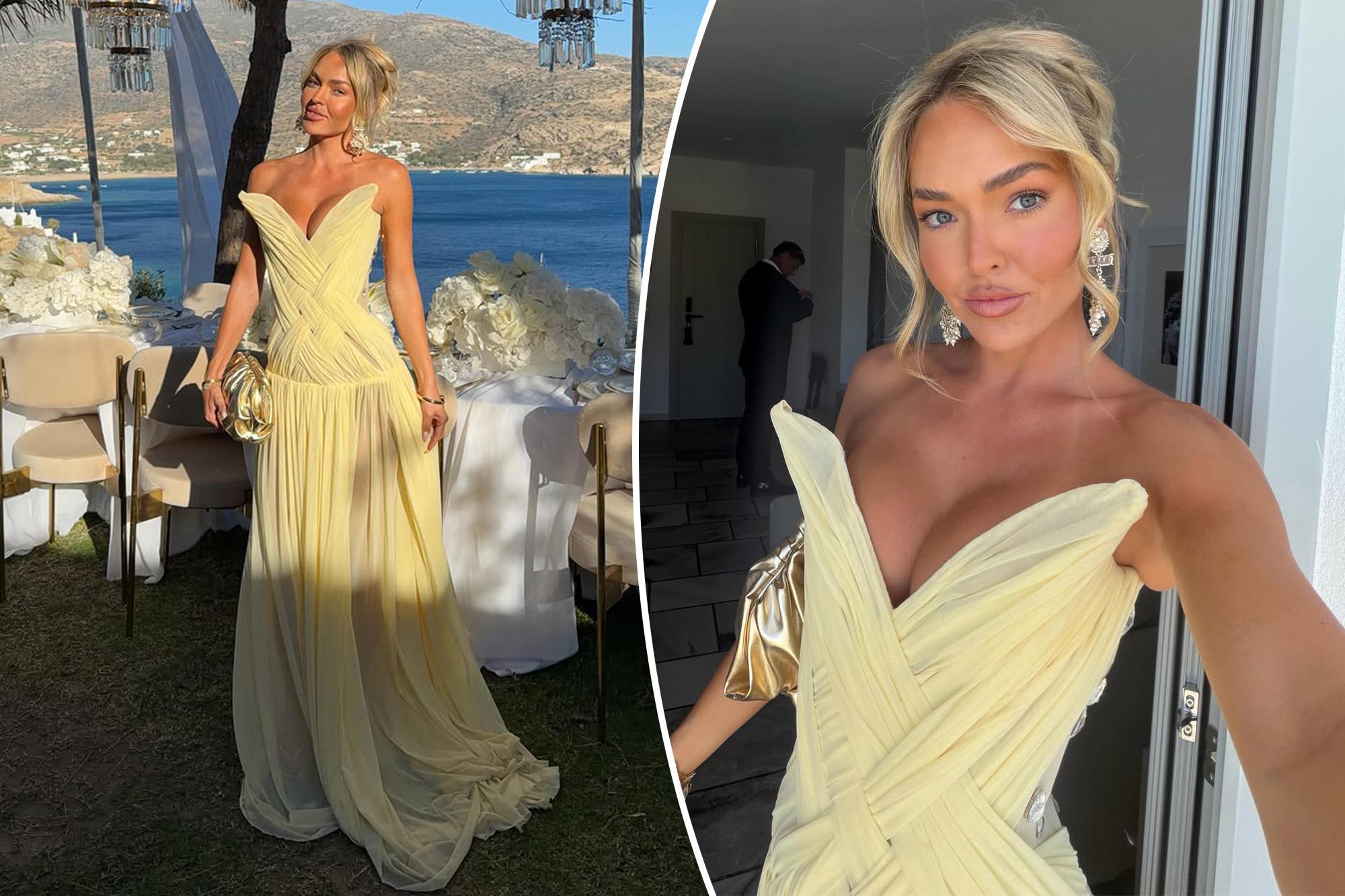
Skaines may have committed a bridal faux pas after turning up to a friend’s wedding in Greece in a plunging lemon-yellow gown — prompting critics to accuse her of one of matrimony’s most controversial offenses.
“Literally outdid the bride!” one commenter declared on her Instagram after the 31-year-old posted photos from the nuptials, while others gushed that she looked “magical.”
In 2024, after wearing a revealing cream-colored cutout gown to another wedding in Bali, critics online were quick to call the look “tacky” and inappropriate for someone else’s big day.
Skaines pushed back at the time, saying guests had actually been instructed to wear white — and that the bride herself loved her dress.
Now, despite ditching white for yellow, she’s once again found herself at the center of the same debate: When does looking fabulous at a wedding cross the line into stealing the bride’s spotlight?
Etiquette and fashion experts say there’s a big difference between dressing to impress and dressing to steal the show — and simply being beautiful, glamorous or even the best-dressed person in the room isn’t necessarily poor form.
“You cannot upstage a bride simply by looking beautiful,” fashion designer Amanda Perna told The Post. “You upstage a bride when your choices intentionally redirect attention toward you.”
Perna, founder and creative director of The House of Perna and a two-time “Project Runway” designer, has a simple mantra for wedding guests: “Be memorable, but don’t become the event.”
That means skipping the obvious bridal offenders—like wearing any variation of white—unless specifically requested, and avoiding the dramatic trains, bridal-style lace, or pretty much anything that could be mistaken for a bridal gown.
She’d also said to avoid wearing anything so revealing or theatrical that it becomes the main topic of conversation.
“My test is: Is everyone going to remember how great I looked, or are they going to remember that I wore THAT to someone else’s wedding?” Perna said. “Those are two very different things.”
But a guest shouldn’t have to deliberately dial down her own looks to protect a bride’s ego, according to etiquette expert Nick Leighton.
“It’s true that you shouldn’t go out of your way to upstage a bride, but you’re also allowed to look your best, too,” said Leighton, co-host of the etiquette podcast “Were You Raised By Wolves?”
“Etiquette doesn’t require you to dim your light, but it does require you to be mindful of the occasion.”
For Leighton, the real judge is what’s on the invitation: What was the dress code, and did the couple give instructions about colors, themes, or formality?
“If Tahlia followed the invitation — both in letter and spirit — then she’s in the clear,” he said.
But it’s a dilemma that has sent the internet into a spiral.
In one viral Reddit confession, a wedding guest wondered whether she had “upstaged” a bride by wearing a dove-gray saree, even though she showed the outfit to both the bride and groom before the wedding and received their approval.
At the reception, she said the groom’s mother repeatedly complimented her while members of the bridal party bristled, with one bridesmaid even allegedly attempting to spill a drink on her, which for Reddit was too far.
“You had taken every possible precaution with your outfit,” one person wrote.
And experts say the attention-grabbing guest problem can go well beyond what someone is wearing.
“Every guest wants to feel like part of the wedding,” said Stacy Stahl, co-founder of wedding entertainment app Betting on the Wedding. “The difference is the spotlight.”
“The wrong kind of guest makes the day about her outfit,” she said. “The right kind makes the couple’s moments the whole show.”
And for anyone standing in front of the mirror wondering whether they’ve crossed into no-go territory, Perna said there is a final test.
“If someone posted a photo of you standing next to the bride, would anyone wonder which one of you was getting married?” she said.
“If the answer is yes, choose something else.”