Add The New York Post on Google MELBOURNE, Australia (AP) — An Australian court ruled Tuesday that one of three serial killers convicted over the murders of 11 people in one of the country’s most notorious criminal cases can be released from prison, rejecting a state government’s bid to block his parole.
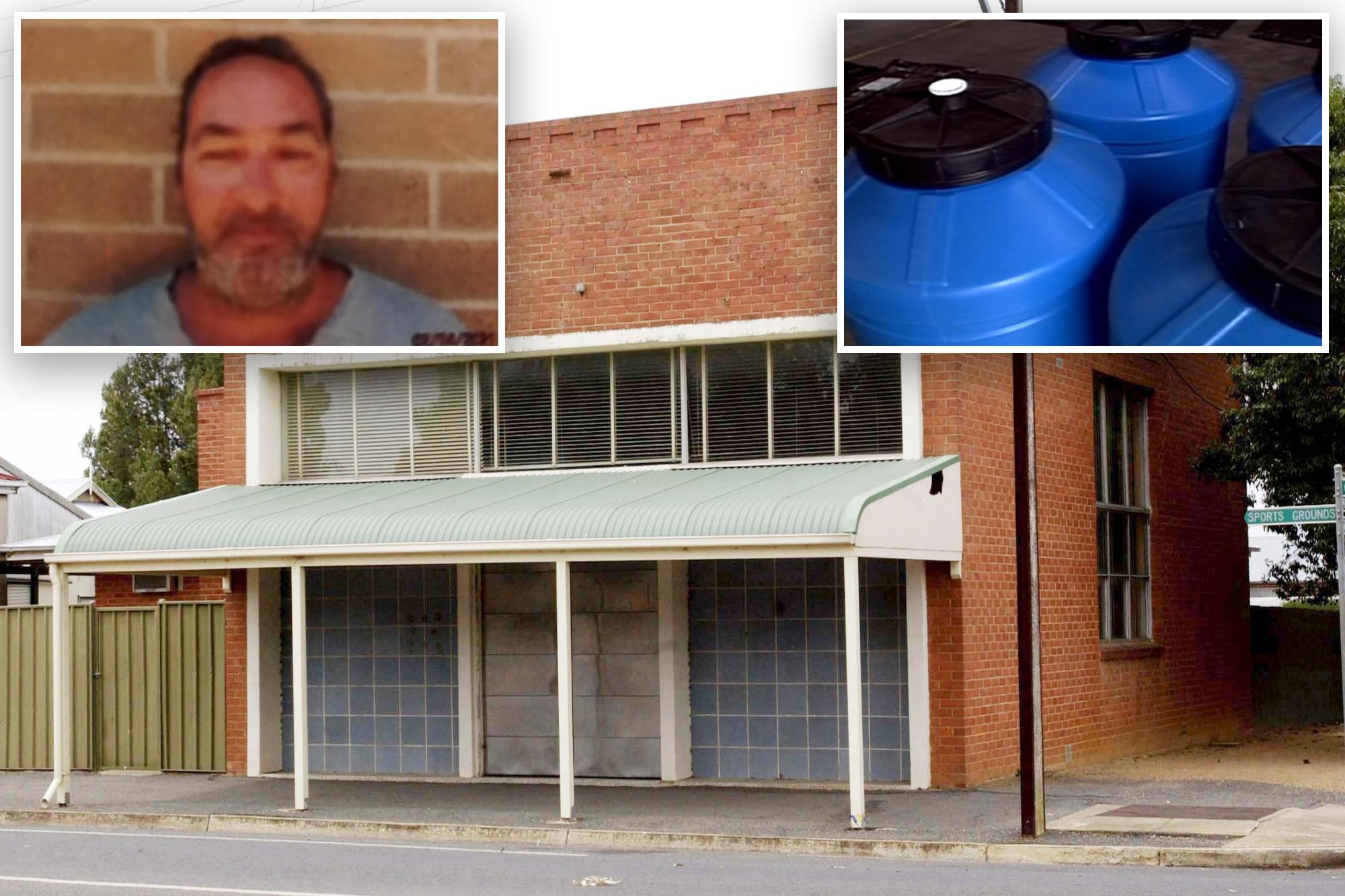
The victims were killed over seven years, and most of their bodies were found in 1999 in barrels of acid in Snowtown, a small town north of the South Australia state capital, Adelaide. The discovery led the crimes to become known as the “Bodies-in-Barrels” murders.
Three judges of the South Australia Court of Appeal upheld a parole board decision made last month to release the youngest of the three convicted murderers, James Vlassakis.
Vlassakis, now 46, was 18 when his crimes began in 1998. He pleaded guilty to four murders, including those of a half-brother and stepbrother.
He became a star witness for the prosecution, and was sentenced to life with a minimum term of 26 years, which expired in August of last year.
He was granted parole in December but the state government succeeded in overturning that parole board decision.
The discovery of dismembered bodies in a derelict Snowtown bank branch and a yearlong trial that ended in 2003 captured the nation’s attention at the time, inspiring books and the 2011 movie “Snowtown.”
Parole board chair Frances Nelson argued Vlassakis had “always been remorseful and contrite.” He had not been diagnosed with any anti-social personality disorder and his prison behavior has been “excellent,” she said.
South Australia Attorney-General Kyam Maher, who had unsuccessfully challenged the parole decision, instead argued that the traumatic nature of the crimes justified keeping Vlassakis behind bars.
“The gravity and the effect this has had on South Australia (and) the need for community safety were always the primary concerns of the state government,” Maher told reporters.
“This is definitely indelibly marked on the psyche of South Australia. These were horrific crimes that were committed against innocent people. Families of victims, friends and whole communities were deeply affected by this,” Maher said.
Start your day with all you need to know Morning Report delivers the latest news, videos, photos and more.
Nelson told reporters the parole board “would not have recommended his release on parole if we thought he was a risk.”
“So for the attorney general to say that he presented a risk, I think, caused unnecessary alarm in the community,” Nelson said.
Vlassakis was the stepson of the killers’ ringleader, John Bunting. Bunting killed people he suspected of being pedophiles or gay.
He ordered some killed because he disliked overweight people and drug users. Victims’ Social Security payments were stolen.
Bunting was convicted of 11 murders and his neighbor, Robert Wagner, was convicted of 10. Both had been active in neo-Nazi groups.
Charges of a 12th murder were dropped because of a lack of evidence. Both were sentenced to life in prison without possibility of parole.
Another accomplice, Mark Haydon, who pleaded guilty to helping dispose of two bodies, was released from prison in 2024 after serving a 25-year sentence.
A jury had failed to reach verdicts on two murder charges against him.