Add The California Post on Google I have recently discovered a surprisingly effective way to save money in Los Angeles: Stay home.
Not eat at home. Not make coffee at home. Do not leave the building.
Because the moment you step outside your front door in Los Angeles, somebody would like $20.
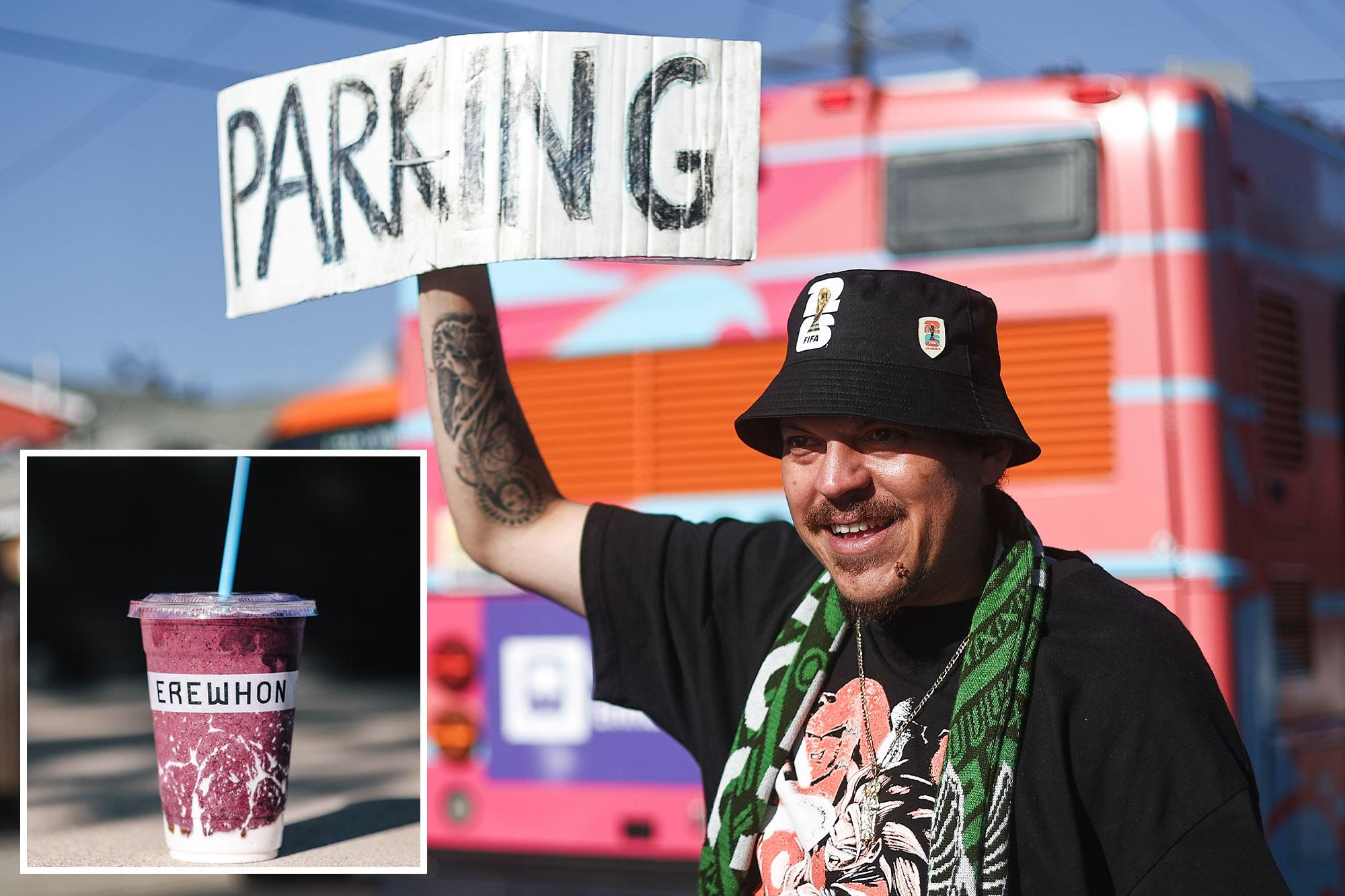
Sometimes it’s the parking garage; sometimes it’s the valet; sometimes it’s a smoothie. Occasionally it’s all three.
Los Angeles has always been expensive, but lately it feels as though simply participating in the city requires an admission fee.
Absolutely. That will be $8 for coffee, $3 for oat milk and whatever amount the iPad decides I should tip while I select from 20%, 25% or I Am Personally Responsible for the Collapse of the Service Economy.
Then there’s parking: You can attempt street parking, circling six blocks while deciphering a sign containing seven restrictions, two arrows and what appears to be a threat from the city attorney.
Congratulations! You have now spent approximately $35 to tell your friend about the weird thing your boss said yesterday.
But in Los Angeles, money is only half the calculation; there is also the time required to get somewhere.
Los Angeles has always been expensive, but lately it feels as though simply participating in the city requires an admission fee. Los Angeles Times via Getty Images Every invitation requires complex algebra: Where is it? What time? Which freeway? How long at 6 p.m.? How much is parking? And, most importantly, do I like this person enough to spend 47 minutes getting home afterward?
A hot new restaurant may have opened across town, but Los Angeles has trained us to understand that “across town” is not a location — but a commitment. Which is how you end up at the taco stand three blocks from home for the 14th time. Not because you aren’t adventurous, but because the tacos are excellent, parking is free and you’ll be home in eight minutes.
We have our CVS. Our Trader Joe’s. Our taco place. Our coffee shop. Sometimes they’re all basically the same place. We could theoretically explore one of the world’s great cities every night, but I’ve already found a CVS with a taco stand in the Trader Joe’s parking lot.
You don’t walk away from something like that.
Agree to dinner, and suddenly you’re conducting financial planning: Park; order the $19 cocktail; split the $24 appetizer that’s primarily cauliflower. Then discover a mysterious surcharge at the bottom of the bill requiring someone to put on reading glasses and ask, “Wait, is gratuity included?”
A casual Tuesday has become a minor financial event.
The numbers suggest this isn’t entirely in our heads. Los Angeles remains one of the country’s most expensive places to live, from housing and groceries to transportation. Rent is horrifying, but you know rent is coming; it’s the little transactions that get you. The $7 coffee, the $18 parking, the $9 juice. The delivery fee attached to the service fee attached to the small-order fee attached to the tip.
Quality of life isn’t only measured by whether you can technically afford your mortgage or rent. It’s also whether you can afford to have a life after paying it. NurPhoto via Getty Images The moment somebody asks, “Do you want to do something Saturday?” and your first thought isn’t “That sounds fun” but “Where is it and how much is parking?”
Because cities aren’t just places where we pay rent; they’re supposed to be places where we live.
We meet friends. We wander around. We try restaurants. We sit somewhere longer than economically advisable. We say yes to things we hadn’t planned to do. Those little interactions are what make a giant city feel like a community instead of an expensive storage facility for humans. And when every casual outing starts at $20 before you’ve actually enjoyed anything, staying home becomes increasingly attractive.
There are worse problems in the world than paying too much for a matcha. But quality of life isn’t only measured by whether you can technically afford your mortgage or rent. It’s also whether you can afford to have a life after paying it.
Maybe that’s why the places that haven’t gotten the memo feel increasingly precious: The taco stand where dinner is still dinner. The coffee shop that lets you sit down without applying for financing. The neighborhood bar with a happy hour that is actually happy. The miraculous restaurant with free parking.
We tell our friends about these places with the urgency previously reserved for medical breakthroughs.
“There’s a parking lot.” “No.” “FREE.” “Send me the address.”
Perhaps the great Los Angeles luxury of 2026 isn’t another members-only club, $25 smoothie or restaurant where the chairs appear deliberately designed to punish you.
Someplace you can meet a friend, order something you like and spend two hours talking without wondering whether you should have stayed home and put that money into your 401(K).
I love Los Angeles; I would, however, occasionally like to experience it without paying admission.
Mary Kay Holmes is a Los Angeles writer covering culture, modern relationships and the increasingly absurd business of being a person.
California Post News: Facebook, Instagram, TikTok, X, YouTube, WhatsApp, LinkedInCalifornia Post Sports Facebook, Instagram, TikTok, YouTube, XCalifornia Post Opinion California Post Newsletters: Sign up here!California Post App: Download here!Home delivery: Sign up here!Page Six Hollywood: Sign up here!