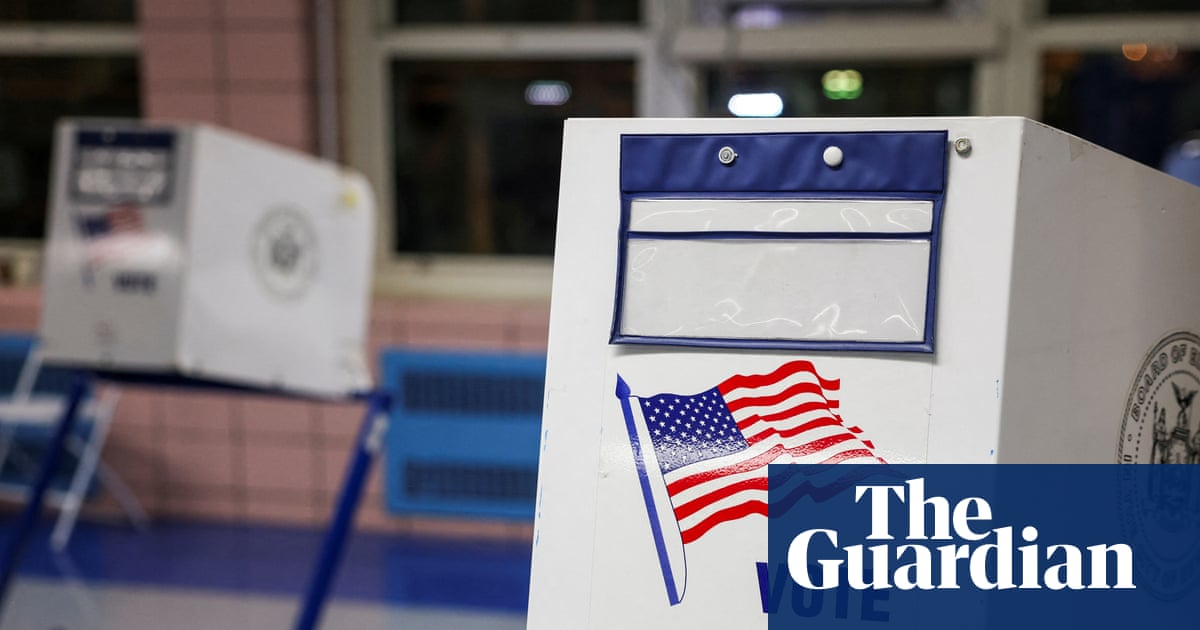
Though these cases are extremely rare, the Trump administration has ramped up its investigation into non-citizens voting ahead of the midterm elections. Photograph: Andrew Kelly/ReutersView image in fullscreenThough these cases are extremely rare, the Trump administration has ramped up its investigation into non-citizens voting ahead of the midterm elections. Photograph: Andrew Kelly/ReutersDHS officers raise concerns over potentially illegal voter searches and unreliable data, whistleblower saysOfficers were instructed to search state voter databases and create federal records on suspected non-citizen voters despite concerns over the process
Department of Homeland Security (DHS) lawyers told officers investigating voter fraud they would not be held responsible for violating state laws around accessing voter registration information, an anonymous whistleblower revealed on Monday. DHS officers also had concerns about the reliability of the data they were working with, the whistleblower said.
The Trump administration has ramped up its investigation into noncitizen voting ahead of the midterm elections. Noncitizen voting is extremely rare and the effort has only turned up a handful of cases so far.
As part of the effort, officers tasked with investigating potential non-citizen voters were told to take data DHS had compiled on voters and run it through state websites where voters can look up their voter information. Some states require voters to click attestations affirming that they are looking up their own voter information. On the Virginia Department of Elections website, for example, voters must click a disclaimer that says: “I certify and affirm that the information provided to access my voter registration is my own or I am expressly authorized by the voter to access this information. I understand that it is unlawful to access the record of any other voter, punishable as computer fraud.”
“In light of these instructions about access to the state websites, officers expressed concerns that accessing registered voter information on these websites may be illegal as officers are essentially misrepresenting themselves as the potential registered voter (with or without a specific attestation),” lawyers for Democracy Defenders Fund, who is representing the whistleblower, wrote in the disclosure.
A slide in the presentation officers watched in the initiative says DHS’ office of the general counsel “advised that this type of review is permissible as open-source research when conducted for purposes related to adjudicative or investigative responsibilities”. It also said there was an effort to get further clarification from DHS leadership, and officers were told that immigration officers and immigration service officers “are not personally liable for conducting these searches when done as part of their official duties and properly documented”.
“This statement suggests that there may be legal implications for accessing these websites, but that the officers themselves are simply not personally liable. This leads us to believe that USCIS-FDNS HQ is aware that the activity may be illegal, and yet they are still requiring officers to engage in this illegal activity with promises of personal liability protection,” lawyers for the whistleblower wrote. DHS did not immediately respond to a request for comment.
The whistleblower also expressed concern about the reliability of the data DHS was giving officers to review as well as the lack of transparency into where the data came from.
In some cases, DHS gave officers an individual’s name and specific dates on which they registered and voted. But when an officer went to look up the individual in the state’s voter registration website, there was no record of the voter. “With such a direct contradiction, knowing the specific source and date of the information is necessary to determine reliability before taking any action.”
The whistleblower disclosure says this was a huge issue in California, where officers were often unable to access the voter registration database. Officers were told they should still create a file on the person in Tecs – a DHS database where law enforcement officials share information (Tecs is not an acronym).
“The result is that a significant number of Tecs records, potentially thousands or tens of thousands, will be created against California residents based on data that an officer may have good reason to believe is unreliable or inaccurate without corroboration,” the disclosure says.
“The whistleblower’s disclosure outlines shocking allegations of unlawful and unethical conduct that includes potentially thousands of violations of state law and the use of highly questionable data,” California senator Alex Padilla, a Democrat, said in a statement.
Other election officials have raised concerns about the DHS data. Earlier this year, DHS told Nevada election officials it had identified as many as 15,903 non-citizens on its rolls. In a meeting last month, DHS representatives told the Nevada secretary of state’s office they had made that claim by comparing the state’s July 2025 public voter rolls against DHS data. When DHS began reviewing the data, they had only firmly identified 185 non-citizens on the rolls, though they said their review was ongoing.
The disclosure also details the pressure the department put on officers to find voter fraud. Officers received their first and only training on 21 August, and were expected to begin researching four days later, lawyers for the whistleblower wrote. They were expected to review five individuals per hour.
“The Department of Homeland Security is sending hundreds of officers who should be focused on our security on a wild goose chase to prove Trump’s long-debunked election conspiracy theories – and DHS is telling officers to lie to do it. This new DHS initiative is nothing more than an unlawful order by the government to silence the voices of Americans,” Senate minority leader Chuck Schumer said in a statement.