play Live Sign upShow navigation menuplay Live Click here to searchsearchSign upNews|Sudan warSudan aid networks at risk of collapse, UN agencies warnWithout immediate donations, shelter and aid relief supplies could be depleted by the end of the month, says IOM, as civilians continue to bear the brunt of attacks.
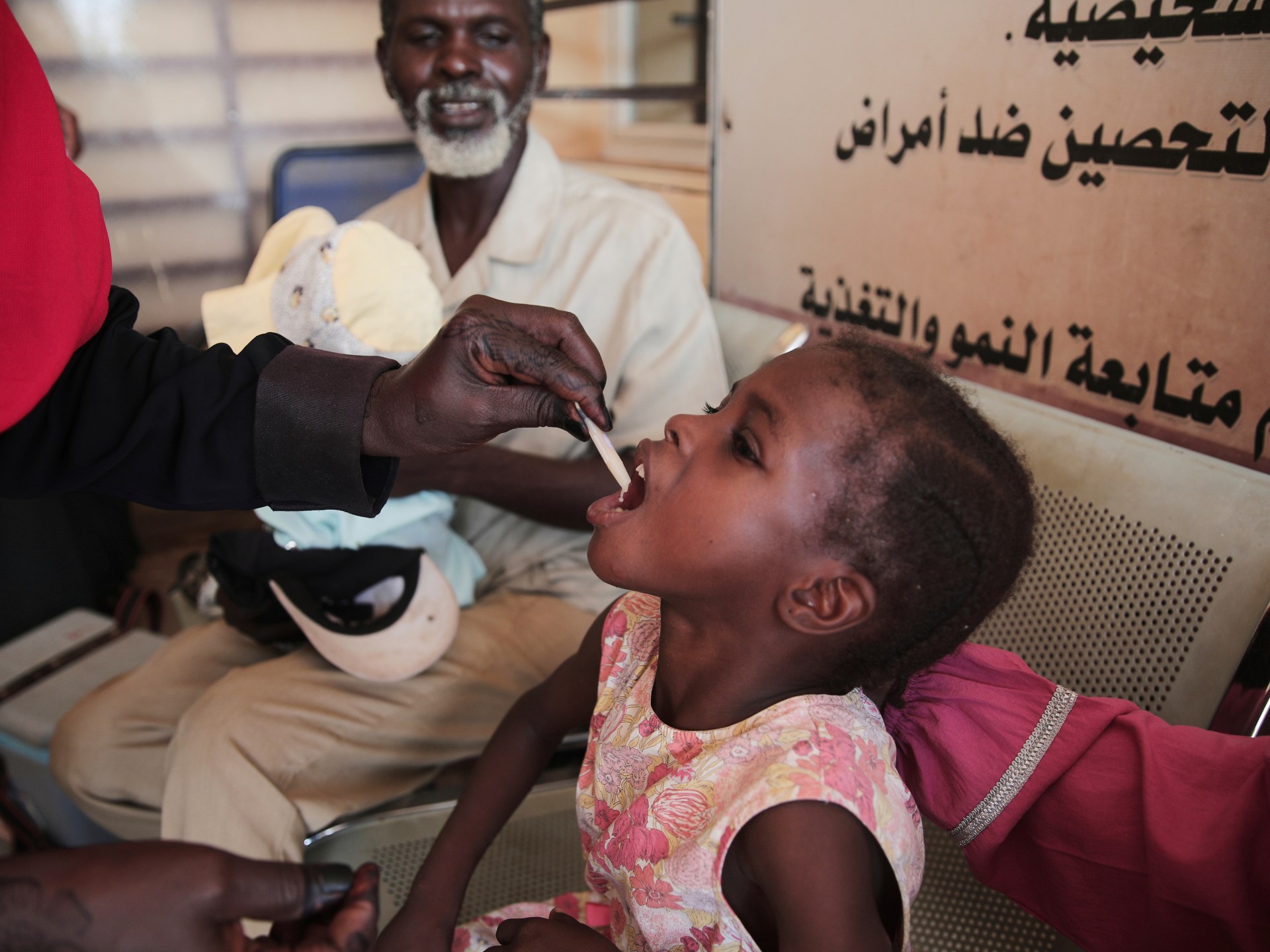
xwhatsapp-strokecopylinkgoogleAdd Al Jazeera on GoogleinfoA Sudanese girl receives an oral cholera vaccine during a vaccination campaign conducted by health ministry workers in Khartoum, Sudan [File: Marwan Ali/AP]By Al Jazeera Staff and ReutersPublished On 14 Sep 202614 Sep 2026Sudan’s aid network is at risk of collapse, the United Nations’ International Organization for Migration (IOM) has warned.
Ongoing fighting, heavy rains, and continued displacement threaten to bring an “imminent end” to Sudan’s emergency relief supply via the IOM’s Common Humanitarian Pipeline, the agency said on Monday.
The ongoing war between the Sudanese army and the rival paramilitary Rapid Support Forces (RSF) that erupted in April 2023 has killed more than 200,000 people, aid workers estimate, and created the world’s largest hunger and displacement crisis. But amid a sharp cutback in global aid funding, resources are stretched.
“The entire humanitarian system could collapse within weeks if we don’t act now. Without new funding, we won’t be able to get help where it’s needed most,” said Amy Pope, IOM’s director general in a statement.
“We simply can’t turn our back on the people of Sudan when they need us most amid raging conflict, increased displacement and the impact of heavy rain,” she added.
The IOM warned that without immediate donor support, shelter and aid relief supplies are expected to be depleted by the end of the month. The operational capacity of warehouses that keep the pipeline functioning is only able to be sustained until the end of the year.
A total of 8.6 million people remain internally displaced in Sudan, with ongoing violence, floods and heavy rains continuing to damage shelters and forcing people to move, the organisation said.
IOM said its network, comprising nearly 100 national and international NGOs, has supplied aid to 2.8 million people since July 2023. However, its reach has been shrinking due to falling funds, even as needs remain at an all-time high.
The cost of keeping the IOM system running for a year to support 305,000 people is $15m, and the agency would require $42m to return to the level of aid it was able to provide in 2024.
Funding for Sudan at the World Food Programme (WFP) has also fallen, dropping by about half this year, its acting head told the Reuters news agency.
Executive Director Carl Skau said that while access had represented humanitarians’ largest obstacle in the past, now “we have [a] presence that we are not fully utilising because of the lack of funding”.
Last year, WFP received $645m in funds, but so far this year funding is only at $206m.
Meanwhile, in continued fighting, at least four civilians were killed and several others wounded overnight in RSF drone attacks on Damazin, the capital of Blue Nile region, a senior Sudanese military official told Al Jazeera.
The official said the attacks targeted civilian infrastructure and fuel stations owned by civilians.