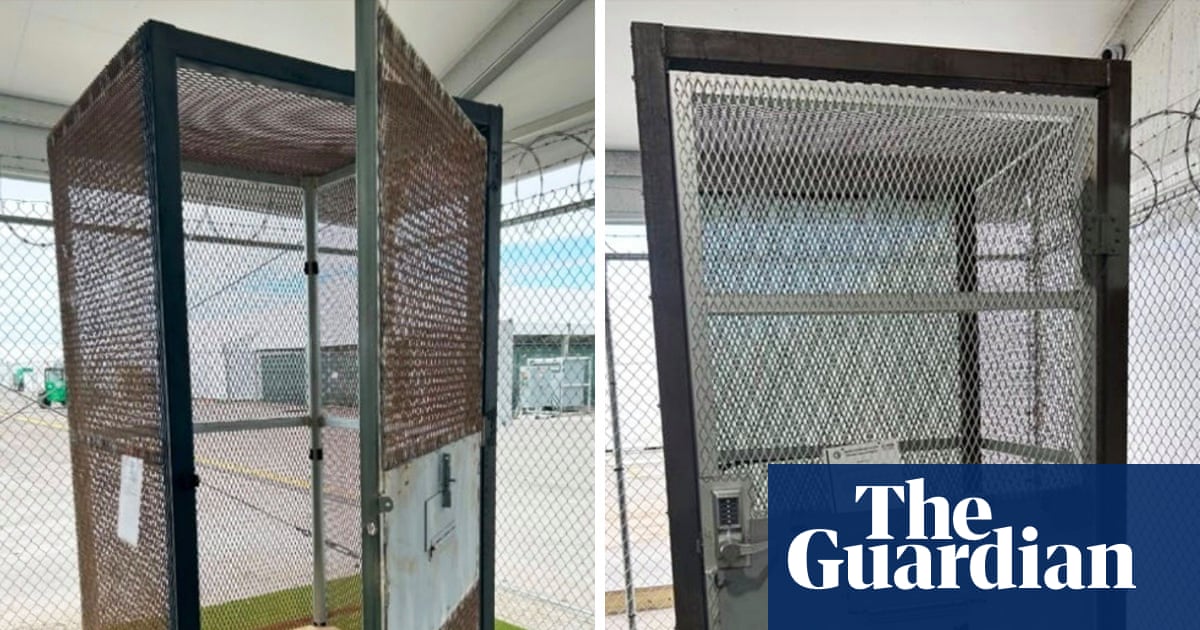
Small cages that were used in the ICE detention facility in Ochopee, Florida. Photograph: OIG/DHSView image in fullscreenSmall cages that were used in the ICE detention facility in Ochopee, Florida. Photograph: OIG/DHSAlligator Alcatraz held detainees in cages the size of phone booths, DHS watchdog saysOffice of inspector general’s report says practice at Florida immigration jail is not aligned with ‘humane treatment’
Before the facility was shuttered, detainees at Florida’s “Alligator Alcatraz” federal immigration jail were frequently locked in outside metal cages no bigger than a phone booth, according to a damning government watchdog report that said the practice “does not align with standards for humane treatment”.
The findings from the office of the inspector general of the Department of Homeland Security (DHS) were published on its website – and offer rare criticism of the Trump administration by one of its own agencies.
The report also provides the first official confirmation that guards repeatedly used the highly restrictive cages on detainees in direct contravention of Immigration and Customs Enforcement (ICE) rules.
In December, the Guardian was the first to report an Amnesty International dossier detailing multiple alleged human rights abuses at the controversial camp in the remote Florida Everglades, including how people were regularly shackled outside in metal cages for hours as well as exposed to brutal heat, sunshine and swarms of mosquitoes.
At the time, a spokesperson for Ron DeSantis, the Republican Florida governor whose administration ran Alligator Alcatraz on behalf of the federal government, dismissed the claims now confirmed by the DHS report as “fabrications” – and the Amnesty report as “a politically motivated attack”.
Read moreThe same spokesperson did not respond to the Guardian’s request for comment on Monday.
The notorious immigration jail closed in June after a year of operation during which DeSantis boasted of detaining and deporting more than 21,000 immigrants. Officials cited the risk of holding detainees in tents during hurricane season for the closure.
Critics, however, said the $1.2m of taxpayers’ money that DeSantis was spending on the camp daily was fast becoming a political millstone – while separate lawsuits swirled over the jail’s impact on the environmentally fragile Florida wetlands, and the harsh mental and physical treatment of detainees that several Democratic lawmakers decried as akin to “torture”.
The inspector general’s office report exposed numerous failings found during an unannounced January 2026 visit by DHS inspectors to Alligator Alcatraz, which they refer to as the Florida Soft-Sided Facility (FSSF). Many of the shortcomings, they said, posed “significant risks to detainee health and safety”.
“FSSF did not provide detainees with sufficient living space, creating cramped conditions for detainees who spent most of their time in their housing units, which may harm detainees’ physical and mental health,” the report said.
Additionally, it studied records that revealed 79 instances between July 2025 and January 2026 in which guards placed detainees in the metal cages for up to two hours at a time.
Each cage, the report noted, offered only about 18 sq ft of floor space, less than half the minimum 37 sq ft required for single-person spaces by ICE’s own published national detention standards. The inspector general’s discovery of cases in January means detainees were still being confined in the cramped cages more than a month after Amnesty International exposed the practice and DeSantis’s office denied it was taking place.
The report acknowledged concerns raised by the Democratic US senators Jon Ossoff of Georgia and Dick Durbin of Illinois in March over the use of the cages known to detainees as “The Box”. But the report said facility staff insisted they were used as “calming areas” for detainees “to deescalate and have time alone”.
“Staff further maintained that detainees asked to spend time” in them, the report said.
However, inspectors found at least one time in which a cage was documented to have been used as a disciplinary tool: for a detainee who “failed to comply with a lawful command”. Inspectors noted that there were locking mechanisms on the cages.
“Use of these small metal enclosures for any reason is unprecedented among ICE facilities inspected by OIG,” the report said. “Confining individuals in small metal enclosures for any reason presents significant risks to detainee health and wellbeing.”
Read moreOther failures noted by the DHS inspectors during their tour of detention spaces, and kitchen and bathroom areas, included overcrowding, a lack of sufficient recreation time for detainees, and inoperable telephones preventing detainees from contacting their attorneys or families, and poor food hygiene standards leading to the risk of contamination and illness.
Multiple detainees told the inspectors in January they had limited or no access to clean drinking water. The Guardian reported in June that the practice appeared to be continuing, with detainees complaining that guards were withholding clean water and food as punishment – or until they signed documents in English that they did not understand.
The Florida department of emergency management, which oversaw the operation of the facility using private guards, did not immediately respond to a request for comment.
The inspectors made 10 recommendations for Alligator Alcatraz, including discontinuing the use of the cages – but all are in effect moot since the facility is closed down.
In August, an alliance of environmental groups filed an amended lawsuit against the DHS, the Federal Emergency Management Agency (Fema), and the state of Florida, seeking restitution for the damage caused by the presence of the facility from its opening in July 2025, harm they argue is still ongoing.