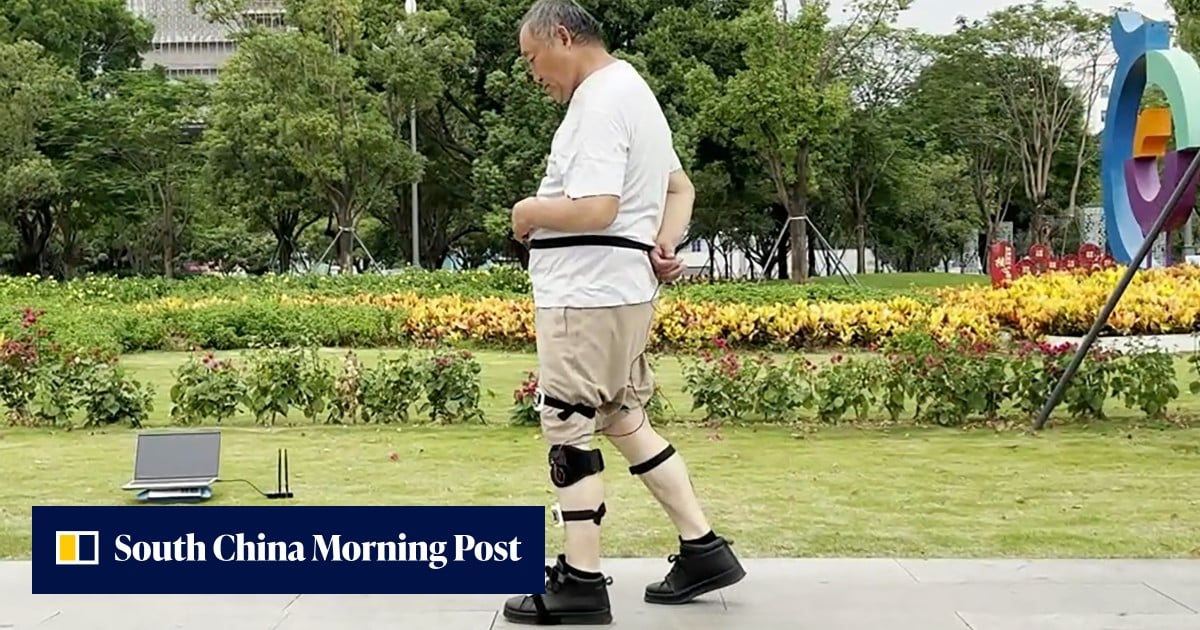
Prosthesis developed by mainland China and Hong Kong team uses electrical current to flex the wearer’s ankle while walking
3-MIN READ3-MIN ListenVictoria BelaPublished: 4:00pm, 14 Sep 2026Updated: 4:03pm, 14 Sep 2026Scientists have developed a lightweight, battery-free device that could help improve the mobility of people with difficulty walking, such as stroke survivors.
Developed by researchers in Hong Kong and mainland China, the neural prosthesis uses energy generated by the wearer’s own movements to electrically stimulate their muscles, helping to flex their ankle and restore their natural walking pattern.
“Rather than relying on external sensors or battery-powered control, the device operates automatically during walking through mechanically coupled energy harvesting and stimulation delivery,” the team said in a paper published in the peer-reviewed journal Nature Communications on September 2.
Requiring just a few steps to power up, the device helped to increase stride length and walking speed in stroke survivors during both indoor treadmill trials and outdoor walking tests.