Add The New York Post on Google A faction of hardliners inside Tehran took advantage of the country’s phantom supreme leader to launch the summer attacks in the Strait of Hormuz that derailed a peace deal with the US, according to a new report.
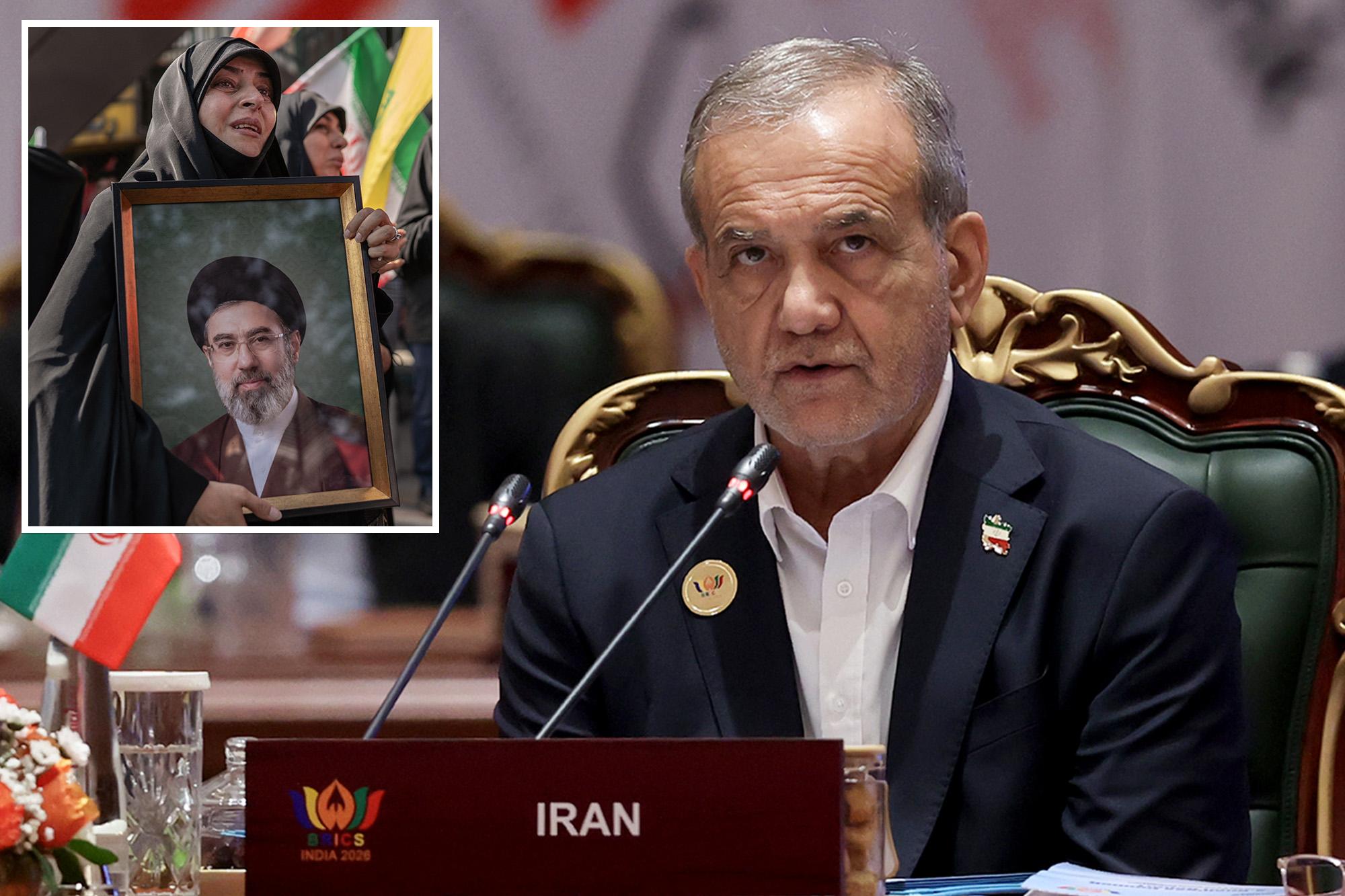
After the US and Iran agreed to the Memorandum of Understanding in June, Iranian moderates led by President Masoud Pezeshkian believed the cease-fire would create a pathway to permanently end the war.
Those hopes, however, were dashed when Iran attacked three vessels sailing in the Strait of Hormuz, an attack greenlit not by Tehran’s army, but by its newly appointed paramilitary chief, Hossein Taeb, the New York Times reported.
Taeb, who runs the brutal Basij militia that carried out the deadly crackdown on protesters in January, allegedly ordered the strikes in July to avoid peace at all costs, believing that Iran should not compromise with the US.
“The attack on the ships was orchestrated with the goal to blow up the memorandum of understanding with Trump and to kill the prospects of any future negotiations and deal,” Alireza Namvar Haghighi, an Iranian expert with contacts inside Tehran, told the Times.
Despite leading a force separate from the Islamic Revolutionary Guard Corps, Taeb was able to get his orders through while Iranian Supreme Leader Mojtaba Khamenei remains missing from the public.
The whereabouts of Khamenei, who was severely injured in the first strikes of the war, remain unknown, and his physical and mental condition has repeatedly come into question as his reported orders are only given on readouts.
Even Pezeshkian, who has pushed for Iran to renew peace talks with the US, has previously admitted the man he met in secret last month may not have actually been Khamenei.
There has been speculation that Taeb and his fellow hardliners, who are longtime Khamenei allies, have used the supreme leader’s absence to push their own ideals and attribute it to orders from the very top.
When Pezeshkian demanded answers as to who orchestrated the July attacks, Iranian military officials repeatedly passed the buck or claimed the orders came from up top, sources told the Times.
The IRGC’s Khatam al-Anbiya headquarters notability did not issue a statement claiming responsibility for the July 7 strikes, breaking with a pattern of the army’s usual gloating when such attacks have occurred.
The incident highlights the extent of the division inside Tehran and how its hardliners have been able to manipulate events to keep the country at war.
Since the July 7 incident, Tehran has regularly fired at ships attempting to cross the Strait of Hormuz, with Iran and its terror proxies and the US and its allies now trading regular attacks in the region.