Add The New York Post on Google What’s in a name? These days quite a lot, it seems. Since President Trump issued his Executive Order declaring that the body of water conventionally known as Lake Ontario would henceforth be named “Lake America,” we’ve seen surprisingly impassioned demonstrations of both support and opposition — and not just from Canadians.
These responses were interesting on two counts. First, because some of the same people who had mocked or decried the renaming of old places on the basis of contemporary ideologies were now happy to follow suit for their own political reasons. And also, because those who had formerly nodded along as monuments fell to trendy political movements were now shocked and appalled to realize someone less congenial might do the same.
Granted, names have always had a certain intrinsic importance. Arkansas, for example, has an official state law specifying that its name must be pronounced “Arkansaw” rather than “Ar-Kansas” — passed by General Assembly in 1881. (Growing up, there were rumors regarding the cruel and bizarre penalties applied to violators.) And this is without getting into the endless foreign disputes over the correct application of “Macedonia” or the “British Isles.”
But within the past few years the obsession with names and changing them has escalated. For some time now, contemporary progressives operating on Red Guard lite-mode have gladly sacrificed traditional names — not to say statues and institutions — to their ideological passions.
Canadians themselves cannot exactly stand on principle here: Toronto’s central Dundas Square was recently renamed to “Sankofa Square,” for reasons no one quite seems to understand. Across the city, those looking for Woodsy Park will instead find Ethennonnhawahstihnen’ Park. If you held a gun to the heads of nearby residents and demanded they correctly pronounce this, you would almost certainly end up with a lot of bodies.
President Trump by contrast has kept things simple with Lake America, just as he did last year with the Gulf of America (formerly “of Mexico”). One envisions a future in which all natural features eventually get renamed some variant of “America” — like the bizarre scene in “Being John Malkovich” in which all language has been reduced to various inflections of the word “Malkovich.”
So, what exactly is the problem here? In his classic study, “Names on the Land,” George R. Stewart observed how Americans both inherited place names from a variety of sources and, “adding more names, they gave to their children with every generation the heritage richer than before.” And note that Lake Ontario, too, was part of that heritage, being so designated in the Treaty of Canandaigua, signed on behalf of George Washington and “Six Nations of Indians” in 1794 — no Canadians involved.
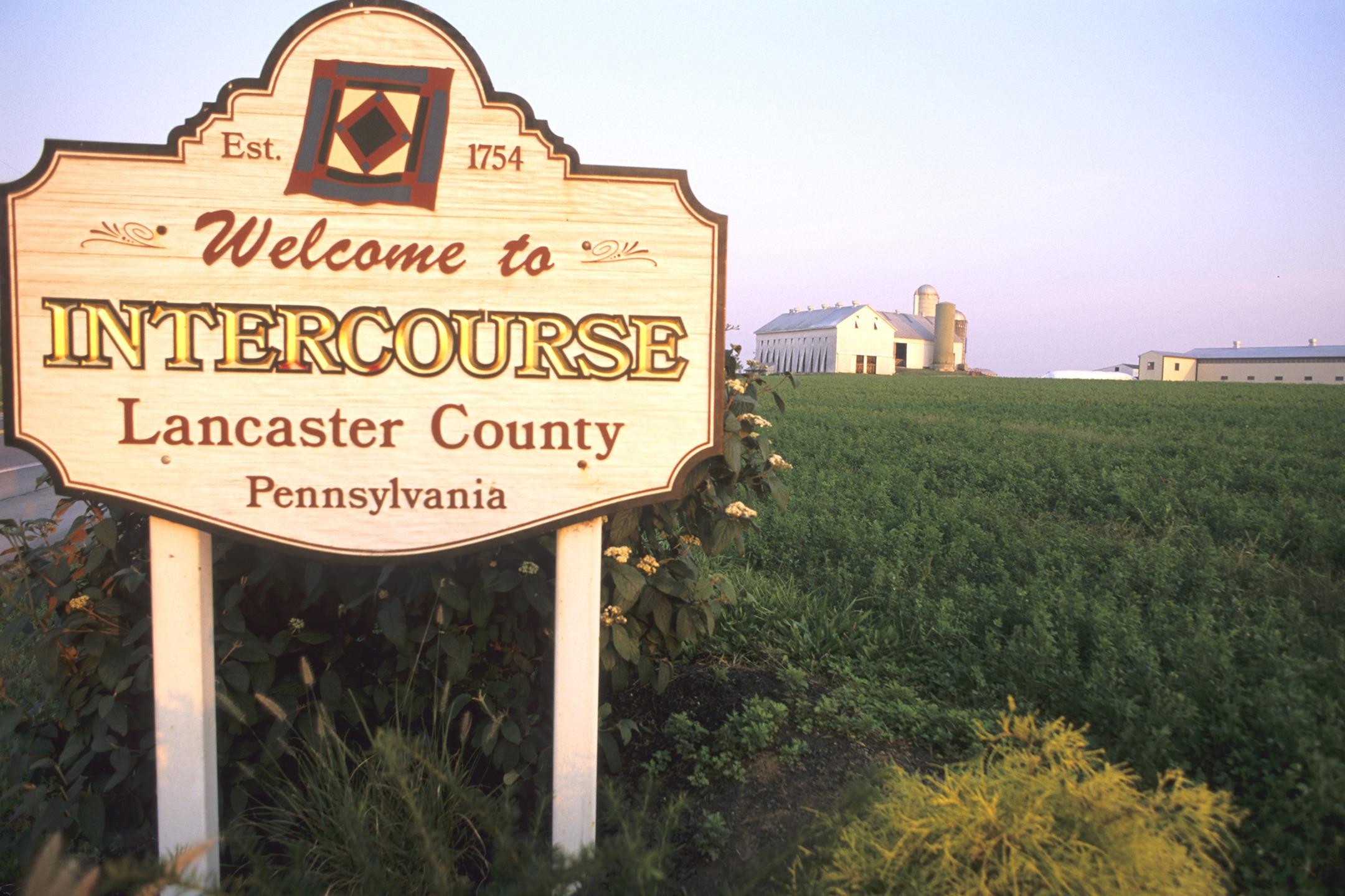
Nor is that heritage altogether grand and respectable. Rural America is replete with such gleefully vulgar-sounding names as Climax, Ga.; Beaverlick, Ky.; and Intercourse, Pa. And while I might wince if I had to see them every time I drove home, I wouldn’t change them. Similarly, I once spent the better part of an hour laughing as I drove past the Saskatchewan city Regina (pronounced with a long “i”).
We crave the real, the particular, the local, the colorful. Lincoln’s mystic chords of memory resound in our founding documents but also in the cadences of actual places like Frostproof, Fla., or Last Chance, Iowa — heck, even Hell, Mich. Such place-names are a concrete representation of our history, in all its variegated, multihued strangeness. What the music critic Greil Marcus called the “old, weird America” is very much alive in these eponyms.
The current occupant of the White House may be an especially egoistic fellow, but this egoism is otherwise common to our time — what the essayist GK Chesterton referred to as the “small and arrogant oligarchy of those who merely happen to be walking about.” What he meant was that it’s all too easy for us now alive to disregard those who came before and bequeathed so much to us.
Let us then be magnanimous enough to respect the names passed down to us by the dead — of rivers, lakes, mountains, parks, statues, universities. For those still impelled to embark on further naming sprees, one hopes the promised age of space exploration and colonization will provide a suitable outlet for their ambitions.
David Polansky is an American writer living in Toronto and the author of the Strange Frequencies Substack @polanskydj.