play Live Sign upShow navigation menuplay Live Click here to searchsearchSign upNews|US-Israel war on IranTrump’s Iran war now has a midterm election problemTrump has tied the end of his war on Iran to the midterm elections. But with Iran holding firm, the political cost is mounting.
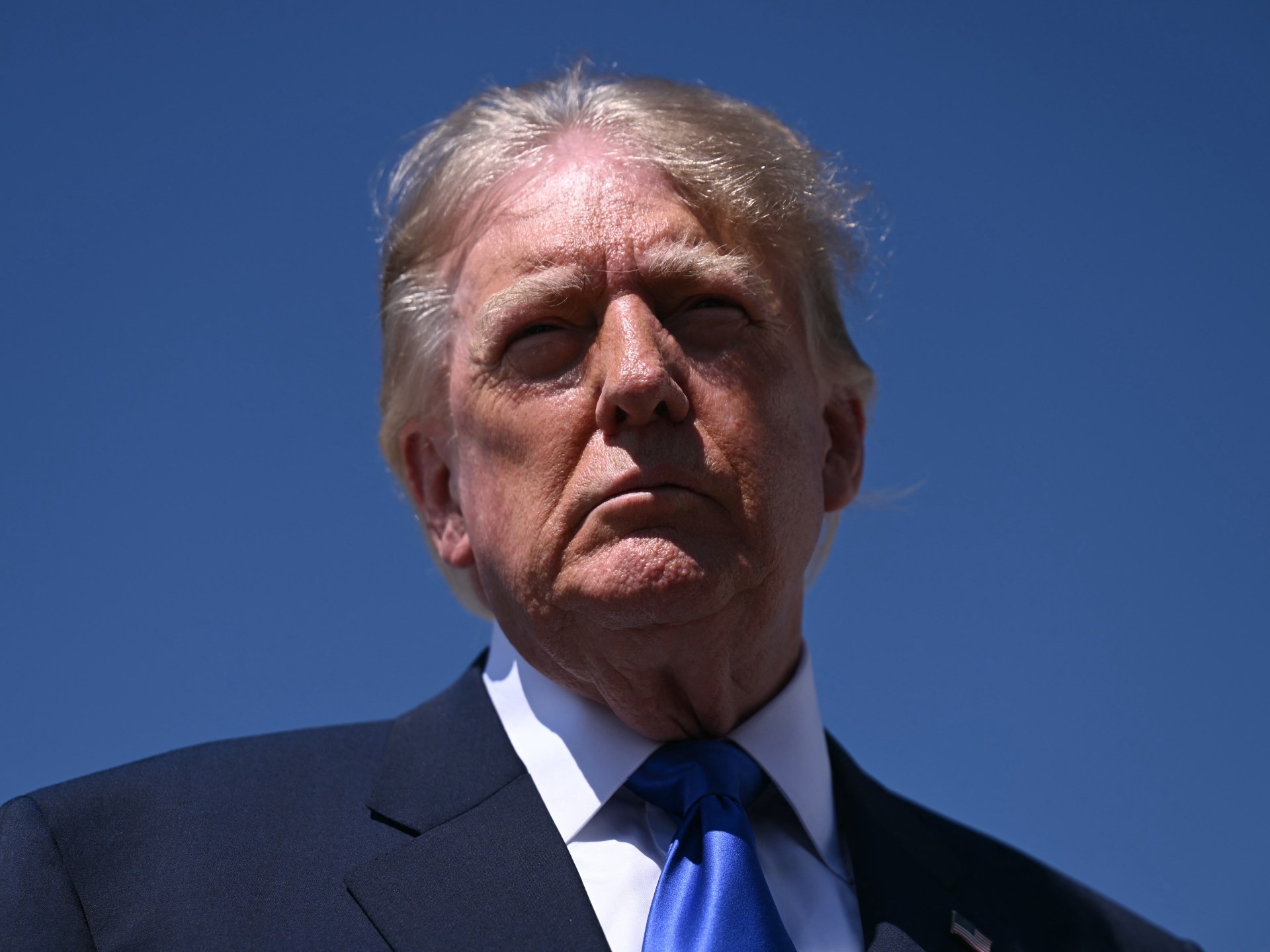
xwhatsapp-strokecopylinkgoogleAdd Al Jazeera on GoogleinfoUnited States President Donald Trump has claimed Iran is attempting to influence the November US congressional election [File: Brendan Smialowski/AFP]By Simon Speakman CordallPublished On 10 Sep 202610 Sep 2026United States President Donald Trump has claimed that the seven-month-long war with Iran will end “immediately after” the US midterm elections in November, framing the ongoing conflict as an attempt by Tehran to influence the vote.
“They’re desperate to try and affect the election,” he told reporters on Wednesday.
Trump’s latest claims of Iranian capitulation are not new. Tehran has thus far withstood sustained strikes by the US and Israel intended to eradicate its military capacity, as well as a naval blockade of Iran’s ports intended to choke the country’s economy. In late August, the US ratcheted up the economic pressure even further, threatening secondary sanctions on Iran’s trading partners.
“It was a statement that was more likely meant for an internal [domestic] audience,” Ali Alavi, an Iran lecturer at SOAS University of London, said of Trump’s predictions of Iran’s post-election collapse. ”It was Trump’s method of communicating that the only reason it seemed as though he was failing in his Iran policy before the midterms is because Iran wanted it to be perceived that way.”
The cost of Iran’s failure to capitulate is being felt across the United States ahead of the midterms, which could see Trump’s Republican Party lose one or both houses of Congress.
Petrol prices – a key measure of the cost of living in the world’s largest economy – have climbed to a national average of $4.27 a gallon according to the American Automobile Association, up nearly 30 percent from a year ago.
Trump’s approval rating has also plunged from the high-40s when he returned to office in January 2025 to the low-to-mid 30s today.
The US electorate’s pain extends beyond the pump. A 2026 LendingTree survey found that 29 percent of buy-now-pay-later users had used the loans to buy groceries, while 47 percent said they had paid late on a buy-now-pay-later loan at least once in the past year.
Separately, economists at the University of Michigan have found that rising fuel costs and inflation linked to the war on Iran are weighing on consumer confidence and purchasing power.
“Iran has prepared for a long war,” Sanam Vakil, director of Chatham House’s Middle East and North Africa programme, said. ”It may be that part of that was a secondary plan to hold out long enough to destabilise the US midterm elections once it realised that negotiations with the current administration were not going anywhere.”
Top Democrats, including the party’s Senate leader, Chuck Schumer, have been explicit in their calls for Trump to end the war on Iran.
Given Republican difficulties over the Iran war and other issues, Center for American Progress international policy analyst H.A. Hellyer described the situation ahead of the November 3 congressional midterms as one where the Democrats aren’t as much poised to win as the Republicans are positioned to lose.
“The question really is one of [voter] turnout,” he explained. “It’s not that many members of the Republican base will suddenly switch to supporting the Democrats, as much as they’ll stay home and not vote.”
Foreign policy, Hellyer said, rarely influenced voters, but “economics matter”.
“The price of things, like the petrol they get from the pump, matter – and it’s this that might swing [the election],” he added.
Irrespective of their claims of military success, both the US and Israel face a reckoning with an electorate that their leaders had promised easy victory: the US and Trump in November’s midterms and Israel’s Benjamin Netanyahu in a crucial general election in October. Iran, ruled by an unelected Supreme Leader and with no legislative elections scheduled until 2028, faces no such countdown.
“For Iran, victory is about surviving long enough to extract a serious diplomatic undertaking from its opponents that it won’t be attacked,” said Vakil of London-based Chatham House. “Victory is about demonstrating leverage, but negative leverage, in proving that it can still disrupt the world’s economy, no matter what the state of its military.”
“For some in the government, that includes retaining control over the Strait of Hormuz,” he said. “For others, that’s just a potential bargaining chip in negotiations, but for all: victory is survival and finding a way to convert it to stability. It’s a tall task.”