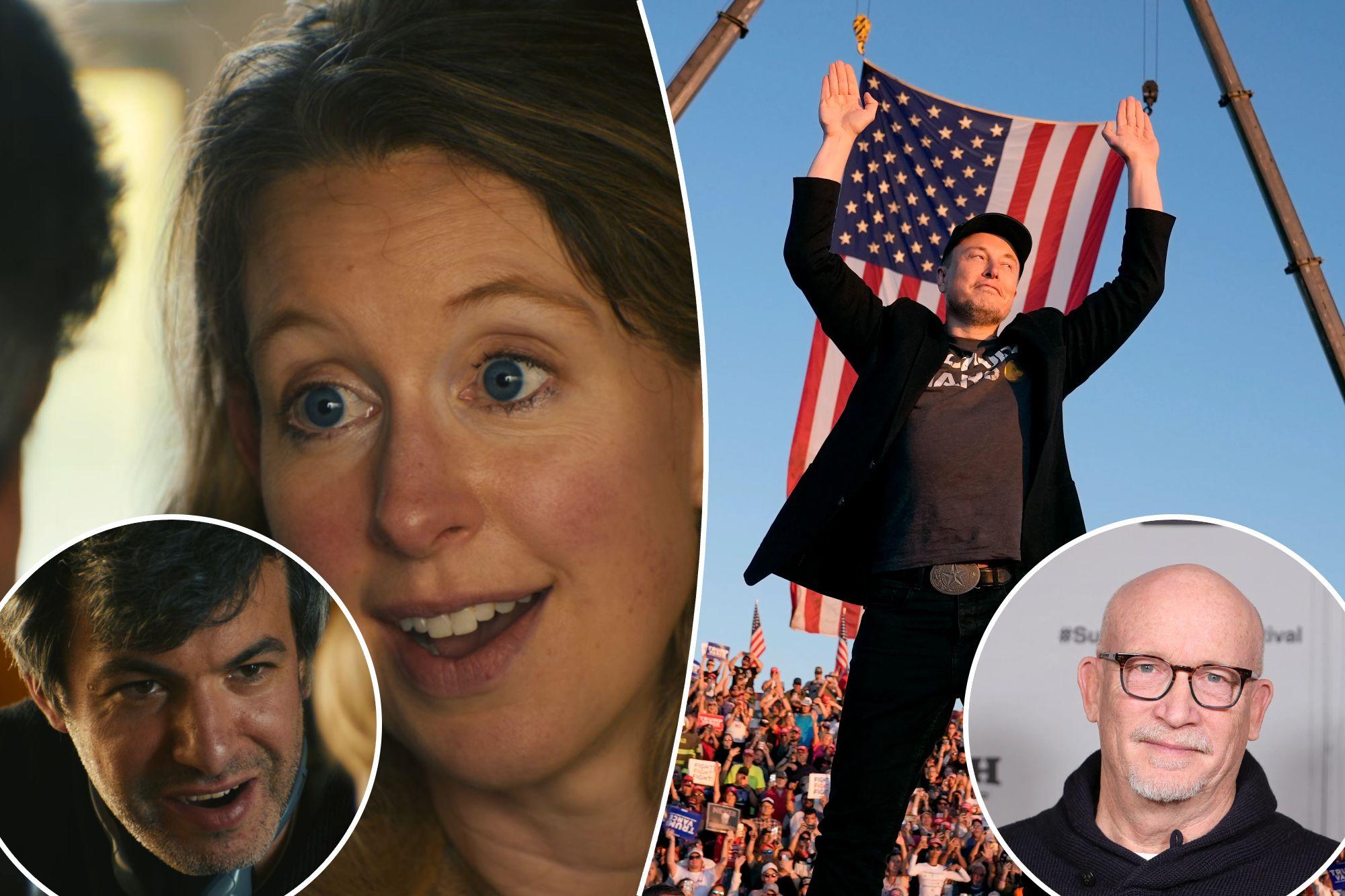
Nathan Fielder's Elizabeth Holmes doc has become the most-buzzed about doc in years. A24/YouTube Inside A24’s Manhattan offices the secrecy surrounding the Elizabeth Holmes documentary, “You Can See Everything,” was so heightened that even the eight-person in-house documentary team was kept in the dark during the project’s three-year development.
“It was totally locked down,” said a knowledgeable source who estimated the film’s budget at just below $8 million — huge in today’s beleaguered documentary climate.
“We weren’t allowed to talk about it, and there was a ton of intrigue surrounding it.” According to the source, only a handful of lawyers along with Ravi Nandan — who oversees A24 television — and his colleague, Sam French, were trusted to steward the project.
To make the film, comedian, co-director and king of can’t-look-away cringe Nathan Fielder secretly moved in with Holmes — the fallen founder of Theranos who was headed to prison — and her family. A24 reportedly gave Fielder and collaborator Lance Oppenheim the go-ahead to pursue the film even if nothing came of it and it was never seen. A24 only announced the film the same night it screened in Telluride.
By now you have probably heard of the instantly viral three-hour doc. The screening generated enormous buzz as festivalgoers were gobsmacked, critics were thrilled and the film became an immediate Oscar contender. Pundits are predicting that A24 will push it as a history-making Best Picture nominee. Fielder has never neatly fit into a definable category as evidenced by his other genre-bending projects including “The Rehearsal,” “The Curse” and “Nathan For You.” As Variety film critic Owen Gleiberman put it, Fielder operates, “in a nether zone between fiction and reality.”
But amidst all the viral buzz, a sense of sad irony has set in among the town’s tight-knit documentary community. They noted that at the same time A24 was developing “You Can See Everything,” they shut down their in-house documentary arm, laying off their entire team last year (A source close to the company said it was a “re-org.”)
“The biggest irony in all of this is that they shuttered their documentary division saying docs are no longer commercially viable and yet they may end up with this surprise theatrical hit which is going to be in the awards conversation.”
Then again, A24 wasn’t the only film company scaling back after the industry came down from a five-year boom marked by record-breaking sales at fests like Sundance, (a topic which I wrote about for The Ankler). Others, like Participant Media, were forced to shut down while companies like the Laureen Powell Jobs-backed Concordia Studios went through layoffs and downsized ambitions.
A24’s decision to get out of the documentary game was a particularly harsh blow because the mini-major had the reputation for being an artist-friendly and prestige-oriented home for storytellers willing to take risks. In 2016, A24 won the Academy Award for Best Documentary Feature for “Amy,” about ill-fated singer Amy Winehouse. (Other films in A24’s former non-scripted slate — including Eric Goode’s “Monsters of God,” “The Yogurt Shop Murders” and “Nuisance Bear” — also won awards.)
Fielder and Oppenheim’s film, set for a theatrical release in October, now joins another extremely buzzed about and highly anticipated documentary in the marketplace: “Musk,” Alex Gibney’s nearly four-hour documentary about billionaire businessman Elon Musk which premiered at the Venice Film Festival. “Musk” will air on HBO later this year following an Oct. 16 theatrical release.
To some the arrival of both films may be an opportunity for a revival of sorts. “We all want to be hopeful that there will be a return to this human form of storytelling and we’re getting a lot of incoming calls from streamers asking what we have and what we are working on, but we are also still finding a lot of resistance in the marketplace,” said filmmaker Gotham Chopra.
Chopra co-founded Religion of Sports and has upcoming projects including a doc on Stephen Curry called “Portrait of an Artist” for Disney. “Could this be a moment? I don’t know. There is a big difference between a trend and a breakthrough.”
If the documentary Oscar race ultimately comes down to Gibney vs. Fielder it will be a study in contrasts. Gibney is part of the old guard and is considered an elder statesman within the documentary branch of the Academy. He has long employed a relatively conventional storytelling style which contrasts sharply with Fielder’s who may in fact be snubbed by the documentary for his outlandish melding of various genres.
“I’m sure Alex is pissed beyond belief,” said one veteran executive.
And while Musk has slammed Gibney’s film on him, the Tesla mogul is reportedly so obsessed with Fielder, he once invited the enigmatic entertainer to lunch at SpaceX in 2016. The New York Times reported in a past Musk profile: “Mr. Musk has, in particular, pursued a friendship with one comedian whose public image revolves around the outrageous steps he takes to relate to other people: Nathan Fielder.”
Indie film fans may remember the unprecedented aughts documentary boom with hits like “March of the Penguins” and “Fahrenheit 9/11.” The landscape is now dominated by participatory celebrity docs: Of the five films nominated for an Emmy in the Outstanding Documentary or Nonfiction Special, four are star-driven.
Unlike most of A24’s other documentary projects, which were typically co-financed, “You Can See Everything” was fully funded by the mini-major.
“What [‘You Can See Everything’] shows is the special magic — almost the genius — of what A24 can do when they really get behind something and support it, which they didn’t do for their own documentary slate,” said an insider.